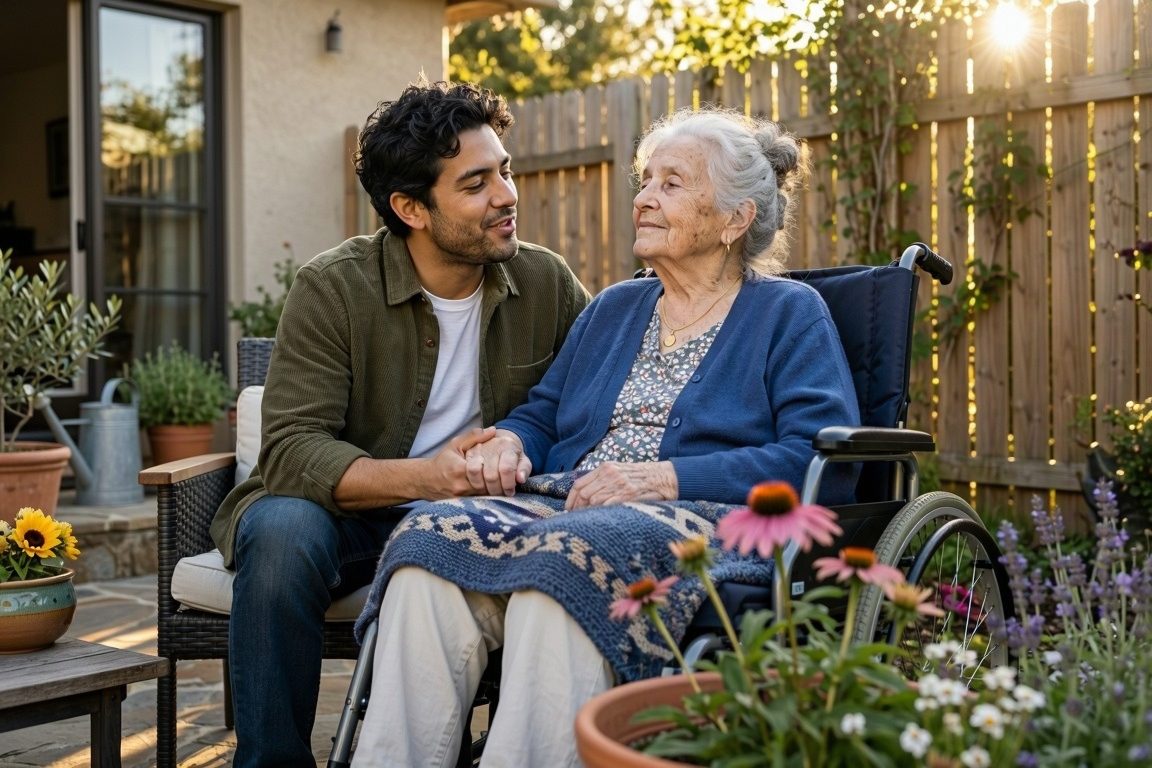
Step by step
What not to do
- Do not force participation or keep them in a group activity if distressed. Remove them to a quiet space for one-on-one sensory engagement.
- Do not correct how they handle an object (e.g., crooked folding). Correction can feel critical and shut down engagement.
- Do not give complex instructions or multiple steps. Offer one piece and say "Try this." If no response, place it near them or guide their hand to touch it.
- Do not assume disinterest from silence or stillness. They may be listening or feeling. Wait up to 30 seconds for a response before moving on.
- Do not talk about them in their presence as if they cannot hear. Speak directly to them; many remain aware of tone and inclusion.
- Do not neglect your own well-being. Take breaks and accept help. You cannot fix the disease, but you can be present for small moments.
Key points
- Engagement in advanced dementia is about the moment of connection, not completing a task.
- Start with observation: notice breathing, gaze, and small movements to choose your approach.
- Use single sensory invitations (touch, smell, sound) and give the person time to respond.
- Side-by-side, parallel activities are often more successful than face-to-face interactions.
- Never correct or force participation, focus on the process, not the outcome.
- Take care of yourself: small, consistent visits are better than long, exhausting ones.
Videos
 How to increase activity for someone with dementiaThis video explains why a person with dementia may not engage and offers practical troubleshooting tips, including how to adapt activities to their current ability.
 Activities For Dementia Patients At Home (Module 3)This module covers simple, low-cost activities that can be done at home or in a facility, with a focus on sensory and repetitive tasks suitable for advanced stages.
 Carrie Aalberts Founder & Creator of "Dementia Darling"Carrie shares person-centered activity ideas that emphasize meaning and purpose, even for those with limited verbal ability.
 Quick Tips: Recognizing Alzheimer's DiseaseWhile focused on early recognition, this video helps you understand the disease progression, which informs why engagement strategies change over time.
2 more videos
 How Does Dementia Affect Safety?Safety considerations are crucial when engaging someone with advanced dementia, this video covers common risks and how to create a safe environment.
 LinkedIn Live: October 18, 2022This live discussion includes expert advice on engagement and the importance of community support for both the person with dementia and the caregiver.
Background
Why They Seem Non-Responsive
In advanced dementia, the brain’s ability to initiate activity or respond to social cues is deeply impaired. The person may have lost their “internal volitional switch”, the part of the brain that says, “I want to do something.” This is not a lack of interest; it’s a neurological change. They may also be overwhelmed by noise, lights, or the pace of a group. Their senses are still working, but the brain processes input differently. What looks like withdrawal is often a protective response to overstimulation or an inability to start an action on their own.
What Engagement Really Means Now
Engagement in advanced dementia shifts from doing to being. The goal is not to complete a puzzle or sing a song, but to create a moment of positive connection. This could be a shared gaze, a hand squeeze, or a calm reaction to a familiar smell. The activity is the connection itself. As one expert notes, “It really is about the process,” not the outcome. Your loved one may not remember the activity, but they can feel the comfort, safety, and love in the moment. That feeling is the engagement.
Why Group Activities Often Fail
Group activities in memory care are often designed for mid-stage residents. For advanced dementia, the group setting can be confusing or frightening. The person may not understand what others are doing, may feel pressure to perform, or may be distracted by the movements and sounds around them. Many people with advanced dementia do better with one-on-one or very small group interactions. The key is to match the activity to their current ability, not to what they used to do or what the group is doing.
Practical tools
3
The Sensory Invitation Script
No pressure.
Familiar Object Kit
Gather 3–5 meaningful objects:
Keep in a small bag. Rotate items; use one per visit.
The Slow Rocking Chair Setup
The combination of rhythm, movement, and familiar melody can be deeply calming and engaging.
Different situations
Lewy body dementia (advanced stage)
People with Lewy body dementia often have visual hallucinations and fluctuating alertness. Avoid activities with complex visual patterns (like busy photo albums) that might confuse them. Use simple, solid-colored objects. Also, they may have Parkinson-like stiffness, gentle hand massage or slow arm movements can be more engaging than fine motor tasks.
Frontotemporal dementia (advanced stage)
In FTD, the person may have retained some motor skills but lost social awareness. They might enjoy repetitive, physical tasks like sorting large objects (e.g., putting big wooden blocks into a bin) or wiping a table. Avoid activities that require social interaction or verbal cues. Side-by-side, parallel activities work best.
Spouse vs. adult child visiting
A spouse may be able to use intimate touch (holding hands, stroking hair) and familiar inside jokes or phrases. An adult child might feel more comfortable with a structured activity like reading a short poem or playing a simple instrument (like a shaker egg). Both roles should prioritize calm, slow presence over talking.
In a memory care facility
Coordinate with staff. Ask them what time of day your loved one is most alert. Visit during that window. If group activities are happening, ask if you can sit with your loved one in the same room but slightly apart from the group, doing your own side-by-side activity. This lets them feel part of the social environment without being overwhelmed.
Medicaid or limited resources
You do not need expensive tools. Use items from home: a clean sock filled with rice (for weight and texture), a wooden spoon, a piece of aluminum foil (crinkle sound), or a small bottle of vanilla extract (smell). Focus on free sensory experiences like sitting outside, feeling a breeze, or listening to birds.
Common questions
16
How does approaching a person with dementia on their dominant side improve interactions?
Approach from their dominant side, as that side often retains more sensory awareness, making it easier for them to notice and respond to your presence or a gentle touch.
How can a person live meaningfully with dementia, and how should caregivers enter their world?
Accept their reality without correction; you enter their world by joining their emotion or activity, not by trying to pull them into yours, this builds trust and reduces distress.
How can I still connect with my loved one as their dementia progresses?
Focus on single sensory invitations like offering a familiar scent (lavender lotion) or a soft rhythm (humming a lullaby), and wait patiently for a small response like a blink or relaxed breath.
Can people with advanced dementia have moments of clarity?
Yes, moments of clarity can happen briefly, stay calm and present during them, but don't test or expect them, as forcing recall often increases agitation.
Which healthcare professionals should I involve for dementia symptoms beyond diagnosis?
Involve a geriatric psychiatrist for mood or behavior changes, an occupational therapist for daily routines, and a palliative care specialist for comfort-focused symptom management.
What should I do if the airline agent's standard procedure doesn't work for my loved one with dementia?
Quietly step aside with your loved one, use a calm tone and gentle touch, and let the agent reset; if needed, ask for a supervisor who can bend standard rules for safety.
How should paramedics approach and treat dementia patients during emergencies?
Paramedics should approach slowly from the front, speak in a low, slow voice, and explain each action before touching, avoid sudden moves or loud questions that can trigger fear.
How can I engage my loved one in activities when they have lost initiative?
Sit beside them and start the activity yourself slowly, like folding a towel or tapping a rhythm, so they can join through mirroring without feeling pressured to initiate.
What is the first step to using Positive Approach to Care (PAC) techniques in dementia care?
The first step is to notice their breathing and posture: if they seem calm, try a gentle hand massage; if tense, give them space and soft music before approaching.
What are the preliminary effects of the Meaningful Moments program on patient and family outcomes?
Early findings show reduced caregiver stress and increased positive interactions, with patients showing more relaxed body language and occasional brief smiles during sessions.
6 more questions
Does hospice reduce feeding tubes, IV fluids, and other aggressive treatments?
Yes, hospice focuses on comfort care, so it typically stops feeding tubes and IV fluids unless they are needed for symptom relief like pain medication delivery.
What can I do to redirect a person with dementia who is trying to exit?
Gently offer a sensory redirect: hand them a soft object to hold, guide them to look out a window, or start a simple task like wiping a counter near the door.
How can I engage a person with dementia in dressing or movement without direct demands?
Try a side-by-side approach: lay out the shirt beside them and begin putting your own arm into yours, letting them mimic the motion without direct commands.
How can I help a person with dementia who refuses insulin injections?
Use a consistent, gentle routine: offer a small treat or distraction afterward, and have one person do the injection with calm, slow movements while another holds their hand.
What helps people with early dementia engage with psychosocial interventions?
Match their remaining interests by offering simplified versions, if they loved gardening, let them feel dried herbs or scoop soil; if they liked music, hum a favorite tune nearby.
Engaging a person in stage 5 dementia
For the doctor
3
- If your loved one shows sudden changes in responsiveness (e.g., becomes completely unresponsive, has a fever, or shows signs of pain), discuss with their doctor immediately, this could indicate an infection or other medical issue.
- Ask the care team about any medications that might be causing drowsiness or reducing engagement. Some medications can be adjusted to improve alertness during the day.
- If your loved one becomes agitated or aggressive during engagement, discuss non-drug behavior management strategies with the facility’s dementia care specialist before trying again.