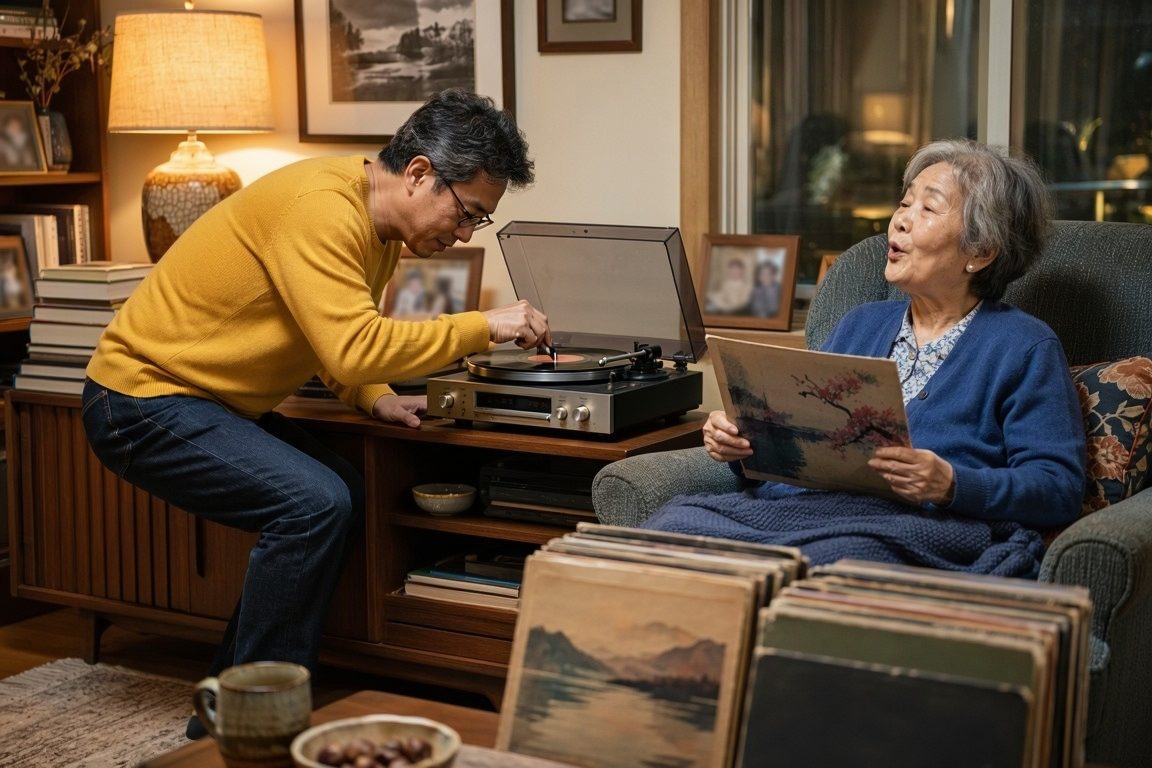
Step by step
What not to do
- Do not play music at high volume or from a genre they never liked. Loud, unfamiliar music can cause agitation or confusion.Instead, start at a low volume and gradually increase until it is comfortably audible. Always choose music from their past that you know they enjoyed.
- Do not test them by asking 'Do you remember this song?' This puts pressure on them and can cause frustration or shame if they cannot recall.Instead, simply play the song and let the memory come naturally. Your job is to create the environment, not to quiz them.
- Do not talk over the music or give constant instructions. Let the music speak first. If you are talking, you are competing with the very thing that is supposed to help. Let the song play for at least 30 seconds before you say anything.
- Do not force them to participate if they are not in the mood. If they seem tired, agitated, or uninterested, stop and try again later. Forcing engagement can create a negative association with music. Respect their cues.
- Do not use music as a 'babysitter' by putting on headphones and leaving the room. Music is most effective when it is a shared, social experience. Even if you are just sitting quietly together, your presence matters. The connection is the point.
Key points
- Music is processed across the whole brain, making it one of the last abilities to decline in dementia.
- Choose songs from the person's early life (teens to early 30s) for the strongest emotional and memory connection.
- Let the music play for at least 30 seconds before you speak, let it work its magic first.
- Use simple instruments like a tambourine or rhythm sticks to add physical engagement.
- Do not test their memory; instead, share your own memories and invite them to join in.
- Repeat songs that work, they will feel fresh each time because short-term memory is impaired.
- Adapt the activity to the stage: slow lullabies for late stage, karaoke for early stage.
- Always end with a positive closure and transition to a calm activity.
Videos
 Music and Alzheimer's DiseaseThis video explains how familiar tunes and lyrics are recognized across all stages of Alzheimer's, and shows the emotional reactions music can elicit.
 Simple dementia trick to get your loved one talking and feeling happy.This video demonstrates a concrete technique for using music to spark conversation and joy, with real examples of how to invite participation.
 Top 5 Indoor Activities for Seniors with Dementia (For Free)This video includes music-based activities like singing and dancing, and shows how to use rhythm instruments to engage a person with dementia.
 How to keep a dementia patient busyThis video offers practical tips for using music as a calming and engaging activity, including how to set up a listening environment.
2 more videos
 Grandpa, Do you Know who I am? (Dementia Tips)This video discusses how music can help when a person does not recognize you, and how to use it as a bridge for connection.
 The Baffled Brain: Demystifying Dementia Episode 27 June 5 ,2021This video covers the science behind music's effect on the brain in dementia, and offers caregiver strategies for using music therapeutically.
Practical tools
6
The 'Memory Playlist'
Create a playlist of 10-15 songs from their early life. Use a streaming service like Spotify or Apple Music, or burn a CD. Include songs from their teen years, wedding, and early parenthood. Label the playlist with their name and a date. Play it during calm times of day, like after lunch or before bed. You can also use a simple MP3 player with large buttons for them to operate themselves if they are able.
Simple Rhythm Instruments
Keep a small basket with a tambourine, a pair of rhythm sticks, a small bell, or a shaker egg. These are inexpensive and easy to hold. Introduce them after the first verse of a song. Demonstrate how to shake or tap. The physical sensation of making sound adds a layer of engagement and can be very satisfying. For someone in late stages, even just holding the instrument can be comforting.
The 'Sing-Along' Script
Have a few go-to phrases ready: 'Let's listen to this one together.' 'I love this part, here it comes.' 'You used to sing this all the time.' 'That was beautiful.' 'Do you want to play along with me?' These phrases are warm, inviting, and do not demand a correct answer. Practice them so they feel natural.
The 'Music and Memory' Photo Pairing
Before playing a song, show them a photo from the same era, a wedding photo, a picture of them with their first car, a family holiday. Say, 'Look at this picture. I remember you telling me about this trip. Let's listen to a song from that time.' The visual cue can help anchor the music in a specific memory, making the conversation richer.
The 'Quiet Listening' Setup
Create a cozy corner with a comfortable chair, a small table for a drink, and a device for playing music. Use headphones if they are easily distracted, but only if they tolerate them. Some people find headphones isolating. If using headphones, choose a pair with good sound quality and a comfortable fit. Always test the volume yourself first.
The 'Dance Together' Moment
If they are able to stand or walk, invite them to dance with you. Hold their hand and gently sway. If they are in a wheelchair, you can dance in front of them, holding their hands and moving in time. The physical connection and movement can be profoundly joyful. I have seen people come alive with dancing, even getting out of a wheelchair for a short time.
Different situations
Late-stage dementia (bedbound or minimally verbal)
Focus on very slow, familiar songs like lullabies or hymns. Do not expect a verbal response. Watch for small signs: a change in breathing, a slight smile, a tear, or a hand movement. Hum softly near their ear. Use gentle touch on their hand or shoulder while the music plays. The goal is comfort and connection, not conversation. Singing can also help with vocalization and reduce aspiration risk.
Early-stage dementia (still verbal and aware)
Use music as a springboard for deeper conversation. After the song, ask open-ended questions: 'What do you remember about that time in your life?' 'Who did you used to listen to this with?' Share your own memories. You can also try karaoke-style singing where you both sing along to the lyrics on a screen. This can be a fun, creative activity that builds confidence.
Lewy body dementia (with visual hallucinations or movement issues)
Be cautious with music that has strong emotional associations, as it may trigger anxiety or agitation. Start with instrumental versions of familiar songs. Avoid music with complex rhythms that might be disorienting. If they have parkinsonism, gentle swaying to a slow waltz can help with movement. Always have a calm, quiet backup activity ready if the music causes distress.
In a care facility (group setting)
Choose songs that are likely to be familiar to most residents, such as standards from the 1940s-1960s or hymns. Use a portable speaker. Invite everyone to clap or play simple instruments. Be mindful of residents who may be overstimulated, offer a quiet corner for those who need it. Coordinate with staff to ensure the activity fits into the daily routine.
As a spouse vs. adult child
As a spouse, you have a lifetime of shared musical memories. Use songs from your courtship, wedding, and early marriage. Say things like, 'This was our song when we were dating.' As an adult child, you may need to research their past. Ask other relatives or look at old records. Use phrases like, 'Mom told me you loved this song when you were my age.' The key is to connect the music to their personal history, not yours.
For the doctor
4
- If the person with dementia has a history of seizures, discuss whether music with strong rhythmic beats could trigger a seizure. Some types of epilepsy are photosensitive or musicogenic.
- If the person has hearing aids, discuss with their audiologist whether the music volume or type of headphones is appropriate. Improper use can cause feedback or discomfort.
- If the person has a history of severe anxiety or PTSD, discuss whether certain songs might trigger traumatic memories. A music therapist can help create a safe playlist.
- If the person is on medications that affect heart rate or blood pressure, discuss whether dancing or vigorous movement is safe. Always monitor for signs of dizziness or shortness of breath.