Step by step
What not to do
- Do not correct or scold them if they forget to brush or do it wrong. Correcting a person with dementia often increases anxiety and resistance.Instead, gently redirect: 'Let's do it together' or 'I noticed your toothbrush is dry, let me help you get started.'
- Do not use a hard-bristled toothbrush or brush aggressively. Dementia can make gums more sensitive, and harsh brushing can cause pain and bleeding, leading to more refusal. Always use a soft brush and gentle pressure.
- Do not try to brush their teeth while they are lying flat on their back. This increases the risk of choking or aspiration. Keep them upright, sitting in a chair or standing at the sink, and tilt their head slightly forward so any excess saliva or toothpaste can drip out.
- Do not force the mouth open or hold their head still. This feels threatening and can trigger a fight-or-flight response.Instead, use the pre-mouth-care routine (sip of water, empty spoon) to encourage them to open naturally. If they bite down, stop, wait, and try again later.
- Do not skip dental care because it is hard. Poor oral hygiene can lead to painful infections, difficulty eating, and even pneumonia from bacteria entering the lungs. Even a quick wipe with a damp cloth is better than nothing. Consistency matters more than perfection.
- Do not assume they cannot feel pain. People with dementia may not be able to tell you their mouth hurts, but they may show it through behavior changes, refusing to eat, pulling away, moaning, or becoming agitated. Check their mouth regularly for red spots, swelling, or broken teeth.
Key points
- Dental care must be adapted to the person's current abilities, never assume they can do it alone, but also do not take over completely if they can still participate.
- Use a calm, consistent routine and gentle techniques (hand-under-hand, soft brush, baking-soda toothpaste) to reduce resistance and fear.
- In late stages, switch to mouth swabs or moistened gauze; focus on comfort and preventing infections rather than perfect brushing.
- Never force the mouth open or use harsh brushes, this can cause pain and increase refusal.
- Check the mouth regularly for signs of pain, infection, or broken teeth, especially if the person cannot communicate.
- Consult with a dentist experienced in dementia care and discuss any swallowing or medication concerns with the doctor.
Videos
 Oral Care Tips for Loved Ones with DementiaThis video demonstrates gentle, step-by-step techniques for brushing and mouth care, including how to position yourself and use the hand-under-hand method.
 Oral Hygiene Concerns and Options for GEMS States | Teepa's ClipsTeepa Snow explains how to match your approach to the person's cognitive state (GEMS) and offers practical alternatives like mouth swabs and flavored pastes.
 How to make a daily dementia routine for homeLearn how to build oral care into a predictable daily schedule, which reduces anxiety and increases cooperation.
Practical tools
6
The 'hand-under-hand' technique
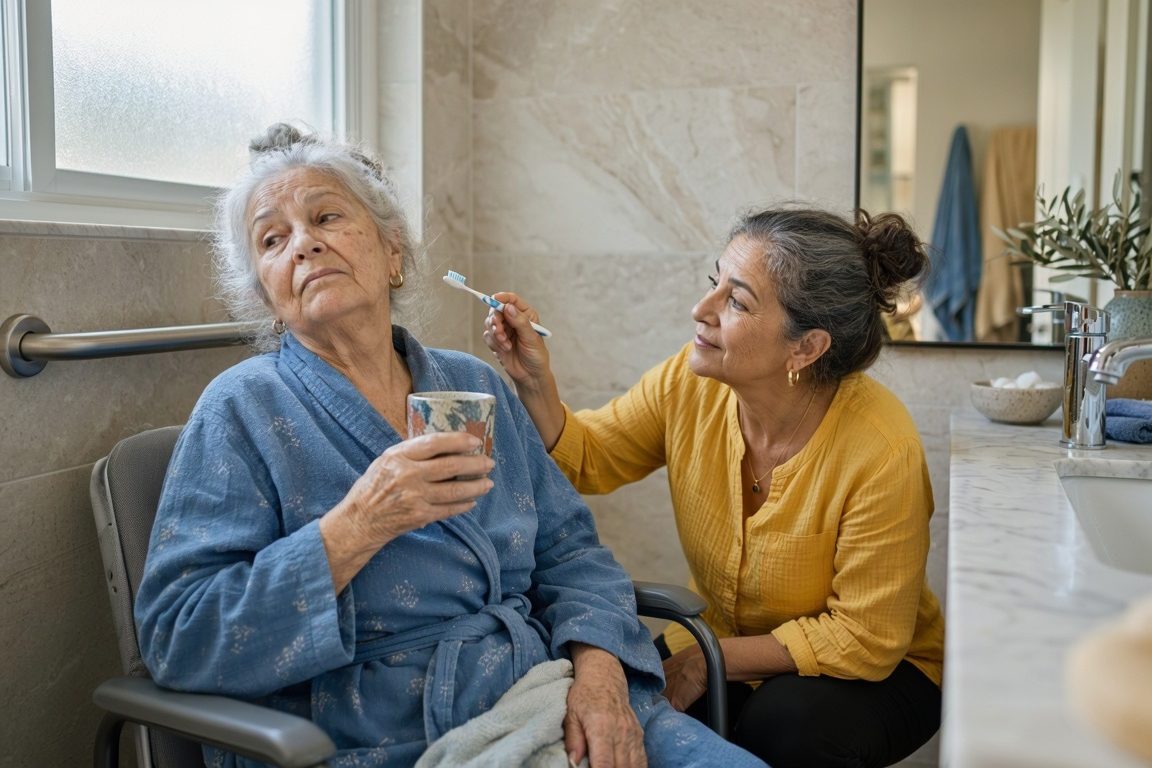
Instead of taking the toothbrush away, place your hand over their hand while they hold the brush. This gives them a sense of control and reduces the feeling of being overpowered. You can guide the brush gently while they feel they are doing it themselves. This is especially useful in middle stages.
Baking-soda toothpaste or plain water
If your loved one tends to swallow toothpaste, switch to a baking-soda-based toothpaste (safe to swallow) or simply use water. Mint flavor can be overwhelming; try unflavored or mild flavors. Test a small amount first to see if they tolerate it.
Mouth swabs (toothettes) and saliva substitutes
For late stages, keep a pack of disposable mouth swabs (small sponge on a stick) in the bathroom. Dip them in water or a saliva substitute spray. These are gentle and less invasive than a toothbrush. Use them to wipe the gums, tongue, and cheeks. Saliva substitutes (spray or gel) help with dry mouth and can be found at most pharmacies.
The 'two-minute song' timer
Play a favorite short song (about two minutes) while brushing. This sets a clear endpoint and can make the task feel less like an ordeal. Sing along or hum to create a calm, familiar atmosphere. It also helps you keep track of brushing time.
A visual step-by-step checklist
Create a simple picture chart showing each step:
Laminate it and keep it near the sink. Point to each picture as you go. This reduces confusion and gives a sense of accomplishment as each step is checked off.
A calm, consistent routine
Set the same time each day for oral care, for example, after breakfast and after the last meal or liquid medication of the day. Consistency reduces anxiety because the brain learns to expect the activity. Pair it with a comforting ritual, like a warm washcloth on the face first.
Different situations
Lewy body dementia (LBD)
People with LBD often have more sensitivity to textures and tastes, and may experience sudden changes in ability from day to day. Use unflavored toothpaste or water. Be prepared to switch to mouth swabs on bad days. Also, LBD can cause swallowing difficulties earlier, so always keep the person upright and use minimal liquid. Consult their doctor before using any mouthwash or saliva substitute.
Late-stage dementia (bedbound or minimal response)
Focus on comfort and prevention of infection. Use moistened gauze wrapped around your finger or mouth swabs. Do not attempt to brush if they are unable to cooperate, gentle wiping is sufficient. Check their mouth daily for sores or redness. If they have dentures, remove them at night and clean their gums. Keep a water spray bottle nearby to moisten their mouth. Discuss with their doctor whether a dental referral is needed.
Spouse vs. adult child caregiver
A spouse may feel more comfortable with intimate care but may also struggle with role reversal. An adult child may feel awkward or embarrassed. Both can use the 'hand-under-hand' technique to maintain dignity. If the care recipient is resistant, try having a different family member or a home health aide assist with oral care. Sometimes a neutral person reduces power struggles.
Living in a facility (nursing home or assisted living)
Advocate for your loved one's oral care to be included in their daily care plan. Ask the staff to use the same techniques you use at home. Provide their preferred toothpaste and toothbrush. Request that a dental professional visit the facility regularly. If you notice signs of neglect (bad breath, red gums, food stuck in teeth), speak up immediately.
Medicaid or limited resources
Many community health centers offer sliding-scale dental care. Some dental schools provide low-cost cleanings and exams. Look for a 'special needs dentist' in your area who is experienced with dementia. If you cannot afford a dentist, focus on daily home care with basic supplies: a soft toothbrush, baking soda, and water. Mouth swabs can be reused if washed thoroughly (but replace them regularly).
For the doctor
5
- Ask your doctor or dentist if a prescription-strength fluoride toothpaste or gel is appropriate for your loved one, especially if they are at high risk for cavities.
- If your loved one has difficulty swallowing, ask about the safest way to use mouthwash or saliva substitutes. Some products contain alcohol or other ingredients that should not be swallowed.
- If your loved one has bleeding gums, persistent bad breath, or refuses to eat, ask their dentist to examine them for possible infections, abscesses, or ill-fitting dentures.
- If your loved one is on blood thinners, ask the dentist about precautions before any dental procedure, even a cleaning.
- If your loved one is taking medications that cause dry mouth, ask the doctor if a different medication or a saliva substitute is safe to use.