Step by step
What not to do
- Don't argue or correct if they say they haven't eaten when they have; instead, say 'I'm sorry you're still hungry' and offer a small snack without conflict.
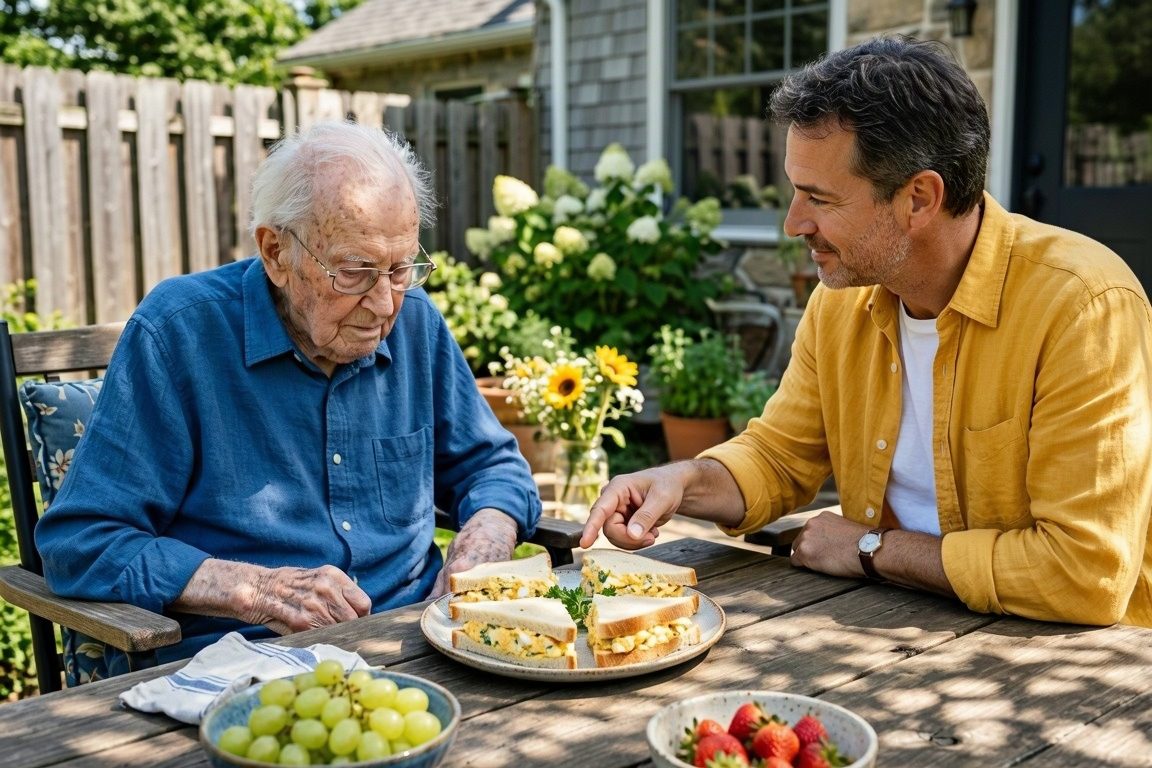
- Don't put a large, full plate in front of them; serve one or two items at a time on a small plate to avoid visual overwhelm.
- Don't force-feed, pressure, or rush; this creates a power struggle; if they refuse, stay calm, remove food, and try later.
- Don't serve food that is too hot; dementia may impair their ability to wait for it to cool, risking mouth burns and refusal.
- Don't dismiss refusal as pickiness; check for pain, fatigue, constipation, or other discomfort and consult a clinician if needed.
Key points
- Rule out physical causes first: pain, dental issues, constipation, or swallowing problems.
- Create a calm, consistent mealtime environment with minimal distractions and a simple, high-contrast plate.
- Offer small, frequent meals and finger foods to reduce overwhelm and support independence.
- Boost calories and protein by adding butter, oils, cheese, or nutritional shakes to the foods they will eat.
- Eat with them and use social connection to encourage eating without pressure.
- Be patient and flexible, what works today may not work tomorrow. Adjust and keep trying.
Videos
 Dementia Caregiving: How to Get Them to EatOffers practical, step-by-step strategies from an occupational therapist, including how to reduce distractions and use finger foods.
 Loss of Appetite in DementiaExplains the medical and cognitive reasons behind appetite loss and provides actionable fixes like using aromatherapy and exercise.
 Quick Tips: Mealtime with Dementia (Mini-Series Part 1)Short, focused tips on creating a supportive mealtime environment, including the importance of routine and consistency.
 Zinnia Caregiver Support - Eating and DementiaFeatures real stories from people with dementia about their eating challenges, emphasizing the need for a distraction-free setup and patience.
2 more videos
 The Baffled Brain Demystifying Dementia Episode 30 June 26 2021Discusses the emotional side of eating difficulties and offers compassionate communication strategies.
 Why Meal Refusal Happens with Dementia (And How to Tackle It Without a Fight)Breaks down common reasons for meal refusal and provides gentle, non-confrontational approaches to encourage eating.
Background
Why Eating Becomes Hard in Dementia
Dementia changes the brain in ways that directly affect eating. In early to moderate stages, your loved one may lose interest in food due to apathy, a common symptom where motivation fades. They might also forget that they have already eaten, leading to confusion or frustration when told otherwise. As the disease progresses, the brain struggles to coordinate the complex sequence of seeing food, choosing it, bringing it to the mouth, chewing, and swallowing. This can be exhausting and overwhelming, causing them to give up or refuse food entirely. Physical issues like ill-fitting dentures, sore gums, constipation, or tremors can also make eating painful or frustrating, so it is important to rule out these causes first.
The Role of Environment and Routine
A cluttered or distracting environment can derail a meal before it starts. People with dementia often have difficulty filtering out background noise, movement, or visual clutter. Even something as small as a patterned tablecloth or salt shakers that look like strawberries can confuse or distract them. A consistent routine, eating at the same time, in the same place, with the same steps (like saying grace or setting the table the same way), provides a sense of safety and predictability that reduces anxiety and makes eating more automatic. The goal is to create a calm, focused space where the only task is to eat.
Why Small Portions and Frequent Meals Work
Large plates of food can be visually overwhelming for someone with dementia. Their brain may not know where to start, leading to refusal or frustration. Serving smaller portions, or even one food item at a time, reduces this overwhelm. Additionally, eating multiple small meals throughout the day (five or six instead of three) works with the fatigue that often accompanies dementia. A person may have the energy for a few bites every couple of hours but not for a full meal. This approach also helps maintain blood sugar and calorie intake without pressure.
Practical tools
4
Red Plate Strategy
Use a solid red plate for meals; red provides high contrast against most foods, aiding visual recognition. Avoid patterned plates or placemats that can distract or confuse.
Finger Food Tray
Prepare a tray with easy-to-pick-up foods (
); offer throughout the day for grazing, especially when utensils are no longer used.
Calorie-Boosting Smoothie
Blend 1 cup whole milk or yogurt, 1 banana, 2 tbsp peanut butter, 1 scoop vanilla protein powder or Ensure powder, and a handful of spinach; serve in a fun cup with a straw, or freeze into popsicles.
Adaptive Utensils Set
Keep utensils with
; these extend independent eating when fine motor skills decline.
Different situations
Early to moderate stage (still able to use utensils and communicate)
Focus on routine and social eating. Eat together, offer choices, and use engaging scents. They may still enjoy going out to a restaurant as a treat. Encourage light exercise like short walks to stimulate appetite. Monitor for weight gain, as some may overeat in early stages.
Moderate to severe stage (difficulty with utensils, swallowing concerns)
Switch entirely to finger foods and soft, easy-to-swallow textures. Puree foods if needed. Serve small portions frequently. Use a red plate for contrast. Be prepared to assist with feeding if necessary, but always let them try first. Monitor for choking and discuss swallowing evaluations with your clinician.
Lewy body dementia or Parkinson's disease dementia
These types often involve tremors and rigidity, making utensil use very difficult. Prioritize finger foods and adaptive utensils with larger handles. Be aware of fluctuations in alertness, offer food when they are most awake. Also watch for visual hallucinations that might distract from eating; keep the environment simple and calm.
Spouse caregiver vs. adult child caregiver
Spouses may find it emotionally harder to shift from partner to feeder. It can help to frame feeding as an act of love and to take breaks. Adult children may need to navigate guilt and role reversal. Both should seek support groups. If the person with dementia resists eating from a spouse, an adult child or friend might try feeding them instead.
If the person lives alone (early stage)
Set up a meal delivery service or have family drop by during mealtimes. Use a measured water bottle with fun designs to remind them to drink. Post a simple visual schedule on the fridge: pictures of a plate, a glass, and a clock showing meal times. Consider a senior center or adult day program that provides meals and social interaction.
Common questions
4
How can I stimulate appetite in residents who need hand-feeding?
Sit beside them, make gentle eye contact, and offer one small bite at a time while speaking softly about the food's warmth or taste to create a calm, social moment. Try warming the food slightly to release its aroma, which can naturally spark interest and appetite.
How can I encourage my loved one to use a cane or walker without resistance?
Instead of asking directly, place the cane or walker near their favorite chair and say something like, 'This will help us walk to the garden together,' linking it to a pleasant activity. Model using it yourself playfully, and celebrate small steps with a warm smile or a touch on the hand to reduce resistance.
How should I handle loss of appetite and fatigue?
Offer very small, calorie-dense snacks like a spoonful of peanut butter, a piece of cheese, or a mini smoothie every couple of hours rather than pushing full meals. When they are tired, let them rest first and try again during their most alert time of day, praising any bite they take.
How can I adapt food and utensils to encourage eating?
Use a brightly colored plate that contrasts with the food, such as a red plate for white mashed potatoes, and serve finger foods like chicken strips or steamed vegetable sticks to make self-feeding easier without utensils. If they used to enjoy a specific spoon or cup, offer that familiar item to trigger a sense of routine and comfort.
For the doctor
6
- If your loved one has significant weight loss (more than 5% of body weight in a month), discuss with their doctor about possible medical causes and nutritional supplements.
- If you suspect swallowing problems (coughing, choking, or pocketing food in cheeks), ask for a swallowing evaluation by a speech-language pathologist.
- If constipation is a recurring issue, ask about stool softeners or dietary changes that are safe for dementia patients.
- If your loved one has diabetes or other conditions that require specific diets, ask how to balance calorie needs with medical restrictions.
- If they are on medications that may affect appetite (like cholinesterase inhibitors), ask about timing or dosage adjustments.
- If they are refusing all food and fluids for more than 24 hours, seek immediate medical advice.