Step by step
What not to do
- Don't overwhelm with too many choices; offer only two options.
- Don't use dark or patterned rugs, they can be mistaken for holes or obstacles. Use solid, contrasting colors instead.
- Don't assume they can't help; even in later stages they can match forks, peel a carrot, or fold a towel.
- Don't push through resistance without checking for causes like stiffness, soreness, fear of falling, or cold room temperature.
Key points
- Start with low-cost, DIY solutions like contrasting tape and motion-sensing lights before buying expensive equipment.
- Involve the person in tasks as much as possible, even small contributions preserve dignity and reduce anxiety.
- Limit choices (e.g., two shirts instead of a closet full) to reduce overwhelm and decision fatigue.
- Use visual cues like bright tape on steps, light switches, and toilet seats to improve safety and independence.
- Create a personalized fidget kit based on the person's past hobbies to provide calming, meaningful activity.
- Always prioritize safety with grab bars, raised toilet seats, and non-slip mats, falls are a leading cause of injury.
Videos
 How Hoarding Can Impact Decision MakingThis video helps you understand why your loved one may resist letting go of items, which is useful when introducing new adaptive tools or decluttering the home.
 7 Ways to Reduce Sundowning Symptoms in Dementia PatientsSundowning can make evening tasks like bathing and dressing harder. This video offers practical strategies to calm the environment and reduce agitation.
 The Caregiver's Journal Lance A. Slatton with Cindy -PT & Christina -ST 'Navigating Care' Chapter 4This video features physical and speech therapists discussing adaptive tools and techniques for daily tasks, including bathing and dressing.
 Assisting with Activities of Daily Living in Dementia CareA step-by-step guide on how to assist with ADLs while preserving the person's independence, including specific tool recommendations.
2 more videos
 Posterior Cortical Atrophy Lecture Series with Karen HookstadtThis lecture covers visual-spatial challenges common in PCA, which is helpful for selecting contrast-based tools like tape and night lights.
 Activities For Dementia Patients At Home (Module 3)This module provides ideas for meaningful activities and DIY fidget kits that can be adapted for different stages of dementia.
Background
Why Daily Tasks Become Harder
As dementia progresses, the brain struggles with sequencing, memory, and visual-spatial skills. A task like dressing or bathing, once automatic, now requires conscious effort. Your loved one may feel frustrated, confused, or even resistant because they can't remember the steps or see the items clearly. This isn't about being difficult, it's about the brain's changing ability to process information. Simple tools can bridge that gap by reducing choices, adding visual cues, and making movements easier.
The Role of Adaptive Tools in Preserving Independence
Adaptive tools aren't just about making tasks easier for you, they're about giving your loved back a sense of control. A mobility towel that helps them dry their own back, a raised toilet seat that lets them stand without help, or a cutting board that allows one-handed cooking can restore a piece of their identity. These tools work by simplifying the environment and reducing the cognitive load, so the person can focus on one step at a time. As one expert put it, 'If you can't do it, adapt it.'
Low-Cost and DIY Options Are Often Best
You don't need to spend a fortune on specialized equipment. Many effective tools are already in your home or can be made for a few dollars. For example, bright red duct tape on stairs or light switches provides high-contrast visual cues. A simple toolbox filled with familiar objects, like work gloves, pipe holders, or old electrical parts, can become a 'fidget kit' for someone who used to be handy. The key is to know the person's history and interests, then adapt what you have to meet their current needs.
Practical tools
7
Mobility Towel
A long bath towel with a small weight (e.g., pouch of dry rice) sewn into one corner. The user slings it over their shoulder to dry their own back and feet independently.
Contrasting Tape (Fluorescent or Bright Red)
Applied to step edges, light switches, microwave buttons, and stove dials to provide high-contrast visual cues. Inexpensive and removable.
Motion-Sensing Night Lights
Flat plug-in lights that turn on automatically in hallways, bathrooms, and bedrooms. Eliminate the need to find switches in the dark and reduce fall risk.
Raised Toilet Seat with Contrasting Cover
A toilet seat 2–4 inches higher than standard, paired with a brightly colored cover or contrasting rug. Eases sitting/standing and improves visibility.
Adaptive Clothing with Velcro or Magnets
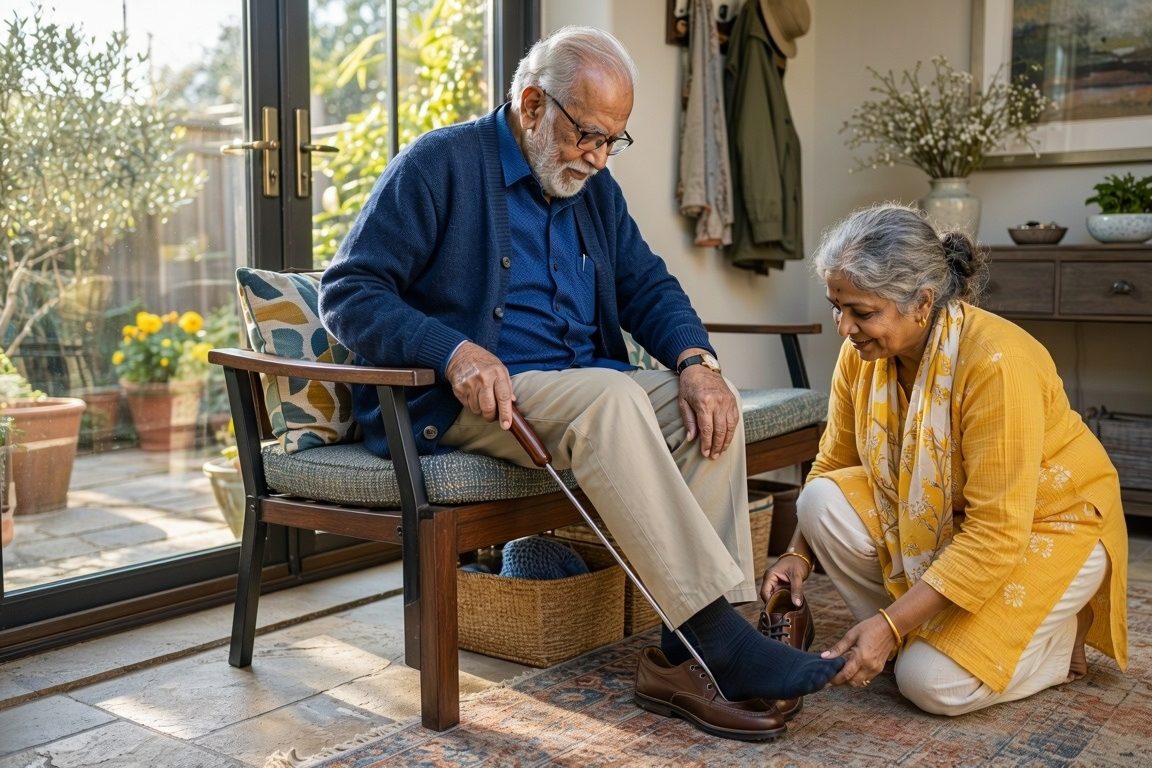
Shirts, pants, and shoes with Velcro, magnetic, or snap closures instead of buttons, zippers, or laces, enabling easier independent dressing.
Fidget Kit (DIY Toolbox or Basket)
A container filled with objects from the person's past hobbies (e.g., work gloves and screws for a handyman; small pots and soil for a gardener) for calming, self-directed activity.
Grab Bars
Sturdy wall-mounted bars beside the toilet and in the shower for gripping during sitting, standing, or stepping. Essential for fall prevention; install into wall studs.
Different situations
Early-stage Alzheimer's vs. late-stage
In early stages, focus on tools that preserve independence, like a hemi cutting board or a simple checklist for morning routine. In late stages, prioritize safety and comfort: use a bath lift chair, mobility towel, and adaptive clothing. The person may need more hands-on help, but still include them in small steps.
Lewy body dementia
People with Lewy body dementia often have visual hallucinations and fluctuating attention. Use high-contrast tape and avoid patterns that could be misinterpreted. Motion-sensing lights are especially helpful because they reduce the need to find switches. Avoid bath lifts with complex controls, stick to simple, one-button operation.
Spouse caregiver vs. adult child caregiver
A spouse may feel more comfortable with intimate tasks like bathing, but may also struggle with role reversal. Use tools that allow the person to do as much as possible themselves (like a mobility towel). An adult child may need to set clearer boundaries, use grab bars and raised toilet seats to reduce physical strain on the caregiver.
Living in a facility vs. at home
In a facility, you may have less control over the environment. Focus on portable tools: a fidget kit, adaptive clothing, and a mobility towel. Discuss with staff about using contrasting tape on the person's door or bed to help them find their room. At home, you have more freedom to install grab bars, motion lights, and cabinet locks.
Medicaid or limited budget
Many adaptive tools can be made from household items. Use duct tape for contrast, a towel with a sewn-in weight for drying, and a sturdy plastic stool as a shower seat. Check with your local Alzheimer's Association or Area Agency on Aging for free or low-cost equipment loan programs. You don't need to buy everything new.
For the doctor
4
- Before installing any bath lift or chair lift, ask your doctor or occupational therapist if it's appropriate for your loved one's specific mobility and balance needs.
- If your loved one has difficulty swallowing, consult a speech therapist before using any tools that involve drinking or eating (like special cups or hydration aids).
- For any medication-related tools (like pill organizers or automatic dispensers), discuss with the pharmacist to ensure the device is safe and the dosing schedule is correct.
- If you're considering a stove shut-off device or other safety equipment for cooking, ask the occupational therapist about the best model for your loved one's cognitive level.