Step by step
What not to do
- Don't leave the person in a dim or dark room during the day.
- Don't use bright, cool-white lights or screens in the evening.
- Don't suddenly flood an agitated person with bright light; add light gradually.
- Don't ignore shadows cast by furniture or the setting sun.
- Don't start melatonin or supplements without consulting the doctor first.
- Don't assume behavior is purely dementia-related without checking for pain, hunger, thirst, or infection.
Key points
- Morning light exposure (natural or via a light box) for 10–20 minutes within 15 minutes of waking is the most effective way to reset the circadian rhythm and reduce sundowning.
- Keep the home bright and active during the day; gradually dim and warm the lighting in the late afternoon to signal the transition to evening.
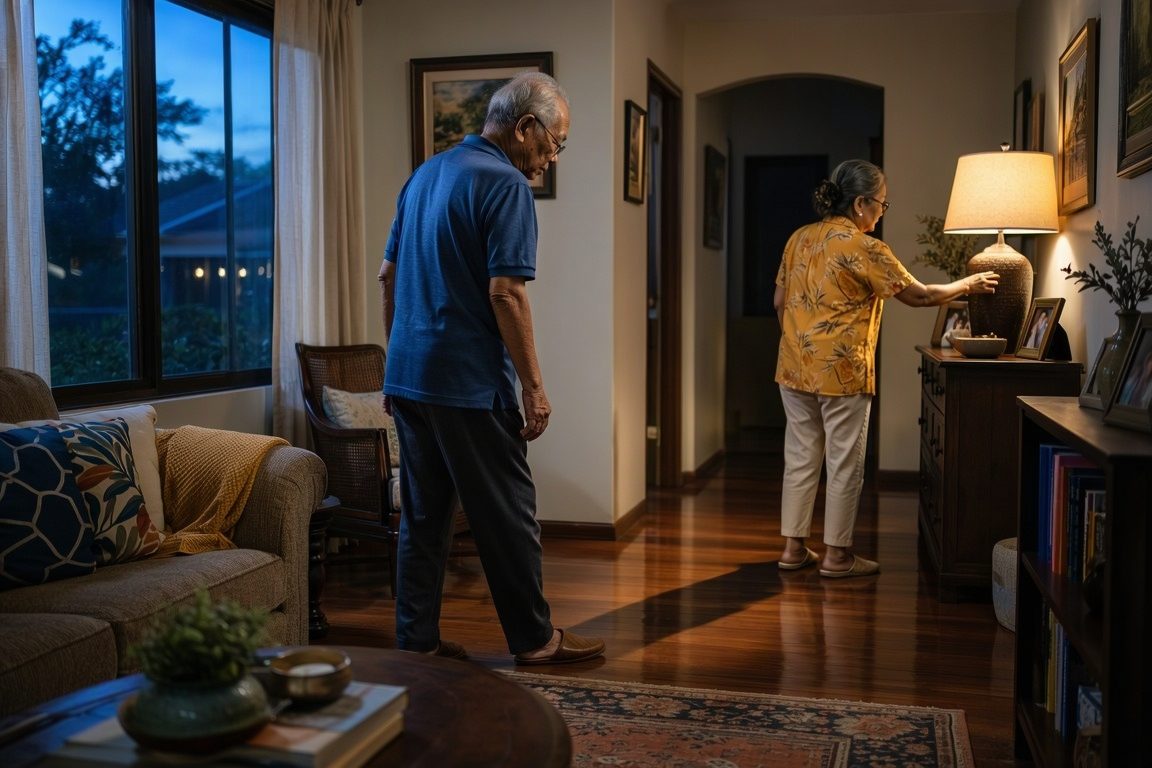
- Eliminate shadows and glare in the late afternoon, they can be frightening and disorienting to a person with dementia.
- Create a consistent, calming bedtime routine that starts an hour before sleep: no screens, dim lights, quiet activity, and a cool, dark bedroom.
- Limit daytime naps to one hour and avoid caffeine after noon to protect nighttime sleep quality.
- Always rule out physical causes (pain, infection, hunger) before assuming the behavior is purely sundowning.
Videos
 Can Light Exposure Reduce Sundowning In Dementia? - Dementia Help HubExplains the science of how bright light therapy works and gives practical tips for morning light exposure.
 Sundowning In Dementia: What Role Does Light Play? - Dementia Help HubDeep dive into how the retina and brain process light in dementia, and why shadows and glare trigger confusion.
 Dementia and Sundowning: Tips to Help Manage SundowningOffers a full toolkit of non-drug strategies including lighting, routine, and environmental adjustments.
 Coping with Sundowning & Sleep Issues as a Dementia CaregiverAddresses caregiver stress and how your own mood affects sundowning, plus practical sleep hygiene tips.
2 more videos


Background
What Is Sundowning and Why Does Light Matter?
Sundowning is not a disease itself but a cluster of symptoms, confusion, agitation, pacing, anxiety, even hallucinations, that tend to worsen in the late afternoon and evening. It affects many people with dementia, especially those with Alzheimer's disease. The root cause is a disruption in the body's internal clock, called the circadian rhythm, which normally uses light to tell the brain when to be awake and when to sleep. In dementia, the retina and the brain pathways that process light become damaged, so the clock loses its anchor. Without that anchor, the person's brain struggles to interpret the fading daylight, and confusion or fear can spike.
How Light Exposure Affects the Brain and Behavior
Natural daylight, especially in the morning, is the strongest signal for setting the circadian rhythm. When a person with dementia gets 10 to 20 minutes of sunlight soon after waking, it tells the brain to suppress melatonin (the sleep hormone) during the day and to release it at the right time at night. This helps consolidate nighttime sleep and reduces daytime napping, which in turn lessens sundowning. Conversely, sitting in dim or dark rooms all day gives the brain no time-of-day cues, making the internal clock drift. In the evening, harsh overhead lights, flickering bulbs, or deep shadows from a setting sun can be misinterpreted by a confused brain as threatening or disorienting, triggering agitation. Keeping lighting even, warm, and shadow-free in the late afternoon is just as important as flooding the morning with brightness.
The Role of the Environment and Other Triggers
Lighting does not work in isolation. A cluttered room, loud noises, hunger, pain, or an uncomfortable temperature can all amplify sundowning. When a person cannot make sense of their surroundings, shadows on the wall or glare from a window can become frightening. Even a urinary tract infection or sleep apnea can suddenly worsen sundowning, so it is always wise to rule out medical causes. The goal is to create a calm, predictable sensory environment: bright and active in the morning, gradually dimmer and quieter as the day goes on, with consistent routines that signal what is coming next.
Practical tools
4
Morning Light Exposure Checklist
Evening Wind-Down Routine Script
Say in a calm voice: 'It is getting dark now, time to get cozy. Let's turn on the soft lamp here and close the curtains. Would you like some warm milk or tea?' Use the same words every night.
Light Box (10,000 lux cool white)
Sundowning Log
Daily grid tracking: date, symptom start time, weather/lighting, activities, meals, naps, caffeine, what helped, and episode duration. Review after one week for patterns.
Different situations
Lewy body dementia or Parkinson's disease dementia
People with Lewy body dementia are extremely sensitive to light and may have visual hallucinations that worsen with shadows or glare. Use very soft, even lighting and avoid any flickering bulbs. Morning light exposure should be gentle, start with 5–10 minutes and increase slowly. These individuals also have a high sensitivity to melatonin supplements, so only use under close medical supervision.
Late-stage dementia (bedridden or very limited mobility)
If the person cannot go outside or sit up, open the blinds and position the bed so they face the window in the morning. Use a light box placed on a bedside table at the correct angle. Even if they are asleep, the light entering the room helps cue the brain. In the evening, use a dim nightlight with a warm tone to prevent falls, but keep the room otherwise dark. Gentle hand massage or soft music can replace active routines.
Spouse caregiver vs. adult child caregiver
Spouse caregivers often feel they 'should' be able to handle everything alone. It is important to ask for help with morning routines, maybe a neighbor or friend can come by to help get the person outside for 10 minutes. Adult children may need to negotiate with a resistant parent who does not want to change habits. Use gentle persuasion: 'Mom, let's just sit on the porch for a few minutes, the sun feels nice.' Frame it as something you want to do together.
In a memory care facility
Advocate for the facility to use circadian lighting systems that shift from cool white in the morning to warm amber in the evening. Ask staff to ensure your loved one is taken to a bright common area in the morning and to close blinds in the late afternoon. You can also bring a small lamp with a warm bulb for their room and a light box for morning visits. Share this article with the care team.
Low-income or Medicaid-funded settings
You do not need expensive equipment. Open curtains and use natural light as much as possible. A simple 10,000 lux light box can be purchased for around $30–50. Use warm-toned LED bulbs (2700K) which are inexpensive and widely available. Blackout curtains can be made from dark sheets or blankets. The most important tool is your consistent routine, it costs nothing.
For the doctor
5
- Ask the doctor if a low dose of melatonin (0.5–3 mg) might be safe for your loved one, especially if they have kidney disease or take blood thinners.
- If sundowning comes on suddenly or worsens quickly, ask the doctor to check for a urinary tract infection, sleep apnea, or medication side effects.
- Discuss whether a light box is safe if your loved one has macular degeneration, cataracts, or takes medications that increase light sensitivity (e.g., certain antibiotics, diuretics, or antipsychotics).
- Ask about prescription sleep aids or anti-anxiety medications only as a short-term bridge while you establish non-drug routines, never start or stop such medications without medical guidance.
- If hallucinations are part of sundowning, ask the doctor whether they might be related to Lewy body dementia and what lighting adjustments are safest.