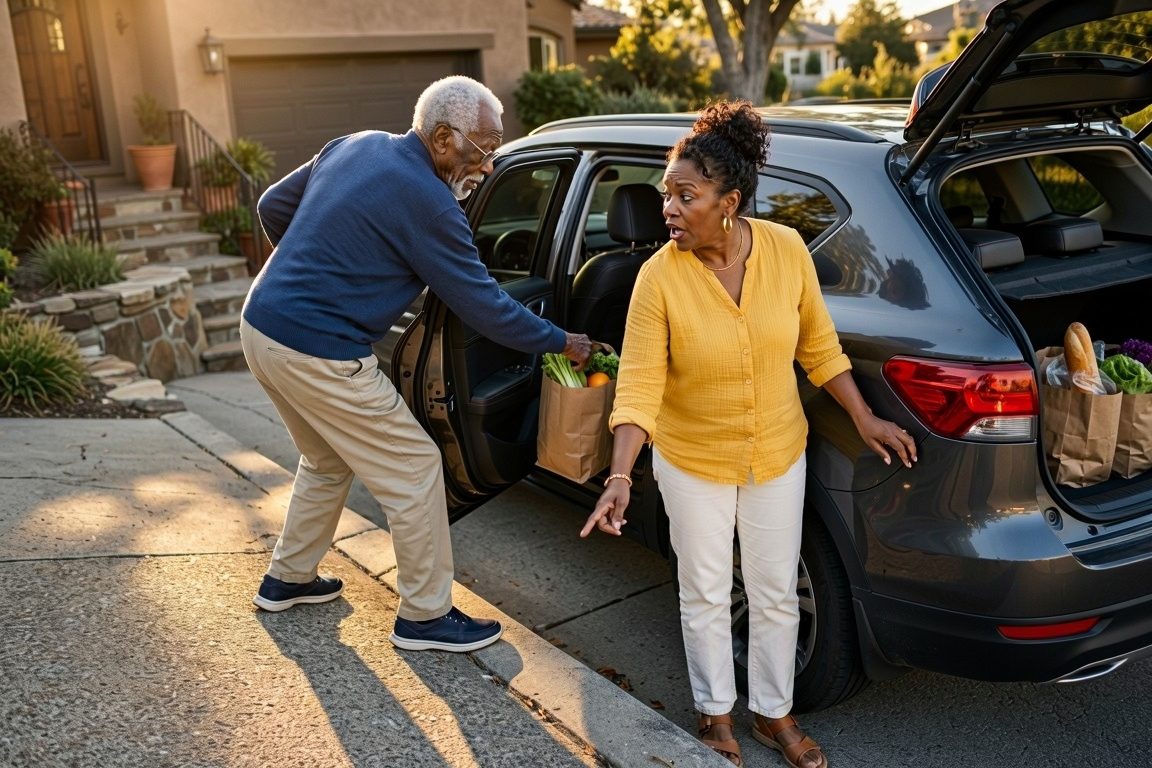
Step by step
What not to do
- Do not assume the person will ask for help when they need it. They may not recognize they are unsteady or that standing up is risky.Instead, proactively offer assistance and supervise during transitions.
- Do not rush the person when they are standing or walking. Hurrying can cause them to lose balance or become anxious. Allow plenty of time and use a calm, reassuring tone.
- Do not use complex instructions like, ‘Mom, I need you to roll over to the edge of the bed so I can help you sit up.’ This overloads the brain.Instead, say, ‘Roll toward me,’ and then, ‘Now sit up,’ one step at a time.
- Do not leave the person alone in a new or confusing environment, such as a shopping mall or a friend’s home. Disorientation increases fall risk. Stay with them or have a companion nearby.
- Do not ignore signs of orthostatic hypotension, such as dizziness when standing up quickly. Encourage the person to sit for a moment before standing, and ensure they are well-hydrated. Discuss any concerns with a clinician.
- Do not place area rugs or mats in high-traffic areas, even if they are non-slip. They can still be a tripping hazard. Remove them entirely for safety.
Key points
- Falls are a leading cause of hospitalization in people with dementia, but many can be prevented with proactive measures.
- The person may not recognize hazards or ask for help due to brain changes, do not rely on their judgment.
- Remove clutter, improve lighting, and place frequently used items within reach to reduce the need to stand and reach.
- Use simple, one-step commands when helping the person stand or walk, and always supervise during transitions.
- Grab bars, non-slip mats, and proper footwear are low-cost tools that significantly reduce fall risk.
- Personalize strategies based on the type and stage of dementia, the caregiver’s physical ability, and the living situation.
Videos
 Steady Steps: Practical Strategies for Managing Falls in DementiaThis video offers practical, step-by-step strategies for preventing falls, including environmental modifications and communication techniques.
 7 Reasons People With Dementia Fall (and how to help)Explains the specific reasons people with dementia fall, such as loss of safety awareness and postural instability, and provides actionable help.
 What Are Common Safety Risks For Dementia Patients? - Dementia Help HubCovers common safety risks including falls, and offers simple home modifications to reduce them.
 How Do You Ensure Home Safety For Dementia Patients? - Dementia Help HubFocuses on home safety modifications like grab bars and non-slip mats, directly relevant to fall prevention.
2 more videos
 What is Orthostatic Light Headedness? Dr. Khushboo VermaExplains orthostatic hypotension, a common cause of falls in dementia, and how to manage it with hydration and slow standing.
 Providing Support When Mobility Rules Are Not Regarded | Teepa's ClipsTeepa Snow discusses how to support someone with dementia who cannot follow mobility rules, emphasizing gentle guidance and environmental changes.
Practical tools
6
Simple Verbal Cues for Standing
When helping someone stand, use short, clear phrases. For example, say, ‘Put your feet flat on the floor,’ then, ‘Push up with your hands,’ and finally, ‘Stand up slowly.’ Avoid saying, ‘Let’s get up now,’ which is too vague. Practice these cues so they become routine.
Gait Belt
A gait belt is a padded belt that goes around the person’s waist, giving you a secure handhold to guide them when walking or standing. It provides stability and reduces the risk of you pulling on their arms, which can cause injury. Always use it with proper training from a therapist.
Nightlights and Motion-Sensor Lights
Place nightlights in the bedroom, bathroom, and hallway. Motion-sensor lights that turn on automatically when someone stands up are especially helpful. This reduces the chance of the person walking in the dark and tripping over unseen objects.
Non-Slip Footwear
Encourage the person to wear shoes with rubber soles, even indoors. Look for shoes that are easy to put on, like slip-ons with elastic laces. Avoid slippers or bare feet, which offer no traction. If they resist, try a pair of comfortable, non-slip socks with grip pads on the bottom.
Home Safety Checklist
Create a simple checklist to review weekly:
This helps you stay proactive and catch hazards before they cause a fall.
Hydration Reminder System
Dehydration can cause dizziness and increase fall risk. Set a timer or use a water bottle with marked times to remind the person to drink small amounts throughout the day. Aim for at least 6-8 cups of water daily, unless a clinician advises otherwise.
Different situations
Lewy body dementia
People with Lewy body dementia often have fluctuating cognition and visual hallucinations, which can increase confusion and fall risk. They may also have Parkinson-like symptoms such as stiffness and shuffling gait. Use extra caution with lighting to reduce shadows that might trigger hallucinations. Ensure the person is supervised during transitions, as they may suddenly become unsteady. Discuss with a clinician about medications that might affect balance.
Late-stage dementia
In late stages, the person may be bedbound or need full assistance to stand. Focus on preventing falls from bed by using bed rails (with proper padding to avoid entrapment) and keeping the bed at a low height. Use a transfer board or mechanical lift if needed. The goal shifts from walking to maintaining comfort and dignity. Always consult a physical therapist for safe transfer techniques.
Spouse vs. adult child caregiver
A spouse may be older and physically weaker, making it harder to assist with standing or walking. They should use a gait belt and learn proper body mechanics to avoid injury to themselves. An adult child may be stronger but might struggle with emotional aspects of the role. Both should seek respite care to prevent burnout, which can lead to lapses in supervision.
In a facility (assisted living or memory care)
Facilities should have fall prevention protocols in place, but you can advocate for your loved one. Ask staff to use a gait belt during transfers, ensure the room is clutter-free, and request a bed alarm if the person tries to get up unsupervised. Visit during different times of day to check lighting and staff responsiveness. If the person wanders, ask about GPS tracking or door alarms.
Medicaid or limited resources
If budget is tight, focus on low-cost solutions: remove clutter, use free nightlights from a dollar store, and repurpose a sturdy belt as a gait belt. Contact your local Area Agency on Aging for free home safety evaluations or loaner equipment. Some communities offer free grab bar installation programs. Do not skip hydration, water is free and essential.
For the doctor
5
- Ask the doctor if the person’s medications could be causing dizziness or low blood pressure, which increases fall risk. Some blood pressure meds, sedatives, or antidepressants can have this effect.
- Discuss whether a physical therapy referral is appropriate to assess balance and strength, and to learn safe transfer techniques.
- If the person has had a fall, ask about a bone density test to check for osteoporosis, which increases fracture risk.
- Inquire about the use of a gait belt or other mobility aids, and whether the person is a candidate for a walker or cane given their dementia stage.
- Ask about orthostatic hypotension: how to check for it and whether the person should have their blood pressure measured while lying, sitting, and standing.