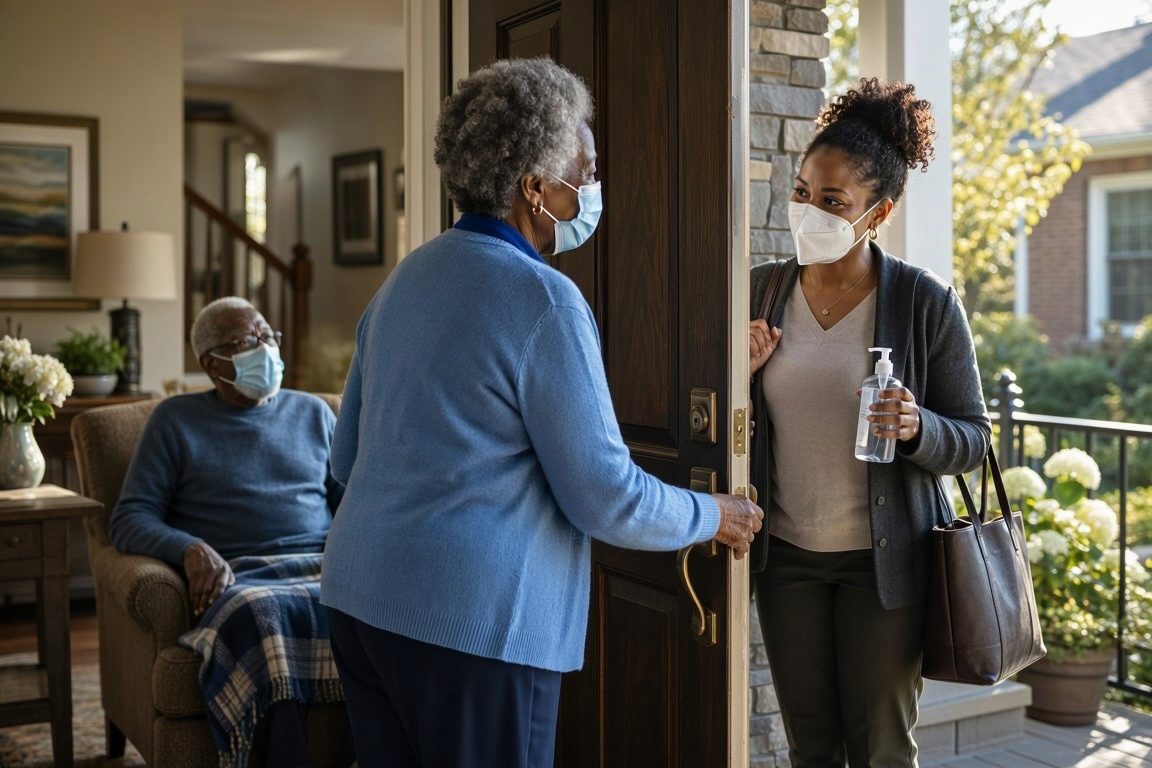
Step by step
What not to do
- Do not argue about delusions; instead, validate the emotion (e.g., "That sounds scary") and redirect.
- Do not use restraint (chemical, physical, or seat belts that prevent movement) as a first-line behavior management.
- Do not correct orientation (e.g., "No, your mother is dead") if it causes distress; use therapeutic fibbing.
- Do not overstimulate with multiple people talking, loud TV, or cluttered environments during meals or tasks.
- Do not assume agitation is aggression; first check for hunger, thirst, bathroom need, or discomfort.
Key points
- Pandemic safety for someone with dementia requires patience, redirection, and routine, not arguing or fear-based warnings.
- Protecting your own health is not selfish; it is essential for your loved one's safety. Schedule your own checkup and manage stress.
- Create a pandemic safety kit, a care notebook on the fridge, and a go-bag for emergencies to reduce chaos and save time.
- Screen all visitors and hired caregivers for symptoms before they enter your home, and have a written care plan that includes safety steps.
- Use distraction and simple activities to redirect your loved one when they want to leave the house or resist safety measures.
- You are not alone, reach out to online support groups, family, or volunteer services for help with errands and emotional support.
Videos
 Caregiver SacrificesThis video discusses the financial and emotional sacrifices caregivers make, which are amplified during a pandemic. It can help you feel seen and validate your experience.
 When someone with dementia wants to leave the houseThis video gives specific techniques for handling the common pandemic challenge of a loved one wanting to go out, including redirection and validation.
 32. Navigating the Caregiver Hiring Process: Five Essential Tips / Alzheimer’s and Other DementiasThis video walks through how to assess needs and hire a caregiver safely, which is critical during a pandemic when you need to screen for symptoms and set safety expectations.
 Caregiver stress related to dementia (Subtitles in Spanish)This video addresses caregiver stress and self-care, which are vital during a pandemic when isolation and worry are higher. It includes Spanish subtitles for broader access.
2 more videos
 An Interview with Vicki Hoak Executive Director of the Home Care Association of AmericaThis interview discusses national standards for home care aides and how to choose a reputable agency, which is useful when hiring help during a pandemic.
 Understanding the signs of paranoia, hallucinations and delusional behaviors w/ Lucy Barylak Sept 12This video helps you understand and respond to paranoia or hallucinations, which can be triggered by masks or isolation during a pandemic.
Practical tools
3
Soothing sensory kit
A bag with items like a small weighted lap pad, scented lotion, noise-canceling headphones, and a tactile fidget to self-regulate during sundowning.
Safety check mesh
A 30-minute re-assessment going through:
One-step prompt card
Index card with a single picture (e.g., toothbrush, hand) paired with a written 3-word instruction to cue grooming without verbal overload.
Different situations
Lewy body dementia or Parkinson's disease dementia
People with Lewy body dementia may have visual hallucinations or paranoia, which can be worsened by masks or seeing people in PPE. If your loved one is frightened by a masked caregiver, try using a clear face shield instead so they can see your face. Also, they may have more sensitivity to changes in routine, so introduce any new safety step very slowly and with lots of reassurance. If they become agitated, do not force the mask, focus on distancing and hand hygiene instead.
Spouse caregiver vs. adult child caregiver
Spouse caregivers often have a harder time setting boundaries because they have a long history of equality. You may need to practice saying, 'I love you, and we need to do this to stay safe.' Adult children may find it easier to take charge but may struggle with guilt. Both roles benefit from writing down the safety plan and sharing it with other family members so everyone is on the same page. If you are an adult child, consider asking siblings to help with grocery delivery or virtual visits to reduce your load.
Caregiver on a tight budget or using Medicaid
If your loved one has Medicaid, check your state's rules, you may be able to get paid as their caregiver. This can offset the cost of safety supplies like masks and sanitizer. You can also seek help from senior volunteer services or ask family and friends to do grocery runs to reduce your exposure. Home delivered meals (like Meals on Wheels) can reduce the need to go out. Every dollar saved on errands is a dollar you can put toward safety.
If your loved one lives in a facility (nursing home or assisted living)
You cannot control the facility's policies, but you can advocate. Call the facility regularly to ask about their infection control measures: Are staff tested? Are visitors screened? Are residents isolated if sick? If you are allowed to visit, follow their rules exactly. If you cannot visit, set up video calls at the same time each day to maintain connection. Keep a care notebook with you in case of emergency transfer to a hospital.
For the doctor
5
- Ask your doctor: 'Given my loved one's dementia and other health conditions, what is their risk for severe COVID-19? Should they get the latest vaccine or booster?'
- Ask your doctor: 'I am a caregiver and have been neglecting my own health. Can you help me create a plan for my own checkups and stress management?'
- Ask your doctor: 'My loved one has trouble wearing a mask. Are there alternatives like a face shield or a bandana that might be safer than nothing?'
- Ask your doctor: 'If my loved one develops symptoms of COVID-19, what should I do? When should I call you versus go to the emergency room?'
- Ask your doctor: 'Are there any medications my loved one takes that could increase their risk of infection or complications from COVID-19?'