Step by step
What not to do
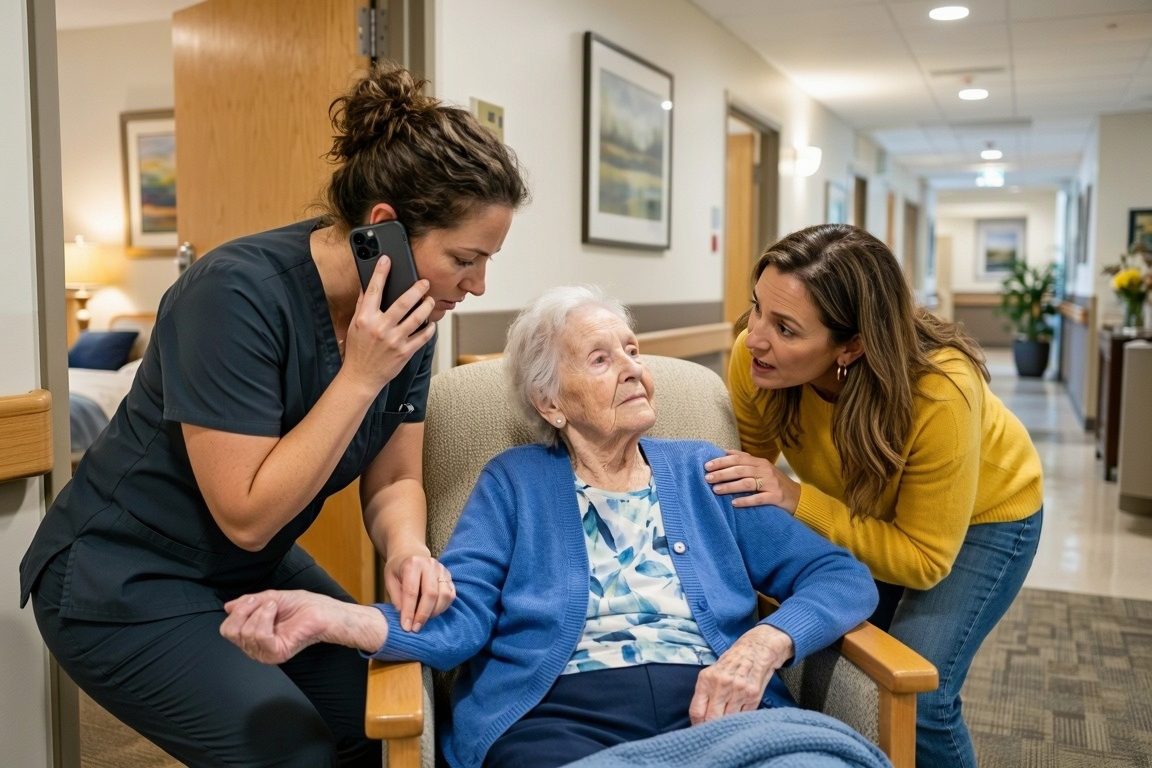
- Do not ignore the resident and talk only to staff. This can frighten the person with dementia, who may feel invisible or threatened.Instead, always address the resident first by name, then include staff in the conversation.
- Do not use medical jargon with the resident or family. Phrases like 'We need to rule out a subdural hematoma' cause confusion and anxiety.Instead, say 'We need to check her head for any injury.'
- Do not rush the handover. Skipping steps or interrupting staff leads to missed information.Instead, use closed-loop communication and ask clarifying questions until you are certain.
- Do not assume the resident's behavior is 'just dementia.' Pain, infection, or a new injury can cause sudden agitation. Always assess for physical causes first, and ask staff about any recent changes.
- Do not forget infection control. Care homes have strict protocols. Paramedics should ask about any known infections (e.g., COVID-19, MRSA) and follow the home's PPE guidance. This protects everyone, especially vulnerable residents.
- Do not leave the family out of the loop. Even if they are not present, a quick phone call or a note left with staff can reduce their anxiety and help them prepare for the hospital visit. Silence from the care team is deeply distressing for families.
Key points
- Always address the resident first by name, using a calm tone and gentle eye contact. This builds trust and reduces fear.
- Use closed-loop communication: repeat back key facts to confirm understanding between paramedic, staff, and family.
- Prepare a care notebook and a Red Folder with medications, advance directives, and personal preferences. Keep them visible and accessible.
- Involve the family caregiver early, even if by phone. A brief update reduces their anxiety and helps them support the resident later.
- Adapt your approach to the dementia type and stage. For Lewy body, avoid sudden movements; for late stage, rely on staff for pain cues.
- Follow up within 7 days after the emergency to ensure continuity of care and that the resident's wishes are being honored.
Videos
 Eoin Walker Paramedic and Host of the Pre-Hospital PodcastEoin Walker, a paramedic, discusses the critical role of communication and compassion in care home emergencies. He emphasizes closed-loop communication and understanding the care home ecosystem.
 How to talk to someone with dementia when they are afraid of saying the wrong thingThis video offers practical phrases and a gentle approach for speaking with a person with dementia who is anxious. Useful for paramedics and staff who need to reassure a frightened resident.
 Dementia Emergency Preparedness: How to make sure your loved one stays safe in an emergencyCovers how to build an emergency kit with dementia-specific items, including the Alzheimer's Association helpline number. Essential for families preparing for emergencies in a care home.
 How to communicate with a dementia patientAn occupational therapist shares tips on modifying your communication style, including using short sentences and positive encouragement. Directly applicable to paramedic-resident interactions.
2 more videos
 Signs Parents Need Memory CareHelps families recognize when a loved one needs a higher level of care, which is relevant context for understanding why a resident is in a care home and what their baseline looks like.
 Can't visit your LOWD? 5 tips for staying connected during COVID-19 lockdownOffers creative ways for families to stay connected when they cannot visit, which is useful for maintaining communication during emergencies or lockdowns.
Practical tools
6
The SBAR Handover Tool
A simple template for staff to use when handing over to paramedics. Write it on a laminated card kept at the nurse's station. SBAR stands for:
Practice using it in drills so it becomes automatic.
The Care Notebook on the Fridge
A physical folder kept on the refrigerator or in a visible spot in the resident's room. It contains:
Paramedics can grab this on the way out.
The 'Red Folder' for Families
A bright red folder that families prepare and give to the care home. Inside:
When an emergency happens, staff hand the Red Folder to the paramedic, who passes it to the hospital. This ensures the resident's wishes are honored even if they cannot speak.
Exact Phrases to Say to a Distressed Resident
When a resident is agitated, use these phrases: 'You are safe now. I am here to help you.' 'I am going to check your arm. It will only take a moment.' 'Take your time. You are doing great.' Avoid: 'Calm down,' 'You already told me that,' or 'Do you remember me?'
The 24/7 Helpline Number
Keep the Alzheimer's Association 24-hour helpline (0300 111 5 111 in the UK) in the emergency kit. Paramedics and families can call for real-time advice on communicating with a person with dementia during a crisis. This is especially helpful during disasters like floods or power outages.
The 'Who Knows This Resident?' Checklist
A simple question paramedics ask on arrival: 'Who has the best relationship with Margaret?' Then direct all initial questions to that person. This saves time and reduces the chance of getting incomplete information from a staff member who does not know the resident well.
Different situations
Resident has Lewy body dementia
Lewy body dementia often causes visual hallucinations and extreme sensitivity to medications. Paramedics should ask staff: 'Does the resident have any known hallucinations? Are they on any antipsychotics?' Avoid sudden movements or loud noises, which can trigger a parkinsonian crisis. Use a calm, slow approach and reassure the resident that what they see is not real, but do not argue.
Resident is in late-stage dementia
In late stages, the resident may be nonverbal and completely dependent. Paramedics rely entirely on staff and family for history. Ask: 'What is their usual pain expression? (e.g., grimacing, moaning, restlessness)' and 'What is their preferred comfort measure? (e.g., a certain position, music, hand-holding).' Use gentle touch and a soft voice; the resident can still feel your presence and tone.
Family caregiver is an adult child who lives far away
Long-distance family members often feel helpless. Paramedics should call them as soon as possible and use clear, simple language. Say: 'Your mother had a fall. She is alert and talking. We are taking her to St. Mary's Hospital. I will give you the direct number for the emergency department so you can call for updates.' Offer to have a staff member stay on the phone with the family during transport if needed.
Resident is in a care home that uses a specific electronic health record (EHR)
Some care homes have digital records that paramedics can access via a shared system. If available, paramedics should ask: 'Can you pull up the resident's summary in the EHR?' This provides instant access to medications, allergies, and advance directives. Staff should have a printed backup in case of power failure.
Emergency involves a disaster (e.g., flood, fire, pandemic lockdown)
During a lockdown or evacuation, communication is even harder. Paramedics should ask: 'Who is the resident's emergency contact? Can you call them now?' Use the Alzheimer's Association helpline for guidance. If the resident is evacuated, ensure their care notebook and Red Folder go with them. Families should have a pre-agreed meeting point and a backup contact person.
For the doctor
4
- Ask your clinician: 'What is the best way to manage my loved one's pain during an emergency transport? Are there any medications that should be avoided for someone with dementia?'
- Discuss with the care home's medical director: 'What is the protocol for advance directives during an emergency? Can paramedics honor a Do Not Resuscitate (DNR) order that is on file?'
- Ask the hospital's emergency department: 'Is there a dementia liaison or a geriatric specialist available to receive handover information from paramedics?'
- Talk to the care home administrator: 'How do you train staff to communicate with paramedics? Can we schedule a joint drill to practice handovers?'