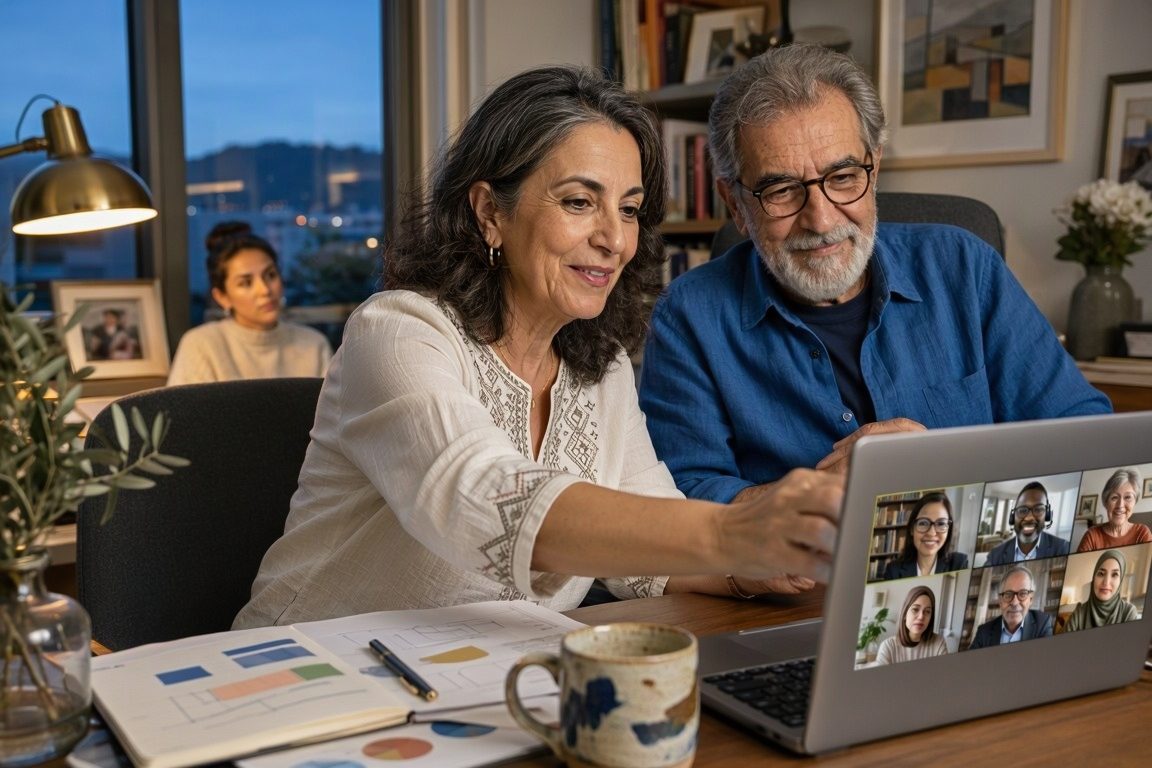
Step by step
What not to do
- Don't ignore emotional pacing, caregivers are often exhausted or in crisis; build in breaks, avoid back-to-back heavy topics, and explicitly permit stepping away.
Key points
- Virtual conferences can be as engaging as in-person events when they use interactive features like chat, Q&A, and live simulations.
- Record all sessions and offer them on-demand to accommodate caregivers' unpredictable schedules.
- Include family caregivers as presenters, their lived experience is invaluable and deeply relatable.
- Tailor content to different stages of dementia, roles (spouse vs. adult child), and professional needs.
- Keep technology simple and provide clear instructions to reduce stress for attendees with limited tech skills.
- Gather feedback after the conference to improve future events and ensure they meet the community's needs.
Videos
 Dementia Care Partner Talk Show Podcast, Ep. 68: 2020 PAC Conference, A Virtual GatheringThis video directly explains how Teepa Snow's team designed a virtual conference using Zoom and the WHOVA app, providing a real-world example of the principles in this guide.
 PAC Live @ 5 - Alzheimers and the UmbrellaThis video demonstrates the interactive, live format that can be used in a virtual conference, showing how to engage attendees in real-time discussions.
 Dementia Needs a Lot More Thought | Kris Engskov | TEDxUofWThis TEDx talk emphasizes the need for specialized, accessible care and innovative models, which can inspire conference content on expanding access to care.
 Are Digital Calendars Good For Dementia Care?This video discusses tools like digital calendars that can be featured in a conference session on practical aids for daily living.
2 more videos
 How Do Online Support Forums for Dementia Help Address Caregiver Stress? | TestThis video explores the role of online support forums, which can be a model for creating community and reducing stress within a virtual conference.
 Conscious Caregiving with L & L - 'End of Life Care'This video covers end-of-life care, a critical topic that can be included as a session in a comprehensive virtual dementia conference.
Practical tools
5
Zoom with chat, Q&A, polls, and breakout rooms
WHOVA conference app
Centralize scheduling, speaker bios, networking, and resource sharing in an app like WHOVA to add navigation and community beyond the main video platform.
On-demand video library
Host all recorded sessions in a searchable library (e.g., YouTube unlisted or Vimeo) for anytime access, turning the event into a lasting resource.
Pre-event tech guide with live support
Send a one-page guide with screenshots for logging in, using chat, muting, and accessing recordings. Pair with a live tech support contact during the event.
Closed captioning and transcripts
Enable live captioning (Zoom built-in or Otter.ai/Rev) and provide written transcripts for recordings to support attendees with hearing differences, non-native speakers, and those who process written information better.
Different situations
For caregivers who are adult children vs. spouses
Adult children may need sessions on balancing caregiving with work and their own family, while spouses may need more on maintaining intimacy and managing daily routines. Tailor breakout groups or Q&A sessions to these different roles.
For different stages of dementia (early, middle, late)
Offer separate tracks or sessions for each stage. Early-stage sessions might focus on planning and communication, middle-stage on behavioral strategies and safety, and late-stage on palliative care and end-of-life decisions.
For people living with dementia themselves
Include sessions designed specifically for people with dementia, using simple language, visual aids, and interactive elements. Offer a separate 'quiet room' or support group for them to connect with peers.
For professionals (nurses, social workers, etc.)
Offer continuing education credits and sessions on clinical best practices, assessment tools, and evidence-based interventions. Include case studies and advanced topics like grief and palliative care.
For those with limited tech skills or access
Provide a simple, phone-based option for listening to sessions (e.g., dial-in audio). Offer one-on-one tech support before the conference. Use a platform that works on low-bandwidth connections.
For the doctor
3
- If you are considering including sessions on medication management or antipsychotic use, discuss the content with a clinician to ensure it aligns with current best practices and safety guidelines.
- For sessions on advance care planning or end-of-life decisions, consult with a healthcare provider to ensure the information is accurate and appropriate for the audience.
- If the conference will address palliative care or hospice referral, have a clinician review the materials to ensure they are clinically sound and sensitive.