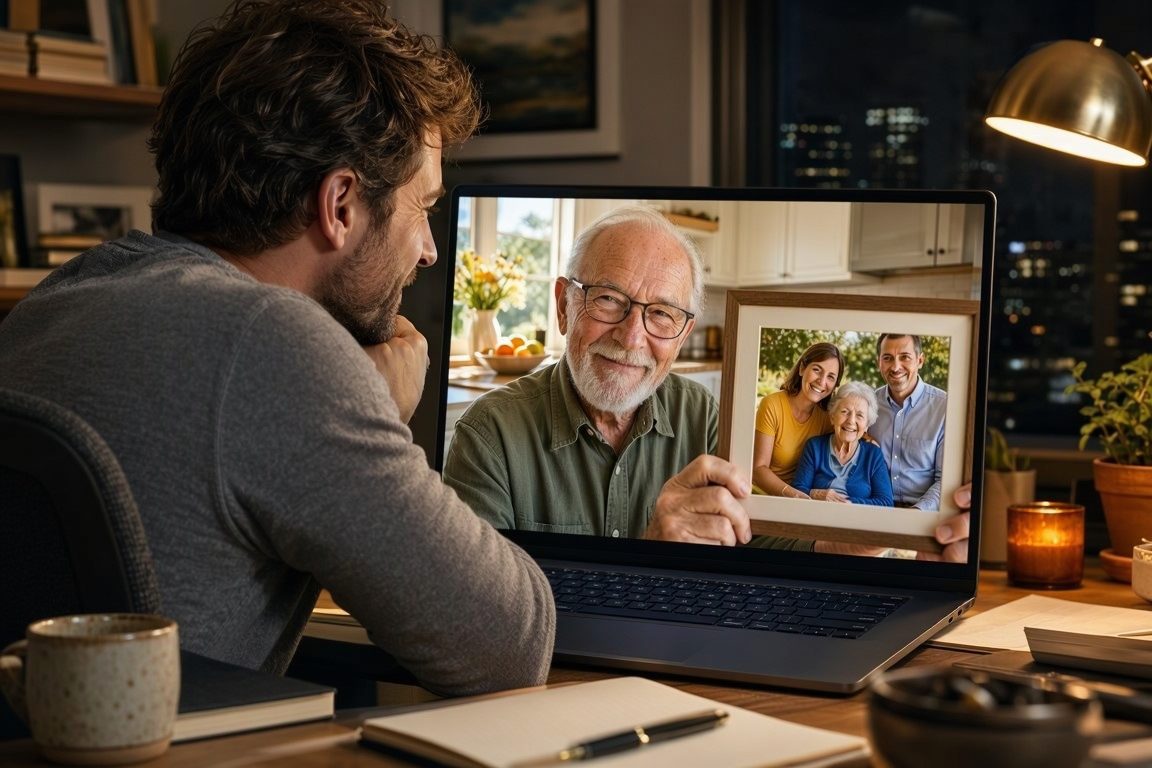
Step by step
What not to do
- Do not call at random times without warning. A sudden phone call can startle or confuse a person with dementia, especially if they are not expecting it.Instead, schedule calls with the staff and let your loved one know ahead of time (even if they forget).
- Do not expect a 'normal' conversation. If your loved one doesn't remember you, repeats the same question, or seems disengaged, don't take it personally. The disease is causing this. Focus on the feeling of connection, not the content. A simple 'I love you' or a shared song can be enough.
- Do not overwhelm your loved one with too much information or multiple questions. Keep your language simple, use short sentences, and talk about one topic at a time. For example, instead of 'How was your day? Did you eat lunch? Did you see the doctor?' say, 'I saw a pretty bird today. It made me think of you.'
- Do not neglect your own health and support system. Long-distance caregiving is stressful. If you don't take breaks, get sleep, and talk to someone about your feelings, you risk burnout. Join an online support group for long-distance caregivers or call the Alzheimer's Association helpline (800.272.3900).
- Do not try to reason with your loved one if they accuse you of not visiting enough. A person with dementia may say hurtful things like 'You never come see me.' Do not argue or explain your schedule.Instead, validate their feelings: 'I know you miss me. I miss you too. I'm thinking of you right now.' Then redirect to a positive topic.
Key points
- Connection is about feeling, not content. A short, calm video call or a simple letter can be more powerful than a long, confusing conversation.
- Build a partnership with facility staff. Regular check-ins and appreciation go a long way in keeping you informed and your loved one well-cared for.
- Use a 'connection kit' of familiar objects and scents to spark positive emotions when you can't be there in person.
- Take care of yourself. Join a support group, get sleep, and see your own doctor. You can't pour from an empty cup.
- Adapt your approach to the stage and type of dementia. What works today may not work tomorrow, and that's okay.
- You are still a vital part of your loved one's life, even from far away. Your love and presence, in whatever form, matters deeply.
Videos
 Can't visit your LOWD? 5 tips for staying connected during COVID-19 lockdownOffers practical, creative tips for maintaining connection when you cannot visit in person, including using video messages and involving staff.
 Long-Distance CaregivingCovers the emotional and practical challenges of long-distance caregiving, with advice on building a team and using technology.
 #6.3 What Can Be Done from Far Away: Long Distance Caregiving (3 of 5)Focuses on specific actions you can take from a distance, including attending appointments virtually and sending care packages.
 What Type of Caregiver are You?Helps you identify your caregiving style and how to leverage your strengths when caring from a distance.
2 more videos
 Long distance dementia caregiverShares personal experiences and strategies from a long-distance caregiver, including the importance of self-care and creative communication.
 MAKE A DIFFERENCE FROM AFAR - How to Provide Care to Parents from a DistanceProvides a step-by-step guide to coordinating care from a distance, including how to research local resources and support the primary caregiver.
Practical tools
6
The 'Connection Kit' Box
A small box or basket you prepare and send to the facility. Include:
Ask the staff to use this during calm times to spark positive emotions.
The Weekly Check-In Script
When you call the facility staff, use this structure:
This makes the conversation efficient and shows you are a partner.
The Video Message Template
Record a 30-60 second video. Start with your loved one's name and your name. Say one simple thing: 'I saw a robin today. It made me smile.' Or 'I remember when we used to bake cookies together.' End with 'I love you. I'll talk to you soon.' Keep the background quiet and your face well-lit. Send the file to the staff via email or text.
The Care Notebook (File of Life)
A physical folder kept in your loved one's room (with facility permission) containing:
This is invaluable for emergencies and new staff.
The 'Respite Visit' Plan
If you can visit a few times a year, plan it as a respite break for the primary caregiver. Coordinate with them ahead of time:
This strengthens your team.
The 'Staff Appreciation' Kit
A small care package for the unit staff. Include:
This builds goodwill and makes staff more likely to go the extra mile for your loved one and to keep you informed.
Different situations
Late-stage dementia or Alzheimer's
At this stage, your loved one may not recognize you or respond to video calls. Focus on sensory connection: send a soft blanket with your scent, a recording of your voice reading a poem, or a simple hand-held object they can feel. The goal is comfort, not conversation. Ask the staff to play calming music or nature sounds during your calls. Your presence is still felt, even if not recognized.
Lewy body dementia
People with Lewy body dementia often have visual hallucinations, sleep disturbances, and fluctuating alertness. Avoid video calls during times of confusion or agitation. Use phone calls with a calm, predictable routine. Keep the environment quiet and free of visual clutter. Send a letter with a simple drawing or a familiar scent. Be patient if they seem disoriented; it's the disease, not you.
Frontotemporal dementia (FTD)
FTD often affects behavior and language more than memory. Your loved one may be impulsive, apathetic, or have trouble understanding language. Keep your messages very short and concrete. Use photos or videos of familiar places or people. Avoid asking open-ended questions. Instead, say 'I'm thinking of you. Here's a picture of your garden.' The staff can help you gauge what works.
Spouse vs. adult child caregiver
As a spouse, you may feel a deeper sense of loss and guilt. It's important to acknowledge that your relationship has changed. Consider joining a support group for spouses of people with dementia. As an adult child, you may be juggling your own family and work. Delegate tasks to other family members or hire a geriatric care manager to help coordinate care. Both roles need self-compassion.
Medicaid or limited resources
If the facility is understaffed or has limited technology, you may need to be more creative. Use a simple prepaid cell phone for calls. Send letters and photos by mail. Ask a local volunteer or church group to visit and read to your loved one. The Alzheimer's Association's Community Resource Finder can help you find free or low-cost services in your loved one's area.
For the doctor
5
- Ask your loved one's doctor: 'Given their current stage of dementia, what type of communication (video, phone, letter) is most likely to be comforting rather than confusing?'
- Ask the facility's nurse: 'Are there any times of day when my loved one is most alert and calm? Can we schedule calls around that time?'
- Ask the doctor: 'Are there any medications or non-drug approaches that might help reduce agitation during video calls?'
- Ask the facility social worker: 'What technology is available for remote visits? Are there any privacy or consent forms I need to sign?'
- Ask your own healthcare provider: 'I'm a long-distance caregiver and I'm feeling overwhelmed. What resources or support groups do you recommend for my own mental health?'