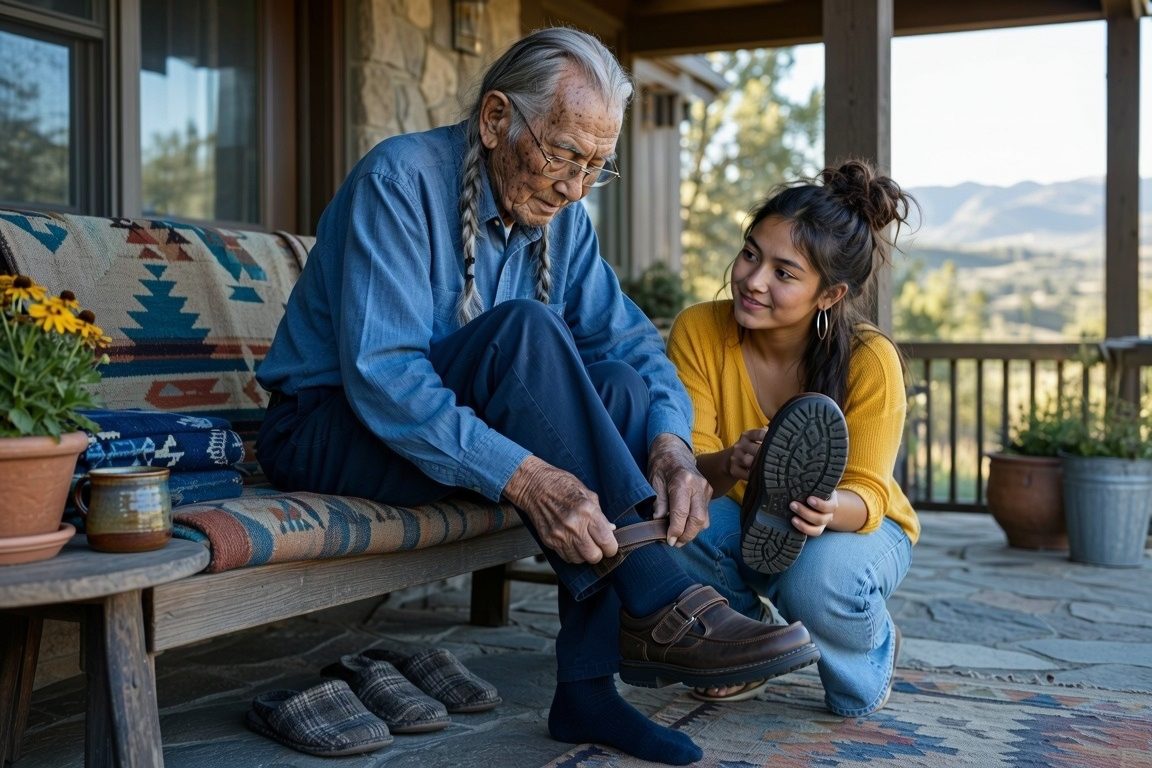
Step by step
What not to do
- Don't let them walk in socks or bare feet on hard floors. Socks provide no traction and can cause a slip. Bare feet can also be cold and uncomfortable, leading to poor circulation.Instead, always have them wear shoes or non-slip socks with rubber grips. If they resist, try a pair of soft, non-skid slippers that have a back and a sole.
- Don't buy shoes that are too big or too small. Shoes that are too big can cause the foot to slide and lead to a fall. Shoes that are too small can cause pain and blisters, making your loved one not want to wear them. Always measure both feet (they can be different sizes) and try shoes on later in the day when feet are slightly swollen. Use the 'thumb test': there should be about a thumb's width of space between the longest toe and the end of the shoe.
- Don't assume that expensive shoes are automatically safe. Price does not equal safety. Some very affordable shoes have excellent non-skid soles and good support. Conversely, some expensive dress shoes have smooth leather soles that are dangerous. Focus on the features: a rubber sole, a closed back, a secure closure, and a snug fit. Read reviews or ask a physical therapist for recommendations.
- Don't force a change abruptly if your loved one is attached to their old slippers. This can cause agitation and resistance.Instead, use a gradual approach. Let them keep the old slippers but also introduce the new ones. You might say, 'These new ones are for when you go to the kitchen, and the old ones are for sitting in your chair.' Over time, they may naturally prefer the new ones. If not, try a different style or color that they might like.
- Don't forget to check the shoes for wear and tear regularly. A shoe that was safe six months ago may now have worn-down soles or stretched-out uppers. Make it a habit to inspect them every month. If you see any signs of wear, replace them. It's better to buy a new pair than to risk a fall.
- Don't use shoes with high heels or platform soles. Even a small heel (like on some loafers) can shift weight forward and increase fall risk. Stick to flat, low-profile shoes with a heel height of less than one inch. Also avoid shoes with a very thick sole (like some athletic shoes) because they can reduce the ability to feel the ground and increase the risk of ankle rolls.
Key points
- The right footwear is a simple, effective way to reduce fall risk, choose shoes with non-skid soles, a closed back, and a snug fit.
- Avoid slippers, backless shoes, high heels, and shoes with smooth soles, they increase the risk of slipping and tripping.
- Have your loved one wear shoes even inside the house, especially on tile, wood, or linoleum floors.
- Introduce new shoes gradually and with positive framing to reduce resistance, use phrases like 'these are so comfortable' rather than 'these are safer.'
- Check shoes regularly for wear and tear, replace them when the tread is smooth or the shoe is misshapen.
- Keep walking paths clear of clutter and area rugs, and use contrasting colors to help with depth perception.
Videos
 Fall Safety TipsThis video provides a broad overview of fall prevention strategies, including the importance of proper footwear and home modifications.
 Steady Steps: Practical Strategies for Managing Falls in DementiaThis video offers practical, dementia-specific strategies for fall prevention, including how to choose safe shoes and reduce environmental hazards.
 Quick Tips: Fall Prevention Tips for SeniorsA concise video with quick, actionable tips for seniors, including footwear recommendations and home safety checks.
 7 Reasons People With Dementia Fall (and how to help)This video explains the specific reasons people with dementia fall, including gait changes and environmental factors, and offers targeted help.

Practical tools
5
The Non-Slip Shoe Checklist
Print or write this short checklist and use it when shopping or evaluating current shoes:
If you answer 'no' to any of these, the shoe may not be safe.
Exact Phrases to Introduce New Shoes
Use these gentle, positive phrases to reduce resistance: 'I found these new shoes that are so soft and they have a special grip to help you walk steady.' 'Let's try them on for just a minute while you sit, they feel like clouds.' 'You can wear them just in the house, and they'll keep your feet warm.' 'I got a pair for myself too, we can match!' Avoid saying 'these are safer' or 'your old ones are dangerous,' which can cause defensiveness.
Non-Slip Socks with Grips
If your loved one absolutely refuses to wear shoes, non-slip socks with rubber grips on the bottom are a better alternative than bare feet or regular socks. Look for brands like 'GripSox' or 'SteadySocks' that have a full rubber pattern on the sole. They are available at most drugstores or online. However, they do not provide ankle support, so use them only as a last resort and keep the floors clear of clutter.
Grip Pads or Non-Skid Tape for Shoes
For a temporary fix, you can buy adhesive grip pads (like 'Dr. Scholl's Grip Pads') or non-skid tape (like 'Sure Step Anti-Slip Tape') and apply them to the soles of existing shoes. Clean the sole first, then press the pad firmly. This can add traction to smooth soles. Check them weekly and replace when worn. This is not a permanent solution but can buy time until you find better shoes.
Shoe Horn and Elastic Laces
If your loved one has trouble putting on shoes due to stiffness or bending, use a long-handled shoe horn to help them slide their foot in without bending. Replace regular laces with elastic 'no-tie' laces (like 'Lock Laces') that allow the shoe to be slipped on and off while still providing a snug fit. This reduces frustration and makes it easier to wear safe shoes consistently.
Different situations
Lewy body dementia or Parkinson's disease
These conditions often cause shuffling gait, rigidity, and a higher fall risk. Choose shoes with a very low profile and a flexible sole that allows the foot to feel the ground. Avoid shoes with a thick, stiff sole that can catch on the floor. Also, consider shoes with a wider toe box to accommodate any foot dystonia. A physical therapist may recommend shoes with a slight heel-to-toe drop (like a rocker sole) to help with forward momentum. Be extra vigilant about checking for tripping hazards, as these individuals may not be able to lift their feet high enough to clear obstacles.
Late-stage dementia (unable to walk independently)
If your loved one uses a wheelchair or is bed-bound, footwear still matters for transfers and for comfort. Use non-slip socks or soft, closed-back slippers when they are being transferred to a chair or toilet. Avoid any shoes with laces that could come undone and cause a trip. Focus on easy-on, easy-off styles like Velcro or slip-on with a back. Also, keep the floor around the bed and chair clear of any rugs or cords.
Spouse caregiver vs. adult child caregiver
A spouse may have a harder time enforcing new footwear rules because of long-standing habits and emotional dynamics. It can help to frame the change as a team effort: 'We both need to wear safe shoes so we can stay steady together.' An adult child may have more authority to make changes but should still approach with respect. Use 'I' statements: 'I'm worried about falls, so I got these shoes for you to try.' Avoid a confrontational tone. If the spouse is resistant, consider having a doctor or physical therapist recommend the change.
Living in a facility (assisted living or memory care)
In a facility, staff may already have a fall prevention program. Ask the care team what type of footwear they recommend. Many facilities prefer shoes with non-skid soles and a closed back. Label all shoes with the person's name. Check that the shoes are not too loose, as staff may not notice. If your loved one tends to take off their shoes, consider using a pair of non-slip socks as a backup. Also, ensure that the walking paths in the facility are clear of clutter and that the floors are not slippery.
Medicaid or limited budget
You don't need expensive shoes. Look for sales at discount stores like Walmart or Target. Many affordable brands like 'Skechers' or 'New Balance' have non-skid options. Also check thrift stores for gently used shoes with good tread, just clean them thoroughly. Some local senior centers or Area Agencies on Aging may have programs that provide free or low-cost footwear. You can also ask the doctor for a prescription for therapeutic shoes, which may be covered by Medicare Part B for people with diabetes.
For the doctor
5
- Ask your loved one's doctor or physical therapist: 'Can you assess my loved one's gait and balance to recommend the best type of shoe for their specific condition?'
- If your loved one has diabetes or peripheral neuropathy, ask: 'Do they need special diabetic shoes or custom orthotics to protect their feet and reduce fall risk?'
- If your loved one has had a recent fall, ask: 'Should we have a full fall risk assessment, including a review of their medications and vision?'
- If your loved one has foot pain or deformities (like bunions or hammertoes), ask: 'Can a podiatrist evaluate their feet and recommend appropriate footwear or inserts?'
- If your loved one is on blood thinners (like warfarin or apixaban), ask: 'What should we do if they fall, given the increased risk of bleeding?'