Step by step
What not to do
- Do not try to force an activity they resist. If they seem overwhelmed, frustrated, or freeze up, stop immediately. The goal is enjoyment, not completion. As one source warns, 'if you feel that they're getting overwhelmed, frustrated, they freeze up, or the task is too difficult, then you need to stop the activity immediately' (Answers About Alzheimer's, source [10]).Instead, take a break and try a different, simpler activity later.
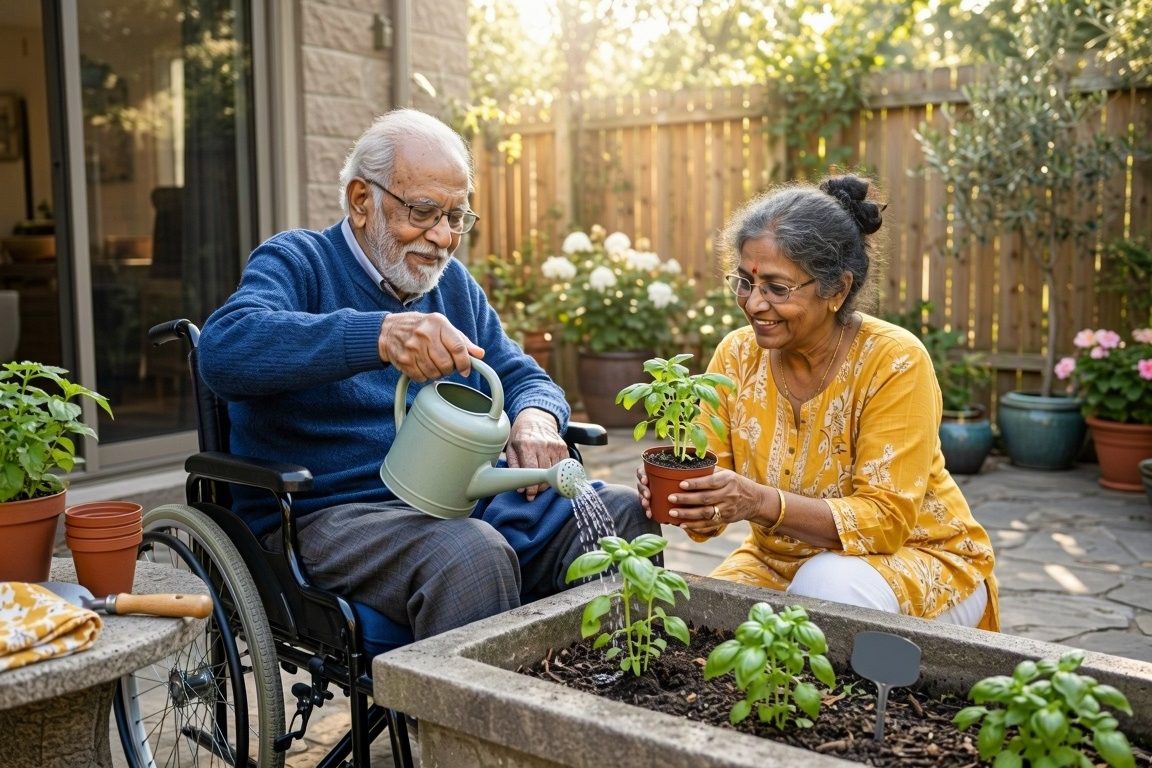
- Do not assume they cannot do something just because they have limited mobility. Many activities can be modified. For example, a person who loved to garden can still water a small potted plant or touch and smell fresh herbs on the table. Don't let your assumptions shrink their world further. Always try the modified version first.
- Do not leave them alone with an activity that involves small parts or anything that could be a choking hazard. Even if they are seated and safe, supervision is key. A person with dementia might put small objects in their mouth or try to dismantle something in an unsafe way. Stay within arm's reach.
- Do not use a walker with wheels and a basket for someone with dementia who forgets to lock it. As one expert notes, 'they may forget to lock it before they get up and try to use it and then they can go forward' (Lori Williams - Senior Services, source [17]). A classic walker with tennis balls on the legs is often safer because it doesn't roll away. Discuss the best option with their doctor or physical therapist.
- Do not expect them to remember the activity from one day to the next. Each day is a new beginning. You may need to re-initiate the same activity every time. That is normal and okay. The joy is in the moment, not in the memory of it.
- Do not make the activity area feel like a hospital or a therapy room. Keep it warm, personal, and familiar. Use their favorite chair, put on soft music, and have a cup of tea nearby. The environment should feel like an invitation, not an instruction.
Key points
- Limited mobility does not mean no activity; it means adapting the activity to a seated or supported position.
- The goal is participation and enjoyment, not completion. Stop if they become frustrated.
- You must initiate the activity; they may have lost the ability to start things on their own.
- Safety is the foundation: a stable chair, clear floor, and locked wheelchair brakes are non-negotiable.
- Use their past hobbies and interests as a guide for what to try, but be ready to simplify.
- Music, hand tasks, reminiscence, and bird-watching are proven, low-cost activities that work well for seniors with limited mobility.
Videos
 Activities for Seniors with Limited MobilityThis video directly addresses the topic and provides visual examples of seated activities you can try at home.
 How Do You Promote Safety In Patients With Dementia?Safety is the first step. This video gives practical tips on fall prevention and creating a safe environment for activity.
 Dementia friendly activities someone would actually enjoy!This video focuses on finding activities the person will genuinely enjoy, which is the core challenge when mobility is limited.
 How to keep a dementia patient busyOffers a range of ideas for keeping someone engaged, many of which can be done from a seated position.

Practical tools
5
The 'Initiation Script' for Starting an Activity
Use this exact phrase to start any activity: 'I found something I think you'll enjoy. Look at this [object].' Then, place the object in their hands or directly in front of them. Do not ask 'Do you want to...?' because that gives them a chance to say no out of confusion or apathy. Your confident, warm initiation is the tool that bypasses their difficulty with starting things.
The 'One-Touch' Activity Kit
Prepare a small basket or box with one single activity ready to go. For example: a basket with three washcloths to fold, a small bag of large wooden beads to sort by color, or a single adult coloring page with two crayons. The rule is: you can set it up in 30 seconds, and it requires no verbal instruction. Just place it in front of them and start doing it yourself. They will often join in.
Seated Movement Playlist
Create a playlist of 3-5 songs from their young adulthood (ages 18-30). Use songs with a strong, steady beat. During the song, model simple seated movements: tap your feet, clap your hands, sway side to side, or do arm circles. The music and your modeling will often get them moving without any verbal cue. This is a gentle, joyful form of physical activity.
The 'Memory Box' for Reminiscence
Fill a shoebox with 5-7 objects from their past: an old key, a seashell, a wooden spoon, a photograph, a piece of lace. Sit with them and take out one object at a time. Say, 'I wonder what this reminds you of.' Let them hold it. Don't correct their memories. This tool opens the door to storytelling and connection without requiring them to move.
Safety Checklist for the Activity Space
Before every activity, run this mental checklist:
This checklist takes 60 seconds and prevents 90% of accidents.
Different situations
Lewy body dementia (LBD) or Parkinson's disease dementia
In LBD, mobility can fluctuate dramatically from day to day, a person may walk well one day and be unable to stand the next. Always have a 'Plan B' that is fully seated. Also, people with LBD are often very sensitive to visual clutter and may become overwhelmed by too many objects. Keep the activity space very simple: one activity, one object at a time. Avoid complex puzzles or sorting tasks with many pieces. Music and simple hand tasks often work best. Also, be aware of visual hallucinations; if they seem to be reacting to something you don't see, gently redirect to a different sensory activity like touching a soft fabric or listening to music.
Late-stage dementia (very limited communication and mobility)
In the late stage, the goal shifts entirely to sensory comfort and connection. Activities are about providing pleasant sensations. Try: gentle hand massage with scented lotion, brushing their hair, playing their favorite music softly, or holding a warm, soft stuffed animal. Talk to them in a calm voice, even if they don't respond. The activity is your presence. Do not expect any participation. The value is in the sensory input and the feeling of being cared for.
Spouse caregiver vs. adult child caregiver
A spouse may feel a deep sense of loss and grief when their partner can no longer do the activities they once shared, like dancing or walking. It can be painful to initiate new, simpler activities. Acknowledge this grief. Try to find a 'new version' of an old shared activity. If you used to dance, now do seated swaying to 'your song.' If you used to garden together, now look at a seed catalog together. For an adult child, the dynamic may be more about 'managing' the parent. Try to shift from a managerial tone to a playful, companionable one. Say, 'Mom, let's do something fun together,' rather than 'It's time for your activity.'
In a facility (nursing home or assisted living)
In a facility, you have less control over the environment. Bring your own activity kit in a small bag. Use the person's own chair or bed. Be mindful of noise and distractions from other residents. If the facility has a courtyard or garden, ask if you can take them there in a wheelchair for a change of scenery. Coordinate with the activities director to see if there are group seated activities (like chair yoga or music groups) that your loved one might enjoy. Your visit itself is the most powerful activity you can provide.
Medicaid or limited budget
You do not need expensive equipment. Most of the activities described use household items: washcloths, socks, plastic bowls, wooden spoons, old magazines, a radio. The local library is a free resource, they often have large-print books, audiobooks, and even free passes to museums or botanical gardens that are wheelchair accessible (All Home Care Matters, source [2]). Some communities offer free transportation to the library, even for wheelchair users. Use what you have. The activity is about connection, not cost.
For the doctor
5
- Ask the doctor or physical therapist: 'Is it safe for my loved one to do seated exercises like arm raises or leg lifts? Are there any movements we should avoid due to their specific condition (e.g., hip replacement, heart condition)?'
- Discuss the best type of walker or mobility aid for someone with dementia who forgets to use it safely. Ask specifically about the risks of wheeled walkers versus standard walkers.
- If your loved one has tremors or difficulty holding objects, ask about weighted utensils or other adaptive equipment that could make activities like eating or coloring easier (Dementia Careblazers, source [19]).
- Ask about the appropriate level of physical activity for someone with limited mobility. The goal is to 'maintain cognition and stabilize disability' (PubMed, source [15]), but the type and intensity must be tailored to the individual. Get a specific recommendation.
- If your loved one has a history of falls, ask for a referral to an occupational therapist who can do a home safety assessment and recommend specific modifications to make the activity space safer.