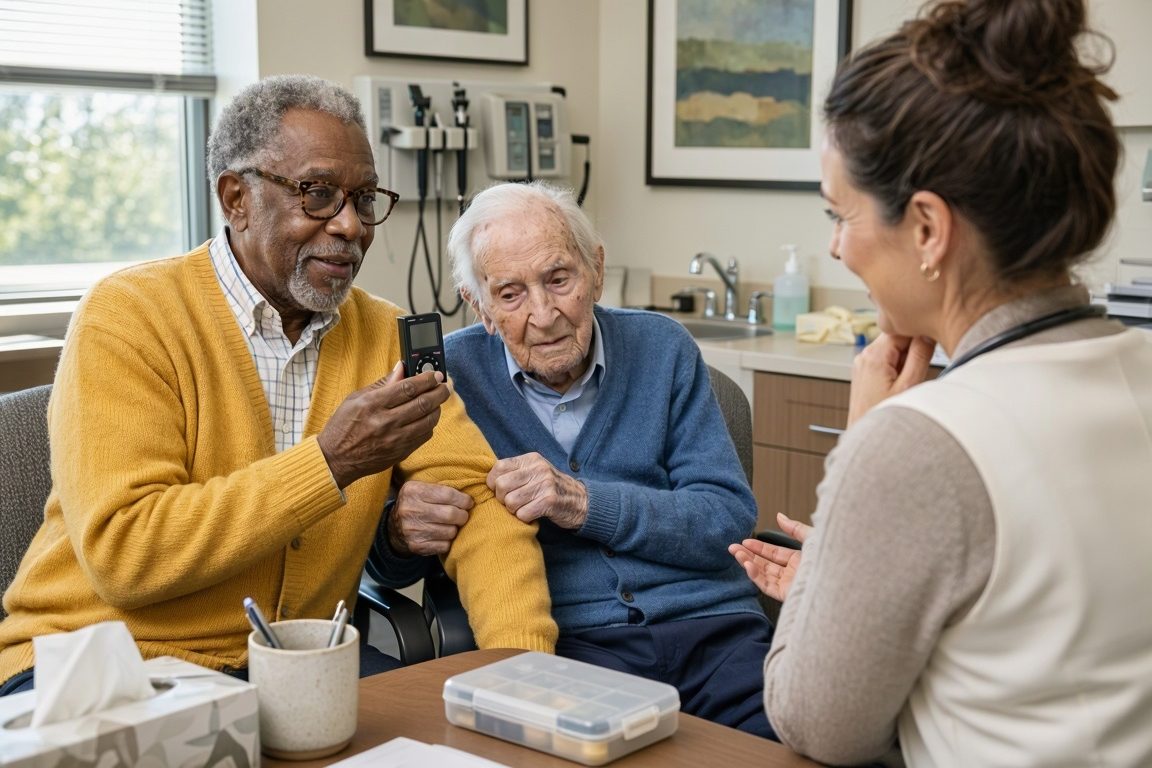
Step by step
What not to do
- Do not ask for medication as a first step. Jumping to pills can mask an underlying problem like pain or infection, and exposes your loved one to unnecessary risks.Instead, start with the detective work of identifying triggers.
- Do not accept a prescription without asking about risks. Many doctors do not fully explain the side effects of antipsychotics or sedatives. Always ask: 'What are the specific risks for my loved one? How will we know if it is working? What are the signs of a bad reaction?'
- Do not use medication to make caregiving easier. The goal is to relieve the person's suffering, not to make them sleepy or easier to manage. If you are feeling overwhelmed, seek support for yourself first.
- Do not give over-the-counter sleep aids like diphenhydramine (Benadryl, Tylenol PM) without talking to the doctor. These can cause confusion, falls, and urinary retention in older adults. They are not safe for dementia.
- Do not stop a medication abruptly. Some medications, especially benzodiazepines and antipsychotics, can cause withdrawal symptoms or a rebound of behaviors. Always work with the doctor to taper off slowly if needed.
Key points
- Non-drug approaches are always the first line for dementia behaviors and sleep problems.
- Medication is considered only when non-drug methods have failed and the person is in significant distress.
- Antipsychotics and sedatives carry serious risks for older adults with dementia, including falls, confusion, and increased mortality.
- Always start with a low dose, go slow, and monitor closely for side effects.
- Keep using non-drug strategies even after starting medication; the combination works best.
- You have the right to ask questions and to request a second opinion before starting any medication.
Videos
 Medications Used in Dementia: What Caregivers Should Know | Sarah Mourra MD | UCLAMDChatThis video explains the risks of common medications and why non-drug approaches are preferred.
 Sleep and DementiaCovers non-drug sleep strategies and when medication might be needed for sleep problems.
 Pharmacologic Management of Neuropsychiatric Symptoms in DementiaProvides a clinical overview of when and how medications are used for behavioral symptoms.
 Managing Sleep & Sundowning in Dementia CareOffers practical tips for managing sundowning and sleep issues without medication first.

Practical tools
5
Behavior Log Template
Create a simple chart with columns: Date/Time, What Happened (behavior), What Was Happening Right Before (trigger), What I Tried, What Helped. Use this to spot patterns and share with the doctor. Example: '3pm, yelling and pacing, after a busy visit from grandchildren, tried quiet music and a snack, calmed in 20 minutes.'
The 'Ask Your Doctor' Script
Print or write down these exact questions to bring to the appointment: '
'
Sleep Hygiene Checklist for Dementia
Post this in the bedroom:
Pain Assessment Tool for Non-Verbal Dementia
Use the PAINAD scale (Pain Assessment in Advanced Dementia). Watch for:
If you suspect pain, ask the doctor about a trial of acetaminophen before considering psych meds.
Medication Side Effect Watch List
Write down and keep near the medication: Watch for
If any appear, call the doctor immediately. Do not wait for the next appointment.
Different situations
Lewy Body Dementia (LBD)
People with LBD are extremely sensitive to antipsychotic medications. Up to 50% can have severe, even life-threatening reactions (neuroleptic malignant syndrome). Always tell the doctor about the LBD diagnosis. Non-drug approaches are even more critical. For sleep, melatonin (under doctor guidance) may be safer than other sleep aids. Avoid all antipsychotics unless absolutely necessary and under specialist supervision.
Late-Stage Dementia
In late stages, the person may not be able to communicate pain or discomfort. Assume pain is present and try a non-drug pain relief (like repositioning, gentle massage, or acetaminophen) before considering medication for agitation. Behaviors like moaning or restlessness may be the only way they express pain. Work closely with hospice or palliative care if available.
Spouse vs. Adult Child Caregiver
Spouse caregivers may feel more comfortable with non-drug approaches because they know the person's history and preferences. Adult children may feel less confident and more likely to ask for medication. Both should remember: the goal is the person's comfort, not caregiver convenience. If you are an adult child, ask the spouse for input on what has worked in the past.
In a Facility (Memory Care or Nursing Home)
Facilities may be quick to suggest medication because they have limited staff for non-drug interventions. You have the right to request a meeting to discuss non-drug approaches first. Ask for a behavior plan that includes environmental changes, activities, and staff training. If medication is proposed, ask for a trial period with a clear end date and follow-up. You can also request a geriatric psychiatrist consult.
Medicaid or Limited Resources
If you cannot afford private-pay memory care or in-home aides, focus on low-cost non-drug strategies: establish a simple daily routine, use free online resources (like the Alzheimer's Association 24/7 Helpline at 800-272-3900), and ask the doctor about generic medications if needed. Some community programs offer free caregiver training. Do not feel pressured to use medication because you lack other support.
For the doctor
5
- Ask the doctor: 'What are the specific risks of antipsychotic medications for my loved one, given their age and other health conditions?'
- Ask: 'Is there a safer alternative, like an antidepressant (SSRI) or a dementia medication (donepezil, memantine) that might help with behaviors?'
- Ask: 'If we try a medication, what is the plan for monitoring side effects and for how long will we try it before deciding if it works?'
- Ask: 'Could any of my loved one's current medications be causing or worsening the behavior? Should we review all prescriptions and over-the-counter drugs?'
- Ask: 'What are the signs of a serious side effect I should call you about immediately?'