Step by step
What not to do
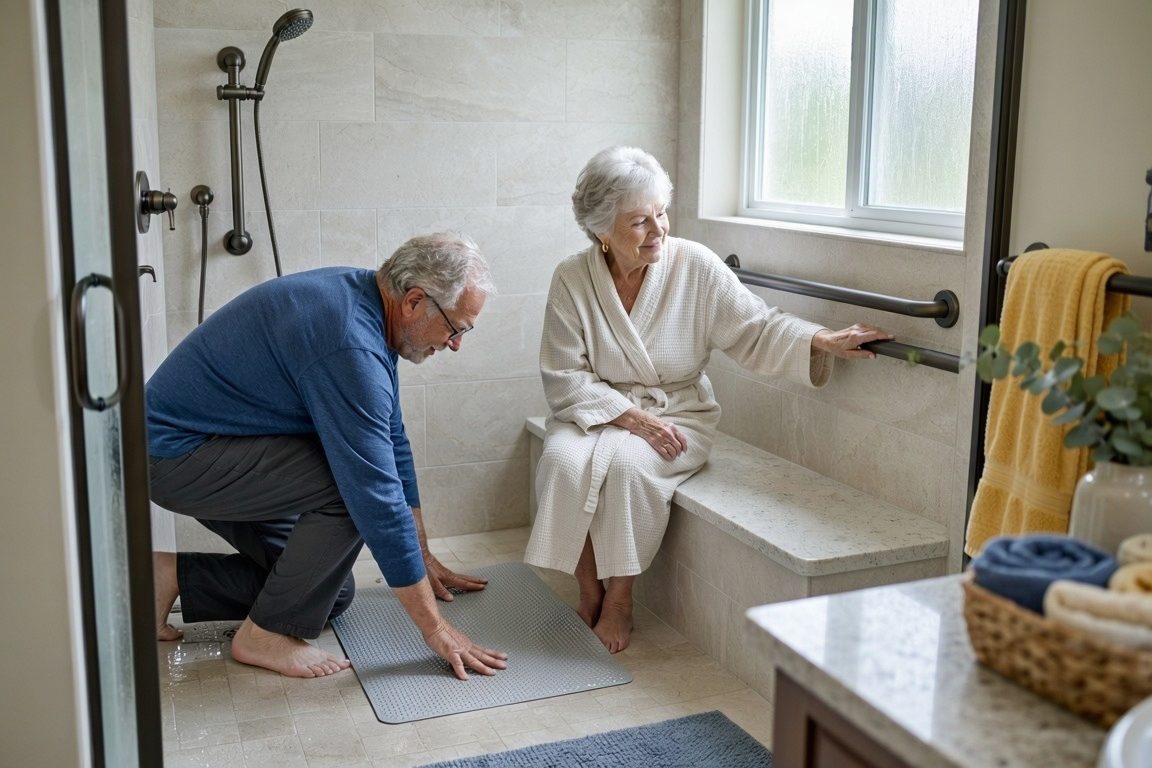
- Do not use bathmats with loose edges or no rubber backing. They can slide or bunch up, causing a fall.Instead, use mats with a non-slip rubber backing or adhesive strips that stay in place.
- Do not rely on towel bars or soap dishes as grab bars. They are not designed to support body weight and will pull out of the wall. Always install proper grab bars anchored into studs.
- Do not leave the water heater set above 120°F without an anti-scald device. A person with dementia may not feel the heat or remember to mix cold water, leading to severe burns. Also, do not lower the tank temperature below 120°F without consulting a plumber, as this can promote bacteria growth.Instead, keep the heater at 120°F and install an anti-scald valve at the point of use.
- Do not use dark-colored rugs on dark floors or light-colored rugs on light floors. This reduces contrast and makes it harder for the person to see the rug, increasing tripping risk. Choose a rug that contrasts with the floor color.
- Do not leave the bathroom door closed or locked. The person may not remember how to unlock it, causing panic or accidents.Instead, keep the door open or use a lock that can be opened from the outside in an emergency.
- Do not assume the person will adapt to new equipment without help. Introduce grab bars, a shower chair, or a raised toilet seat gradually. Show them how to use it, and use calm, positive language: 'This new seat will help you sit down more easily.'
Key points
- Install grab bars near the toilet and in the shower, anchored into wall studs, to provide stable support.
- Use non-slip mats or textured stickers inside and outside the shower to prevent slips on wet surfaces.
- Keep the water heater at 120°F and install an anti-scald device at the point of use to prevent burns while avoiding bacteria growth.
- Add color contrast (e.g., a dark toilet seat on a light floor) to help the person see fixtures and avoid missing the seat.
- Keep frequently used items within easy reach to prevent bending or stretching that could lead to falls.
- Improve lighting with night lights and brighter bulbs, especially on the path to the bathroom and inside the room.
Videos
 Steady Steps: Practical Strategies for Managing Falls in DementiaThis video provides practical fall prevention strategies specifically for dementia, including bathroom modifications like grab bars and non-slip mats.
 Fall Safety TipsCovers general fall safety tips that apply to the bathroom, such as removing clutter and improving lighting.
 Assisting with Activities of Daily Living in Dementia CareDemonstrates how to assist with bathing and toileting, including using a shower chair and handheld shower head, with a focus on preserving dignity.
 Creating a Dementia-Proof HomeOffers a room-by-room guide to home safety, with a segment on bathroom modifications like grab bars and color contrast.


Background
Why the Bathroom Is a High-Risk Zone for Falls and Burns
For a person with dementia, the bathroom presents a perfect storm of hazards. Wet, slippery surfaces, low lighting, and hard fixtures combine with cognitive changes that affect balance, depth perception, and judgment. The person may not recognize the toilet against a white floor, misjudge the edge of the tub, or forget to mix hot and cold water, leading to scalding. As dementia progresses, the ability to plan a sequence of actions, like turning on water, adjusting temperature, and stepping into a shower, becomes impaired, increasing the risk of a fall or burn. The bathroom is also a private space where a person may resist help, making it harder for a caregiver to intervene before an accident happens.
How Dementia Affects Bathroom Safety: The Hidden Risks
Dementia doesn't just affect memory; it changes how a person sees and interprets their environment. Depth perception declines, so a white toilet on a white floor may look like a flat surface, not a seat. The person might try to sit down where there is no toilet, leading to a fall. Similarly, they may not feel the temperature of water correctly or forget how to turn the faucet, risking burns. The bathroom's acoustics can amplify sounds, running water, flushing, which may cause anxiety or confusion. The person might also mistake a wastebasket or plant for a toilet, especially at night. These challenges mean that standard bathroom setups, designed for a fully alert person, become dangerous for someone with dementia. Understanding these perceptual changes helps you see why simple modifications, like color contrast and grab bars, are so effective.
The Emotional Side: Fear, Resistance, and Dignity
For the person with dementia, the bathroom can feel like a place of failure. They may be anxious about managing toileting or bathing, embarrassed by needing help, or frustrated by their own confusion. They might resist using grab bars or a shower chair because it feels like a loss of independence, a dignity issue. Caregivers often feel the same tension: you want to keep them safe, but you don't want to take away their autonomy. This is why the way you introduce changes matters as much as the changes themselves. Using warm, calm language, preparing the room in advance, and framing assistance as teamwork ('Let's get cleaned up together') can reduce resistance. The goal is to create a space that feels safe and supportive, not clinical or infantilizing.
Practical tools
8
Grab Bar Installation Kit
A kit that includes a stud finder, drill bit, and screws. Use it to install grab bars near the toilet and in the shower. Choose bars with a textured grip and a weight rating of at least 250 lbs. Place them at a height the person can reach while seated or standing.
Non-Slip Shower Mat with Suction Cups
A mat that sticks to the tub or shower floor with suction cups. Look for one with drainage holes to prevent water pooling. Place it before the person enters the shower. Test it weekly to ensure it hasn't shifted.
Raised Toilet Seat with Handles
A seat that adds 2-4 inches of height and includes built-in armrests. This makes sitting and standing easier. Choose a model that clamps securely to the existing toilet. Measure the toilet bowl shape (round or elongated) before buying.
Shower Transfer Bench
A bench that sits half in and half out of the tub. The person sits on the bench, swings legs over the tub wall, and slides into the shower. Look for a model with adjustable legs, rubber feet, and a backrest. A popular option is the Drive Medical 12011KD-1 (around $55).
Handheld Shower Head with Slide Bar
A shower head on a hose that can be mounted on a slide bar for height adjustment. This allows the person to shower while seated and reduces the need to reach. Choose one with a pause button to control water flow.
Anti-Scald Device or Thermostatic Valve
A device that limits water temperature to a safe level (e.g., 110°F). It can be installed on the shower head or faucet. This is especially important if you cannot lower the water heater temperature. Discuss installation with a plumber.
Color-Contrast Toilet Seat and Rug Set
A toilet seat in a bold color (e.g., dark blue or green) paired with a matching rug. This helps the person see the toilet against a light floor. Choose a rug with a non-slip backing. Avoid patterns that could be confusing.
Night Light with Motion Sensor
A plug-in night light that turns on automatically when someone enters the bathroom. Place it near the toilet and along the path from the bedroom. This reduces fall risk during nighttime trips to the bathroom.
Different situations
Early-stage dementia (still independent)
Focus on low-visibility modifications: install grab bars in neutral colors, use a raised toilet seat that looks standard, and add non-slip mats that match the decor. The person may resist obvious changes, so frame them as 'helping you stay independent longer.' Use verbal reminders about water temperature and lighting.
Late-stage dementia (needs full assistance)
Prioritize safety over aesthetics. Use a shower chair or transfer bench for all bathing. Keep the water heater at 120°F and install an anti-scald device. Remove all throw rugs and clutter. The caregiver should prepare the bathroom in advance: warm the room, gather supplies, and have towels ready. Use a handheld shower head to control water flow. Consider a bedside commode for nighttime to reduce fall risk.
Lewy body dementia (fluctuating cognition and movement issues)
Be extra cautious with grab bars and non-slip surfaces because of parkinsonism (stiffness, tremors, balance problems). The person may have 'good days' and 'bad days.' Install grab bars at multiple heights to accommodate different needs. Use a shower chair with a backrest and armrests. Monitor water temperature closely because the person may not sense heat. Keep the bathroom well-lit and clutter-free.
Spouse caregiver vs. adult child caregiver
A spouse may feel more comfortable making intimate changes (e.g., installing a raised toilet seat) but may also be more resistant to 'medicalizing' the home. An adult child may need to approach the topic with sensitivity: 'Mom, I want you to be safe so you can stay here longer.' Both should involve the person with dementia in decisions when possible, using 'we' language.
Living in a facility (assisted living or nursing home)
Advocate with staff for the same modifications: grab bars, non-slip mats, raised toilet seat, and shower chair. Ask for a room near the bathroom. Ensure the facility has anti-scald devices and adequate lighting. You can bring your own equipment (e.g., a shower bench) if allowed. Communicate the person's specific needs to the care team.
For the doctor
5
- Ask your doctor or occupational therapist about the best height for grab bars and raised toilet seats based on the person's height and mobility.
- Discuss whether a bedside commode or urinal is appropriate for nighttime use, especially if the person has frequent falls or incontinence.
- Ask about anti-scald devices or thermostatic mixing valves if you cannot lower the water heater temperature safely. Also ask: 'Is it safe to lower the water heater temperature below 120°F in our home, or should we keep it at 120°F and use an anti-scald device instead?'
- Consult a physical therapist about the safest type of shower chair or transfer bench for the person's specific balance and strength needs.
- If the person has a history of falls, ask about a fall risk assessment and whether a medical alert system is recommended.