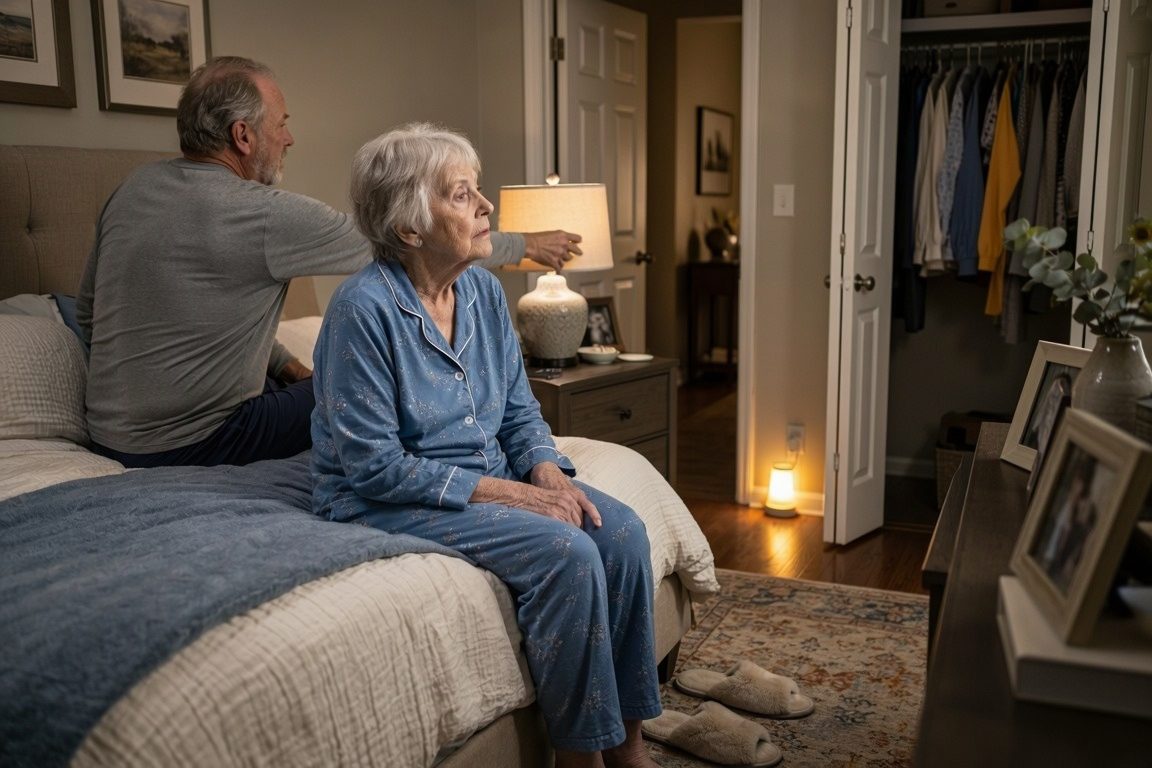
Step by step
What not to do
- Do not use dark-colored rugs on dark floors. This eliminates contrast and can make the floor look like a hole, increasing fall risk.Instead, use light-colored, non-slip flooring or a rug that contrasts sharply with the floor.
- Do not leave clutter, shoes, or small pets in the walking path. These are trip hazards. Keep pathways wide and clear. If you have a small pet, consider a baby gate to keep it out of the bedroom at night.
- Do not use extension cords that cross the floor. They are a tripping hazard.Instead, rearrange furniture so cords are along walls or use cord covers taped to the baseboard.
- Do not assume the person can find the bathroom at night. Even if they've lived in the house for years, dementia can erase that memory. Use a brightly colored sign on the bathroom door (with a picture of a toilet) and keep the door open so the toilet is visible.
- Do not use electric blankets or heating pads without checking for safety. They can cause burns or fires if the person cannot feel heat or if the blanket is old. Discuss with the clinician whether a safer alternative, like a warm fleece blanket, is appropriate.
- Do not place the bed against a wall if the person gets out on both sides. This can trap them or cause falls when they try to get out on the wrong side.Instead, leave space on both sides of the bed and consider a bed rail on the side they don't use.
Key points
- Move the bedroom to the first floor if possible to avoid stairs.
- Use contrasting colors for the bed, floor, and walls to improve depth perception.
- Remove all throw rugs and clutter from pathways.
- Install motion-sensor night lights from the bed to the bathroom.
- Provide a bedside commode or urinal to reduce nighttime falls.
- Secure or remove mirrors to prevent confusion and fear.
- Use waterproof bed protectors (chucks) to reduce laundry and preserve sleep.
- Make closet shelves accessible at waist height to avoid reaching or bending.
Videos
 Quick Tips: Aging in PlaceThis video offers practical, quick tips for modifying the home to age in place, including bedroom safety adjustments like bed height and lighting.
 Steady Steps: Practical Strategies for Managing Falls in DementiaFocuses on fall prevention strategies specific to dementia, including bedroom modifications like removing rugs and improving lighting.
 How Do You Ensure Home Safety For Dementia Patients? - Dementia Help HubCovers overall home safety, with a section on bedroom safety including bed height, clutter removal, and night lights.
 095. How to create a safe home for Dementia family membersProvides a room-by-room guide, including bedroom-specific advice on bed placement, lighting, and fall prevention.
2 more videos


Background
Why the Bedroom Becomes a Danger Zone
As dementia progresses, the bedroom can become a source of falls and confusion. The person may have trouble judging distances, depth perception, and contrast, making it hard to see where the bed ends or where the floor begins. Shadows and poor lighting can create frightening illusions, and the person may mistake a closet for the bathroom or become disoriented when waking in the dark. The bedroom is also where many nighttime falls occur, especially when the person gets up to use the bathroom and cannot find the way or misjudges the bed height.
The Role of Vision and Perception
People with dementia often lose the ability to see contrast and depth. A white bedspread on a white floor can look like a void, and a dark rug can appear as a hole. This is why using contrasting colors is so important: a dark-colored bed frame against a light floor, or a brightly colored toilet seat in a white bathroom, helps the brain understand where things are. Similarly, removing clutter and creating wide, clear pathways reduces the chance of tripping or bumping into furniture. The goal is to make the environment as visually simple and predictable as possible.
The Nighttime Challenge
Nighttime is especially risky because the person may wake up confused, in the dark, and needing to use the bathroom. Shadows can look like people or obstacles, and the path to the bathroom may be unclear. This is where motion-sensor night lights, a clear path, and possibly a bedside commode can make a huge difference. The bedroom should also be free of mirrors, which can cause the person to think a stranger is in the room, leading to fear or agitation.
Practical tools
6
Motion-Sensor Night Lights
Place these along the path from the bed to the bathroom. They automatically turn on when the person stands up, providing gentle light without startling them. Choose warm, soft light to avoid harsh shadows. Examples: GE Motion-Sensing Night Light or Maxxima LED Motion-Activated Night Light.
Bedside Commode or Urinal
A bedside commode (a portable toilet) or a urinal for men can prevent nighttime falls. Place it on a non-slip mat and ensure it is stable. For women, a female urinal (like the Freshette) can be used. Keep a night light nearby. Discuss with the clinician if the person has balance issues or uses a walker.
Contrast Tape or Paint
Use brightly colored tape (like red or yellow) to mark the edges of steps, the bed frame, or the doorway to the bathroom. This helps with depth perception. You can also paint the toilet seat a contrasting color (e.g., dark blue in a white bathroom) to make it easier to see.
Waterproof Bed Protectors (Chucks)
Reusable absorbent pads (chucks) placed under the person's hips protect the mattress and reduce laundry. They are available on Amazon in packs of six for about $25-40. They are washable and can be used under a fitted sheet. This reduces the need for full sheet changes at night, preserving sleep.
Grip Socks or Non-Slip Slippers
If the person walks barefoot or in socks, they can slip on smooth floors. Provide grip socks with rubber dots on the bottom, or non-slip slippers with a closed heel. This is especially important if you have removed rugs and have hardwood or tile floors.
Familiar Objects as Landmarks
Place a familiar object (like a favorite photo or a small plant) at the end of the hallway or near the bathroom door to help the person navigate. This uses preserved long-term memory to guide them. Avoid clutter, just one or two objects per route.
Different situations
Lewy body dementia
People with Lewy body dementia often have visual hallucinations and severe sensitivity to shadows. Use very soft, even lighting and avoid any flickering lights. Remove mirrors entirely, as reflections can be mistaken for strangers. They may also have Parkinson's-like stiffness, so ensure the bed is at a height that allows easy transfer, and consider a bed rail for safety. Nighttime confusion can be extreme, a bedside commode is highly recommended.
Late-stage dementia (bedbound or very limited mobility)
Focus on pressure relief and comfort. Use a hospital bed with side rails (discuss with clinician) to prevent rolling out. Keep the bed in a low position to reduce fall height. Use a waterproof mattress and chucks. Provide a call bell or a simple way to signal for help. Ensure the room is warm (but not hot) and free of drafts. Supervision and assistance with all transfers is critical.
Spouse vs. adult child caregiver
A spouse may be more willing to share a bed or room, but the person with dementia may become agitated at night. Consider separate beds in the same room or a twin bed nearby. An adult child may need to install a baby monitor or a video camera (with consent) to monitor nighttime activity. Both should ensure the caregiver gets adequate sleep, consider respite or a night sitter if needed.
Living in a facility (assisted living or nursing home)
You can still modify the room. Bring in familiar bedding, photos, and a night light. Request a bed rail if needed. Ensure the call button is within reach. Discuss with staff the person's nighttime routine and any fall risks. You can also bring a bedside commode if the bathroom is far from the bed.
Medicaid or limited budget
Many modifications are low-cost: use painter's tape for contrast, buy used furniture from thrift stores, and ask local senior centers for free or low-cost grab bars and ramps. Some Medicaid waivers or Area Agencies on Aging may cover home safety modifications. Contact your local United Way or senior center for resources.
For the doctor
5
- Ask the doctor if a hospital bed with side rails is appropriate for your loved one's stage and fall risk.
- Discuss whether a bedside commode is safe given the person's balance and ability to transfer.
- Ask about the use of electric blankets or heating pads, are they safe for someone with reduced sensation or memory issues?
- If the person is prone to wandering at night, ask about medication adjustments or a nighttime routine to reduce agitation.
- Discuss the use of bed alarms or motion sensors to alert you when the person gets up, are they appropriate for your situation?