Step by step
What not to do
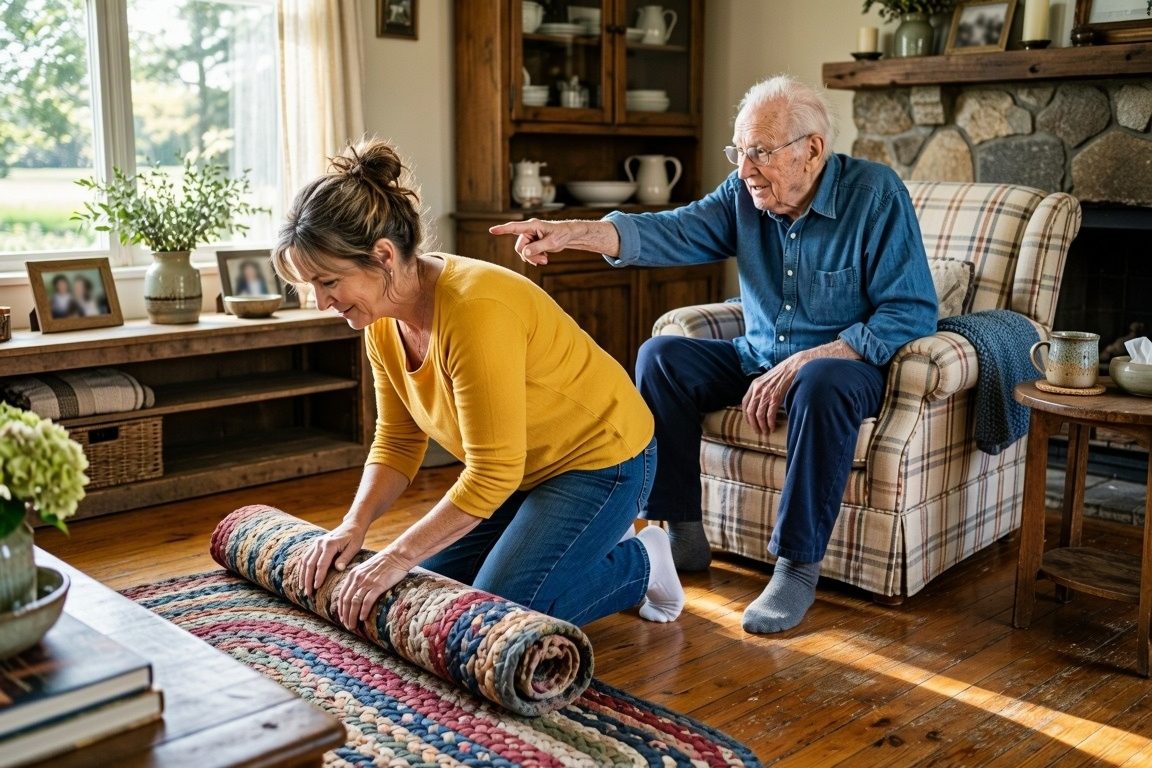
- Do not buy expensive medical equipment you cannot afford.Instead, start with free or low-cost fixes: remove rugs, improve lighting, use a sturdy kitchen chair as a shower seat. Expensive items are not always necessary.
- Do not rearrange furniture without the elder's input. This can cause confusion and increase fall risk for someone with dementia.Instead, involve them in decisions: 'Mom, where would you like your water glass to be so you can reach it easily?'
- Do not ignore 'nagging doubts' or small hazards. As one expert warns, 'Pay attention to those nagging thoughts... the ones you ignore are the ones that are going to cause problems.' If you notice a loose rug or a dark hallway, fix it immediately, not later.
- Do not assume the person will tell you about a fall. Many older adults hide falls out of fear or shame. Watch for signs: new bruises, reluctance to walk, or changes in behavior. Ask gently: 'I noticed you seem a little unsteady today. Can we talk about how to make things safer?'
- Do not use restraints or overly restrict movement to prevent falls. This can lead to muscle weakness, more falls, and loss of dignity.Instead, support safe mobility: clear paths, good lighting, and encourage gentle exercise like walking with a cane or holding a family member's arm.
Key points
- Most falls are preventable with low-cost or free changes: remove rugs, improve lighting, clear clutter.
- Involve the elder in safety decisions to respect their autonomy and cultural values.
- Use free community programs (Tai Chi, Stepping On) and loan closets for equipment.
- Hydration and slow standing are simple, powerful fall prevention tools, but check with a doctor about fluid needs.
- Do not ignore small hazards, fix them immediately.
- Talk to the doctor about fall risk, medications, and a physical therapy referral.
Videos
 Fall Safety TipsProvides practical, low-cost home safety tips including removing rugs and improving lighting.
 Home Safety For Your Loved OnesShows how to create a safer home environment with simple, affordable changes.
 Consuela Marshall OT, CHAT, CDP, CAPS, CGCP Founder of Finding a FootholdOffers culturally sensitive fall prevention advice from an occupational therapist with expertise in underserved communities.
 Steady Steps: Practical Strategies for Managing Falls in DementiaFocuses on dementia-specific fall risks and practical, low-cost strategies.


Practical tools
6
The 'Fix List' Checklist
A free, printable checklist you can create on paper. Write down each room and check for:
Cross off each fix as you complete it. This turns a big problem into small, doable steps.
Bright Duct Tape for Visual Cues
Neon yellow or orange duct tape (under $3 at a dollar store) can mark the edge of each stair step, the transition from a hallway to a different floor surface, or the outline of a doorway. This is especially helpful for people with dementia who have trouble seeing depth or changes in surface.
Free Community Program Finder
The National Council on Aging's online tool (ncoa.org) lets you enter a zip code to find local fall prevention programs. Many are free and held at senior centers, churches, or community health centers. Examples: Tai Chi for balance, Stepping On, or A Matter of Balance.
The 'Slow Stand' Routine
Teach the person to stand up in three steps:
This prevents dizziness from blood pressure drops. If they feel dizzy, sit back down immediately.
A Sturdy Kitchen Chair as a Shower Seat
If you cannot afford a shower bench, use a plastic or wooden kitchen chair (no cushions) placed in the tub or shower. Put a non-slip bath mat under it. The person sits to bathe. Always stay nearby to supervise.
The 'Within Reach' Setup
Place the person's most-used items (remote, water glass, glasses, phone, medications) on a small tray or basket next to their favorite chair or bed. This prevents them from having to stretch, bend, or walk to get what they need.
Different situations
For a person with early-stage dementia who is still independent
Focus on education and habit-building. Use the 'Slow Stand' routine and hydration reminders (after checking with the doctor about fluid needs). Involve them in the home safety walk-through so they feel in control. Avoid language like 'you might fall', instead say 'let's make this room even easier for you to move around.'
For a person with moderate to advanced dementia who wanders
Add motion-sensor night lights (cheap at dollar stores) in hallways and bathrooms to light the path. Place familiar objects (a favorite hat, a photo) as landmarks to guide them. Put a chair in a long hallway so they can rest if tired. Supervise all bathroom and shower activities.
For a person living alone or with a spouse who is also older
Prioritize the most dangerous areas: bathroom and stairs. Install a drilled grab bar by the toilet. Use a commode chair (often available free from local loan closets or churches) next to the bed to avoid nighttime trips to the bathroom. Set up a phone or emergency alert button (a simple cordless phone on a low table) within reach.
For a family with very limited income (Medicaid or no insurance)
Focus on zero-cost fixes: remove rugs, improve lighting by opening curtains, use free nightlights from community programs. Contact your local Area Agency on Aging (call 1-800-677-1116) for free home safety assessments and possible equipment loans (grab bars, shower chairs). Many churches and senior centers have 'loan closets' for medical equipment.
For a person with Lewy body dementia or Parkinson's disease
These conditions cause fluctuating balance and rigidity. Use a walker with a seat (often available secondhand or through a loan program) so the person can rest if they feel unsteady. Avoid rugs entirely, even taped ones can catch a shuffling foot. Ensure the person always wears non-slip, well-fitting shoes (not slippers).
For the doctor
6
- Ask the doctor to check the person's blood pressure lying, sitting, and standing to screen for orthostatic hypotension.
- Ask if any current medications (blood pressure meds, sedatives, antidepressants, diuretics) increase fall risk and if doses can be adjusted.
- Ask about a referral to a physical therapist for a free or low-cost balance and strength assessment.
- Ask if the person should have a vitamin D and calcium level check, deficiencies can increase fall risk and fracture risk.
- Ask about a home safety evaluation through your local Area Agency on Aging or health department (often free).
- Ask the doctor: 'How much water should my loved one drink each day, especially if they have heart or kidney conditions?'