
Step by step
What not to do
- Don't overload the plate; serve one or two foods at a time or use a divided plate.
- Don't serve food too hot; they may not wait for it to cool and could burn their mouth.
- Don't force them to eat or scold them; instead, try different food, texture, or time of day.
- Don't assume refusal means dislike; check for dental pain, swallowing difficulty, or sore throat, and consult a speech pathologist if needed.
- Don't neglect your own well-being; accept help from others for meals or respite.
Key points
- Routine and consistency reduce confusion: same time, same place, same sequence of steps.
- Small, frequent meals (5-6 per day) prevent fatigue and overwhelm.
- Boost calories and protein with butter, whole milk, and protein powder, don't worry about 'junk food' if it helps maintain weight.
- Finger foods are a game-changer when utensils become difficult.
- Use the two-plate trick and the red plate strategy to increase food intake.
- Hydrate creatively with popsicles, broth, and a fun water bottle.
- Take care of yourself, accept help and prioritize your own health.
Videos
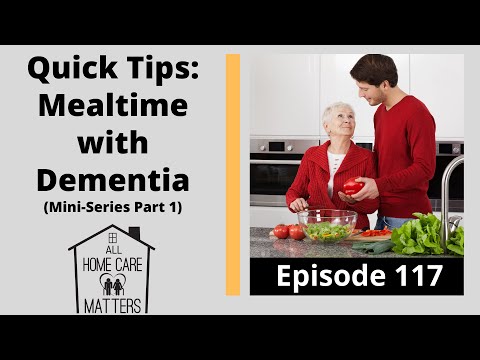 Quick Tips: Mealtime with Dementia (Mini-Series Part 1)Offers quick, actionable tips for reducing mealtime stress, including how to present food and create a calm environment.
 Improve meal times for someone with dementiaCovers practical strategies like serving finger foods and using visual cues to make eating easier.
 Dementia Caregiving: How to Get Them to EatAddresses common reasons for food refusal and provides fixes, including the two-plate trick and sweetening foods.
 Zinnia Caregiver Support - Eating and DementiaShares insights from people living with dementia about the importance of a distraction-free environment and consistent routines.
2 more videos


Practical tools
5
Two-Plate Trick
Prepare two identical plates of food, one for you and one for your loved one. Eat together and say, 'I made us both the same lunch.' Seeing you eat can trigger appetite. If they hesitate, offer choice between plates.
Red Plate Strategy
Use a solid red plate (or other high-contrast color) to improve food visibility. White plates on white surfaces hide food; high contrast increases intake. Avoid patterned plates or busy placemats.
Finger Food Tray or Bento Box
A tray with small, easy-to-pick-up foods:
Makes eating snack-like and boosts intake when utensils confuse.
Hydration Toolkit
Include
Offer choices throughout the day; the brain may not signal thirst.
Adaptive Utensils and Dishware
Use easy-grip utensils with thick handles, divided plates, or bowls to simplify eating. High-contrast colors and non-slip mats can also help.
Different situations
Early-stage Alzheimer's or MCI
Your loved one may still be able to eat independently but might forget they've eaten or lose interest in food. Focus on routine and offering small, frequent meals. Use the MIND diet as a guide (leafy greens, berries, nuts, whole grains, fish) but don't stress if they refuse. Weight gain is more common in early stages, so it's okay to offer treats like cake or ice cream to maintain weight. Involve them in simple meal prep, like washing vegetables or setting the table, to keep them engaged.
Lewy body dementia or Parkinson's dementia
Tremors and rigidity can make using utensils very difficult. Prioritize finger foods and easy-to-hold cups with two handles. Swallowing issues are more common, so consult a speech therapist for safe swallowing techniques. Avoid hot foods that might burn their mouth. Be aware that visual hallucinations might cause them to misinterpret food (e.g., a red stripe on a plate might look like blood). Use plain, solid-colored plates and placemats.
Spouse vs. adult child caregiver
As a spouse, you may feel pressure to maintain 'normal' meals and may struggle with guilt when your partner refuses food. Remember that your relationship is more important than the meal. Sit together, hold hands, and eat in a calm, loving way. As an adult child, you may need to set boundaries and accept help from siblings or community services. Don't try to do it all alone. Ask for help with meal prep or grocery shopping.
Living in a facility or with paid caregivers
Share this guide with the care team. Ask them to use the same routine and environment each time. Request that they sit with your loved one during meals and use the two-plate trick if possible. Provide a list of favorite foods and textures. If your loved one is in a memory care unit, they may already use feeder tables, this is normal and helps prevent weight loss. Visit during mealtimes to offer companionship and encouragement.
Medicaid or limited budget
You don't need expensive supplements. Use whole milk, peanut butter, eggs, canned tuna, and frozen vegetables to create high-calorie, high-protein meals. Make your own smoothies with banana, yogurt, and milk. Popsicles can be made with juice or leftover smoothie mix. Ask your doctor about food assistance programs like Meals on Wheels or SNAP. Many communities offer free or low-cost caregiver support groups where you can share tips and resources.
For the doctor
5
- Ask your doctor or a dietitian if your loved one needs a commercial supplement like Ensure or a high-calorie shake, and if so, which one is best.
- If your loved one has trouble swallowing, coughs while eating, or loses weight rapidly, ask for a referral to a speech therapist for a swallowing evaluation.
- If dental pain, ill-fitting dentures, or mouth sores are suspected, schedule a dental checkup. Pain can cause food refusal.
- If your loved one is on medications that affect appetite or cause dry mouth, ask the doctor if adjustments are possible.
- If weight loss continues despite your best efforts, ask about a referral to a registered dietitian who specializes in dementia care.