Step by step
What not to do
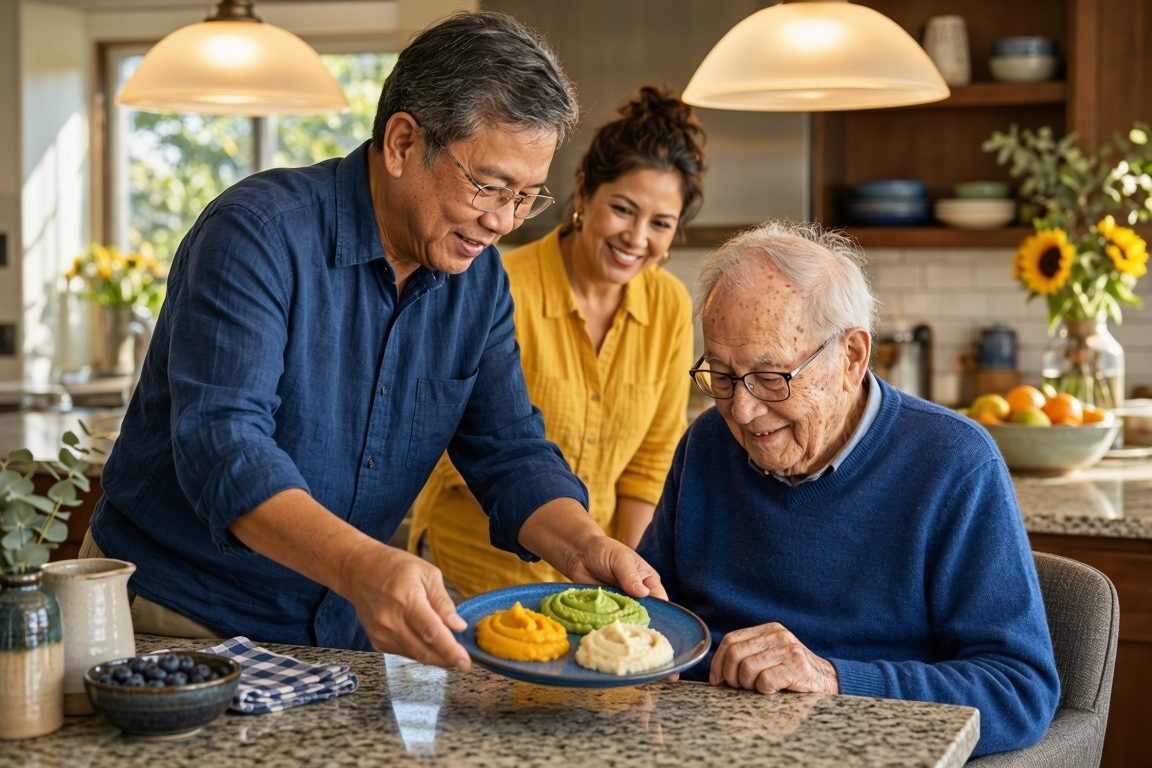
- Do not serve pureed food that looks like a uniform, unidentifiable paste. This can be off-putting and confusing.Instead, use separate colors and shapes to make each component recognizable.
- Do not assume your spouse will dislike pureed versions of their favorite foods. Many people with dementia or after stroke will eat foods they previously enjoyed, even in a different texture. Experiment with pureeing their old favorites before giving up on them (source 4).
- Do not rush the meal or show frustration. Your body language and tone matter greatly. If you seem stressed, your spouse may feel pressured and refuse to eat. Take your time, sit at eye level, and speak in a calm, encouraging voice (source 11).
- Do not skip the step of warming the food. Pureed food can cool quickly and become less appetizing. Serve it warm (not hot) to enhance aroma and taste. You can also use a warm plate to help retain heat.
- Do not forget to check for oral pain or ill-fitting dentures. Pain can cause refusal to eat, even if the food is appealing. Gently ask if their mouth hurts, and consult their dentist or doctor if you suspect a problem (source 26).
- Do not force your spouse to eat if they are not hungry.Instead, offer small, frequent meals throughout the day. A few bites every hour can add up to more nutrition than a single large meal that causes stress.
Key points
- Pureed food doesn't have to be unappetizing, use color, shape, and flavor to make it appealing.
- Offer choices between two pureed options to give your spouse a sense of control.
- Use food cueing: name each bite to help your spouse recognize and enjoy the meal.
- Eat the same meal (non-pureed) together to normalize the experience.
- Keep the dining area calm and free of distractions to help your spouse focus.
- Batch-cook and freeze pureed meals to reduce daily stress and ensure variety.
Videos
 Why Meal Refusal Happens with Dementia (And How to Tackle It Without a Fight)This video explains common reasons for meal refusal, including texture and taste issues, and offers practical strategies that apply directly to pureed meals.
 Loss of Appetite in DementiaCovers appetite loss causes and solutions, including how to make food more appealing through flavor and presentation.
 Dementia Food Secrets: Expert Q&A with Molly Robinson,RDA registered dietitian answers questions about pureed diets, thickening liquids, and making meals nutritious and tasty.
 Dementia, Weight Loss, and Loss of Appetite: Cause and how to helpAddresses weight loss concerns and offers tips for boosting calories in pureed foods without sacrificing appeal.
2 more videos


Background
Why Pureed Food Can Feel Unappetizing
After a stroke, dysphagia often means your spouse needs pureed food to prevent choking or aspiration. But pureed food, when simply blended into a uniform paste, can look and feel like a 'thick goop', as one expert described it, 'like drinking a thick but less tasty milkshake' (source 6). This lack of texture and visual appeal can make eating feel like a chore rather than a pleasure. Your spouse may refuse to eat because the food no longer looks or tastes like the meals they once loved.
The Role of Taste and Smell Changes
Stroke and aging can dull taste buds and sense of smell. Foods that once were flavorful may now seem bland. Experts note that 'taste buds really suffer as we age' and that strong flavors, especially sweet and savory (umami) , are often the last to be recognized (source 3). Since pureed food already lacks texture, you need to compensate with bold, appealing flavors and aromas. Using herbs, spices, and even a touch of sweetness can make a big difference.
The Emotional Impact of Dysphagia
Your spouse may feel embarrassed, frustrated, or even depressed about needing pureed food. They might associate it with baby food or illness. One caregiver shared that after a swallow test, her husband 'could see and was like, 'So, it's going down the right pipe. You're okay'', but the emotional adjustment took time (source 8). Your calm, reassuring presence and your willingness to make meals look and taste good can help them feel cared for and respected.
Practical tools
6
The 'Two-Plate Choice' Technique
Prepare two small plates with different pureed meals (e.g., one with chicken puree and one with beef puree). Hold them up and ask, 'Which one would you like for dinner?' Let your spouse point or say the name. Then, serve that plate and eat the other one yourself. This gives control and reduces refusal (source 1).
Flavor Boosters Checklist
Keep a small jar of these on hand:
Add a pinch or drop to pureed foods to enhance flavor. For sweet dishes, a dash of cinnamon or vanilla can make it feel like a dessert. For savory, smoked paprika adds depth.
Colorful Puree Molds
Use small silicone molds (e.g., star, heart, or flower shapes) to shape pureed foods. After blending, spoon the puree into the mold and refrigerate for 10 minutes to set. Then unmold onto a plate. The visual appeal can spark curiosity and appetite. This works especially well for vegetable purees.
The 'Name That Bite' Script
As you offer each spoonful, say: 'Here comes a bite of your favorite chicken stew. Mmm, it's so good.' Repeat the name of the dish every few bites. This helps your spouse recognize the food and connect it to positive memories (source 23).
Distraction-Free Dining Setup
Set the table with only the essentials:
Remove salt shakers, decorations, and other items that could be confusing or distracting. Keep the TV off and the room quiet (source 20).
Hydration Boosters
If your spouse refuses to drink, offer pureed soups, smoothies, or popsicles made from pureed fruit and yogurt. These can provide hydration and calories in a safe, appealing form. Always check with your speech-language pathologist or doctor before offering these, and use thickeners as directed to achieve the correct consistency for your spouse. Stop immediately if you notice any coughing, choking, or wet-sounding voice, and consult your clinician.
Different situations
If your spouse has had a severe stroke and has significant cognitive impairment
Focus on finger foods that are naturally soft and safe, like well-cooked sweet potato wedges, soft meatballs, or banana slices. These can be picked up without utensils and are less frustrating. Also, use a feeder table or a high chair if needed, and provide hands-on assistance with gentle guidance (source 2).
If your spouse is in the early stages after stroke and has some cognitive clarity
Involve them in the meal preparation as much as possible. Let them choose between two pureed options, or help stir the blender. This preserves dignity and gives a sense of purpose. You can also explain the reason for pureed food in simple terms: 'The doctor wants to make sure your throat is safe, so we're having this special texture for now.'
If your spouse has a history of refusing sweet foods but now craves them
This is common after stroke and with aging, sweet is often the last taste to fade (source 3). Embrace it. Offer pureed fruits, sweetened yogurt, or even a small portion of pureed dessert like pudding or custard. You can add protein powder or healthy fats (like avocado) to boost nutrition without changing the sweet taste.
If you are the sole caregiver and feel overwhelmed
Batch-cook pureed meals on weekends and freeze them in single-serving containers. Label each with the date and contents. This reduces daily stress. Also, consider asking a friend or family member to sit with your spouse during one meal a day so you can have a break. Your well-being matters too.
If your spouse has additional medical conditions like diabetes or high blood pressure
Work with a registered dietitian to ensure pureed meals meet their dietary needs. For diabetes, avoid adding too much sugar or honey; use sugar-free sweeteners or pureed berries instead. For high blood pressure, use herbs and spices instead of salt. Always discuss any changes with their doctor.
For the doctor
7
- Ask your speech-language pathologist for a written list of safe and unsafe textures for your spouse's specific dysphagia level.
- Discuss with your doctor or dietitian whether adding thickeners to drinks is necessary, and if so, which brand and consistency to use.
- If your spouse has significant weight loss or refuses to eat for more than a day, consult their doctor to rule out underlying issues like infection, pain, or medication side effects.
- Ask about the possibility of a swallow study (videofluoroscopy) to get a clear picture of your spouse's swallowing function and guide texture recommendations.
- If your spouse has dentures or mouth pain, schedule a dental check-up to ensure there are no issues causing discomfort during eating.
- Ask your speech-language pathologist: 'What specific consistency should pureed soups, smoothies, and popsicles be for my spouse, and what thickener do you recommend?'
- Ask your doctor: 'Are there any medications my spouse is taking that could affect swallowing or appetite, and should we adjust them?'