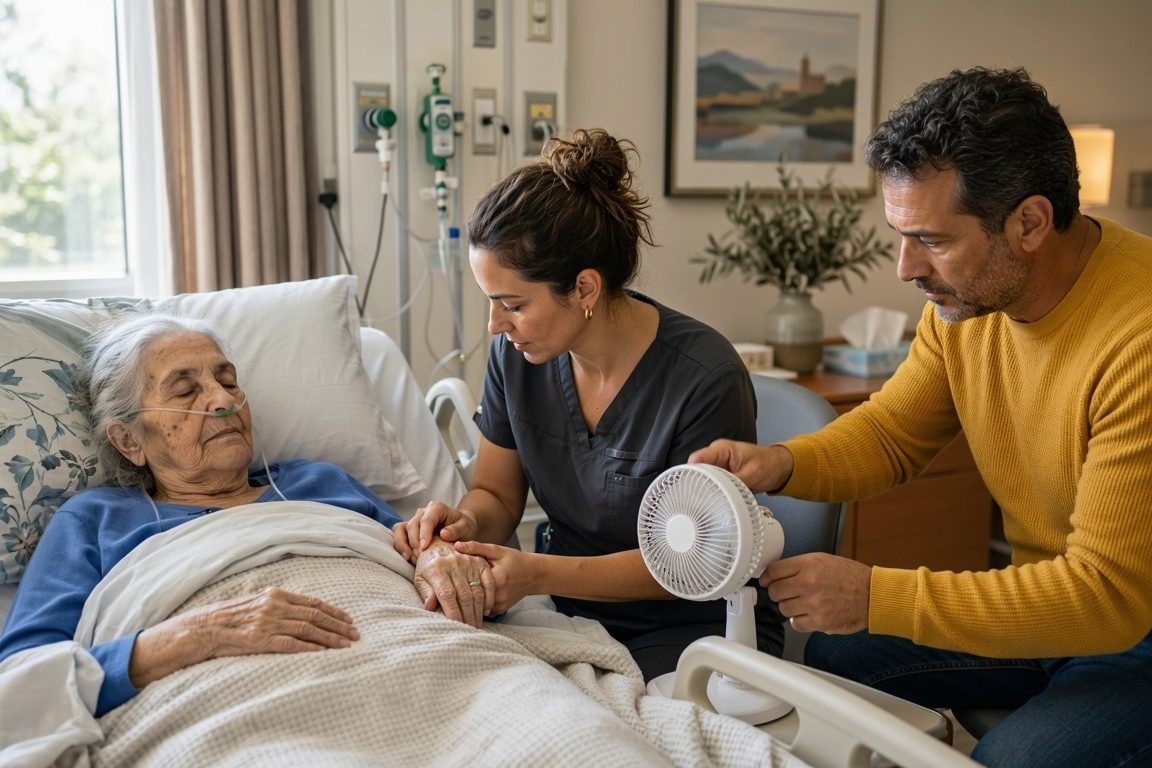
Step by step
What not to do
- Do not use strong scents like eucalyptus or citrus directly on the skin or in a diffuser without testing. They can trigger nausea or headaches.Instead, use a single drop on a cotton ball placed nearby.
- Do not force your loved one to eat or drink when nauseated. This can cause vomiting or aversion.Instead, offer small amounts and respect their cues.
- Do not use physical restraints or hold them down during pain or nausea episodes. This increases fear and agitation.Instead, use gentle redirection and calming words.
- Do not abruptly stop any prescribed medications, including opioids or antiemetics, without consulting the doctor. Alternative therapies are complementary, not replacements.
- Do not ignore signs of bowel obstruction (severe abdominal pain, vomiting, no bowel movements). This requires medical attention. Alternative therapies are not a substitute for urgent care.
- Do not use heat on the abdomen if there is swelling, fever, or suspicion of infection. Heat can worsen inflammation. Use cool compresses instead.
Key points
- Alternative therapies like gentle touch, music, and positioning can reduce pain and nausea without heavy medication side effects.
- Always use these therapies alongside, not instead of, prescribed treatments, discuss with the palliative team.
- Create a calm environment: dim lights, soft music, and avoid strong smells.
- Use positive, simple language and avoid elderspeak to reduce agitation.
- Keep a symptom diary to share with the team for better care adjustments.
- Take care of yourself, respite care is available and important for your well-being.
Videos
 Exploring and Understanding Restraints: A Guide for FamiliesThis video explains why physical and chemical restraints are harmful and offers non-pharmacologic alternatives, directly supporting the alternative therapy approach.
 What is Hospice Care?Clarifies the difference between palliative and hospice care, helping you understand when alternative therapies fit into the broader care plan.
 Palliative Care and Hospice Care for DementiaWhile focused on dementia, the principles of comfort care and non-drug approaches apply directly to cancer palliative care.
 What Does It Mean When Someone Is Hospice?Helps you understand the transition to hospice if your loved one's condition progresses, and how alternative therapies remain central.
2 more videos
 Does Alzheimer's Qualify For Hospice?Explains eligibility criteria for hospice, which can inform your planning if uterine cancer advances to a terminal stage.
 Differences between Hospice Care vs Palliative CareProvides a clear comparison, helping you navigate which services to access and when alternative therapies are most appropriate.
Practical tools
6
Calming Phrases for Nausea Episodes
When your loved one feels nauseated, say: 'I am right here. Let's take a slow breath together. You are safe.' Avoid saying 'You're sick' or 'It's okay' if it's not. Use a soft, low voice. Repeat as needed.
Symptom Tracking Sheet
Create a simple log with columns for time, pain level (0-10), nausea level (0-10), what helped (e.g., music, position, medication), and notes. Share this with the palliative team at each visit to fine-tune the plan.
Comfort Positioning Checklist
Checklist:
Gentle Music Playlist
Create a playlist of familiar, slow-tempo songs (classical, nature sounds, or hymns). Play at low volume during care routines or when pain spikes. Avoid upbeat or jarring music. Use a speaker, not headphones, to avoid isolation.
Aromatherapy Safety Guide
Use only 1-2 drops of peppermint or ginger oil on a cotton ball placed in a dish near the bed. Never apply to skin. Replace every 4 hours. If nausea worsens, remove immediately. Lavender can be used similarly for relaxation.
Breathing Buddy Script
Say: 'Let's breathe together. In through your nose... 1, 2, 3, 4. Hold... 1, 2, 3, 4. Out through your mouth... 1, 2, 3, 4.' Repeat 3-5 times. If they cannot follow, just breathe slowly yourself while holding their hand.
Different situations
Late-stage uterine cancer with bowel obstruction
Avoid any abdominal massage or heat. Focus on head elevation, cool compresses on the forehead, and small sips of clear liquids. Discuss with the clinician about corticosteroids or octreotide for symptom control. Alternative therapies are limited to distraction and gentle touch on non-abdominal areas.
Caregiver is a spouse vs. adult child
Spouses may need more emotional support and respite. Adult children may need guidance on setting boundaries. In both cases, use the same techniques but ensure the caregiver also takes breaks. Respite care (non-medical home care) can provide temporary relief so you can recharge.
Patient has cognitive decline (e.g., from opioids or advanced disease)
Simplify instructions. Use single-step directions like 'Let's sit up' instead of 'Let's sit up so you can drink.' Avoid overstimulation. Use familiar music and touch. If delirium occurs, focus on a calm environment and avoid medications that can worsen confusion (like benzodiazepines) unless prescribed.
Setting is a home with limited space or multiple family members
Designate a quiet room for care. Use a 'do not disturb' sign during rest times. Coordinate family visits to avoid crowding. Use a white noise machine to block out household sounds. Keep supplies (pillows, oils, water) in a caddy for easy access.
Patient is on high-dose opioids for pain
Monitor for constipation proactively (stool softeners, hydration). Nausea may be opioid-induced; discuss with the clinician about low-dose haloperidol or other antiemetics. Use alternative therapies like music and breathing to reduce the need for additional medications.
For the doctor
5
- Ask your palliative care doctor: 'Are there any medications like low-dose haloperidol or scopolamine patches that could help with nausea without heavy sedation?'
- Ask: 'Given my loved one's uterine cancer, are there specific alternative therapies you recommend or caution against?'
- Ask: 'How can we adjust the opioid dose to balance pain relief with nausea and drowsiness?'
- Ask: 'If bowel obstruction is suspected, what signs should I watch for and when should I call you?'
- Ask: 'Can we try a non-pharmacologic approach first for mild pain before increasing medication?'