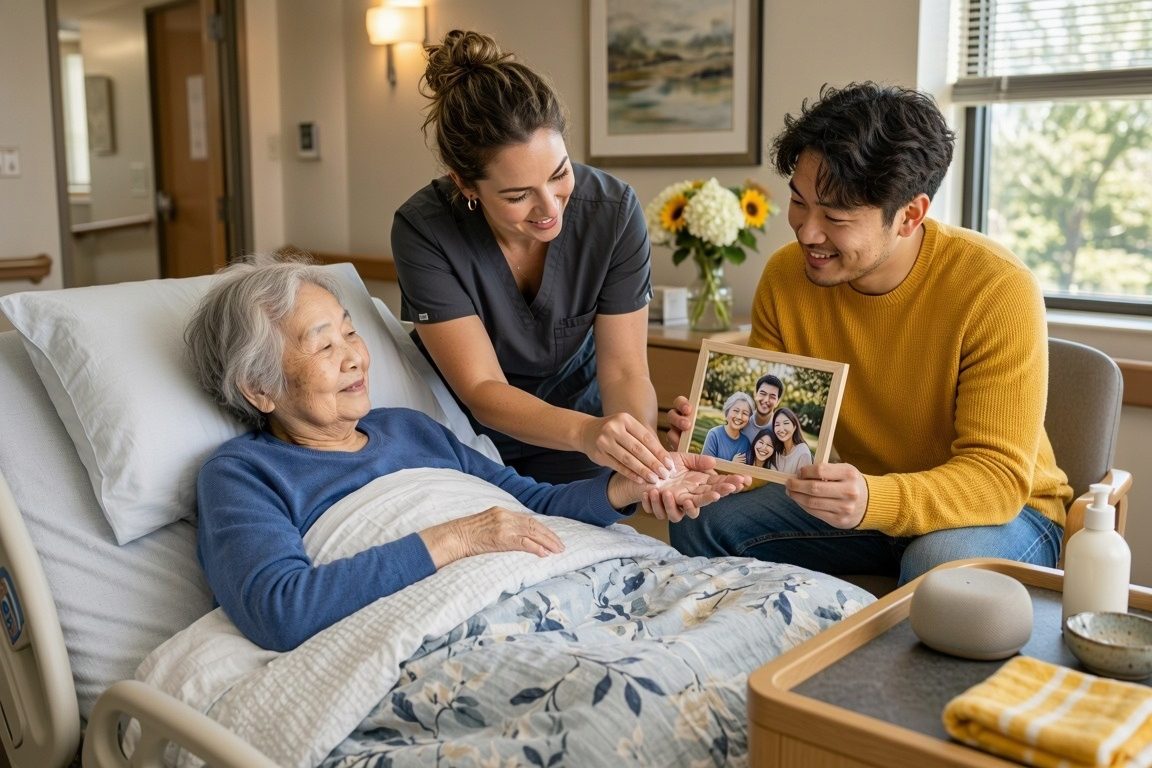
Step by step
What not to do
- Do not try to 'engage' them by asking questions or expecting a response. This can cause frustration or withdrawal.Instead, use simple statements and let them respond in their own time, even if that response is just a relaxed sigh.
- Do not use multiple sensory inputs at once (e.g., music, lotion, and a scented candle all at the same time). This can overwhelm their processing. Introduce one thing at a time, and pause to see how they react.
- Do not force an activity if they show signs of distress, turning away, grimacing, stiffening, or crying out. This is not 'resistance' to the program; it is a communication that they need a break or something different. Stop and just sit quietly.
- Do not expect the same response every day. In advanced dementia, abilities fluctuate. One day they may enjoy hand massage; the next, they may not tolerate touch at all. Follow their lead each time.
- Do not use the program as a substitute for medical care. If your loved one is in pain, has an infection, or is showing new behavioral changes, address those first. Meaningful Moments is for comfort, not treatment.
- Do not feel you have to 'do it perfectly.' The goal is connection, not performance. Even sitting in silence, holding their hand, counts as a meaningful moment.
Key points
- Meaningful Moments is a sensory-based, one-on-one program adapted from Namaste Care for advanced dementia.
- It focuses on comfort and connection, not cognitive stimulation or task completion.
- Use one sensory input at a time (touch, sound, scent) and watch for signs of pleasure or distress.
- The program is flexible, can be done at bedside, in a quiet corner, or during personal care.
- It can improve quality of life and reduce agitation, even in people who are nonverbal or bedbound.
- You do not need special skills, just patience, observation, and a willingness to follow their lead.
Videos
 When Should Dementia Patients Enter Hospice? - TestThis video helps you understand when advanced dementia has reached a stage where comfort-focused programs like Meaningful Moments become the primary goal of care.
 Home Health vs Palliative Care vs Hospice for Dementia Patients with Candance Ramos April 4 at 10Clarifies the difference between care types: Meaningful Moments is a palliative approach that can be used alongside hospice or in a specialized unit.
 Christmas Presents For Dementia PatientsOffers ideas for sensory gifts (soft items, music players, scented objects) that can be used in Meaningful Moments sessions.
 Discovering Busy Minds Box with Founder and CEO, Kristina LubofskyShows how activity boxes can be adapted for late-stage dementia, the founder explains how to split contents based on skill level, which aligns with Meaningful Moments principles.
2 more videos
 Where Can You Find Adult Day Care For Dementia Patients? - TestExplains that adult day programs may not be appropriate for advanced dementia; Meaningful Moments is a better alternative for late-stage care.
 Discover the 'Mindful Museum' Program Presented by Carnegie Museum of Art in PittsburghDemonstrates a similar sensory-based, conversational engagement program for dementia, useful for understanding the philosophy behind Meaningful Moments.
Background
What Is Happening and Why
In advanced dementia, the brain has lost the ability to process complex information, plan, or initiate conversation. Your loved one may not recognize you, speak, or respond to questions. But the capacity for feeling safe, comforted, and connected remains. The Meaningful Moments program is built on the idea that engagement does not require words or tasks, it happens through the senses: touch, smell, sound, and sight. By offering one gentle, predictable activity at a time, you bypass the damaged parts of the brain and speak directly to the emotional and sensory centers that still work. This is not about 'entertaining' or 'stimulating' them, it is about offering presence and pleasure in the moment, without expectation of a response.
Why This Works in a Specialized Dementia Care Unit
In a hospital-based specialized dementia care unit, the environment can be overwhelming, bright lights, loud noises, strangers, and constant activity. The Meaningful Moments program adapts Namaste Care by creating a calm, predictable ritual. It is often led by trained volunteers or staff who sit one-on-one with the person for 20–30 minutes. The structure is simple: a quiet space, a few familiar objects (like a soft blanket, a scented sachet, or a music player), and a slow pace. The goal is not to 'do' anything, but to be together. Studies show that this approach reduces neuropsychiatric symptoms like agitation and aggression, and improves the person's quality of life. For you as a caregiver, it can transform a visit from a stressful attempt to 'communicate' into a peaceful shared moment.
How It Differs from General Engagement Activities
Unlike activities designed for early or moderate dementia, like puzzles, games, or conversation groups: Meaningful Moments does not require the person to follow instructions, remember anything, or produce a response. It is entirely process-oriented, not outcome-oriented. You are not trying to 'stimulate' them cognitively; you are trying to soothe, comfort, and connect. This is critical because in late-stage dementia, cognitive stimulation can actually cause distress, the person may feel pressured or confused. Instead, you focus on what is pleasant and familiar: the feel of lotion on their hands, the sound of a lullaby, the scent of lavender. The program is also flexible, you can do it at the bedside, in a quiet corner of the unit, or even during personal care routines like bathing or dressing.
Practical tools
6
Sensory Kit Checklist
A small bag or box containing:
Rotate items weekly to prevent habituation.
Script for Starting a Session
Say: 'Hi [name], it's [your name]. I am going to sit with you for a little while. I have some lotion for your hands. Let me know if you want me to stop.' Use a slow, gentle tone. Pause after each sentence to give them time to process. Do not fill silence with chatter.
Observation Log Template
A simple chart with columns: Date, Time, Sensory Item Used, Their Response (e.g., relaxed face, pulled hand away, smiled, fell asleep), and Notes for Next Time. Share this with the care team so they can replicate what works.
Environment Setup Guide
Adapted Namaste Care Routine Card
A laminated card with the basic steps:
This can be used by volunteers or family members who are new to the program.
Pain and Discomfort Check
Before starting, quickly check for signs of pain:
If present, address pain first (discuss with clinician). The program is not appropriate if the person is in distress.
Different situations
Lewy body dementia with visual hallucinations or fluctuating alertness
Avoid using visually complex objects (like patterned cloths or bright colors) that may trigger hallucinations. Stick to simple, solid-colored items. If they are drowsy, do not try to rouse them, just sit quietly nearby. The program may need to be very brief (5–10 minutes) during alert periods.
Late-stage Alzheimer's with total dependence and bedbound
Focus entirely on touch and scent. Use a gentle hand or foot massage with lotion. Play music softly through headphones if they tolerate it. Do not expect any response. The goal is simply to provide comfort and reduce isolation. You can also incorporate mouth care (e.g., a soft toothbrush with a tiny bit of toothpaste) as a sensory activity.
Spouse vs. adult child caregiver
Spouses may feel more comfortable with intimate touch (like holding hands or stroking the face). Adult children may need to start with less personal touch (like offering a soft object to hold). Both should be coached to use the person's preferred name and to avoid correcting or 'reality orientation.' The program is about connection, not memory.
In a facility with limited staff or volunteer support
Ask the activity director if they can provide a 'Meaningful Moments kit' at the bedside so you can do it yourself during visits. If staff are available, request that they incorporate the program into the daily care plan (e.g., during morning care or before meals). You can also train a family member or friend to lead sessions.
Medicaid or limited financial resources
The program requires no special equipment, use items you already have: a soft scarf, a favorite lotion, a playlist on your phone. Many specialized dementia care units already have Namaste Care or Meaningful Moments programs funded through grants or volunteer programs. Ask the social worker if there is a volunteer coordinator who can help.
For the doctor
4
- If your loved one shows signs of pain during touch (e.g., flinching, guarding a limb), ask the doctor or nurse about possible arthritis, contractures, or skin breakdown before continuing hand massage.
- If they have a history of aspiration, ask about the safety of using scented lotions or oils near their face or mouth.
- If they are on medications that cause drowsiness or agitation, ask whether the timing of the program should be adjusted to avoid interfering with medication effects.
- If they have a feeding tube or are at risk of skin breakdown, ask about safe positioning for the program (e.g., head of bed elevated, pressure relief cushions).