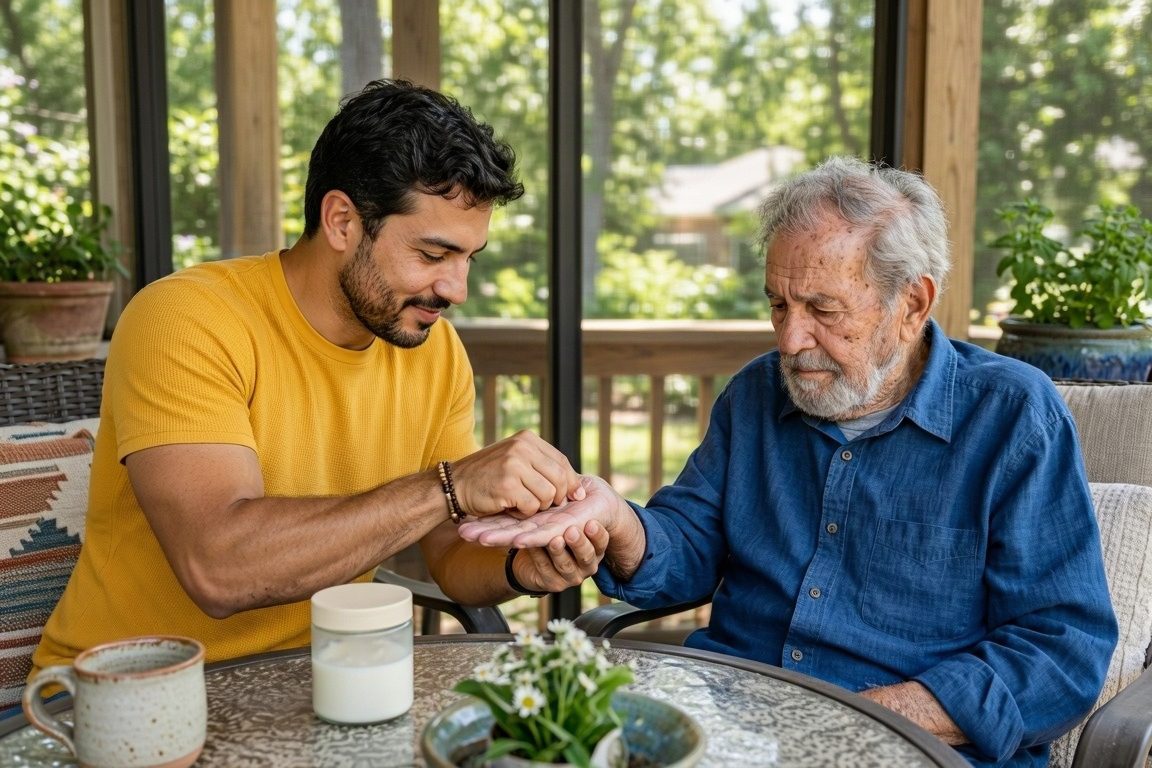
Step by step
What not to do
- Do not rush or grab their hand without warning; approach slowly and ask permission.
- Do not use a light, tickling touch; use firm, slow, predictable strokes.
- Do not force touch if they resist; respect refusal and try another calming strategy.
- Do not replace checking basic needs (pain, hunger, thirst) with massage.
- Do not massage over injured, swollen, or inflamed skin; check hands and arms first.
Key points
- Hand massage and therapeutic touch can reduce agitation in the short term by triggering a relaxation response.
- Always start by creating a calm environment and checking for physical needs like pain, hunger, or thirst.
- Use firm, slow strokes with warm lotion; avoid light or tickling touch that can overstimulate.
- Respect the person’s cues, if they pull away, stop and try another approach later.
- Adapt the technique for different dementia types and stages: shorter sessions for Lewy body, lighter touch for late-stage.
- Track what works in a simple log to refine your approach over time.
Videos
 Sensory Activities for Dementia: Simple Activities with Big BenefitsThis video shows practical sensory activities, including hand massage and kneading dough, that can calm agitation and engage the person in a soothing way.
 Exploring and Understanding Restraints: A Guide for Families with Tim England and Bettina MorrowUnderstanding what restraints are (including chemical restraints) helps you see why non-drug approaches like hand massage are safer and more dignified.
 How To Cope With Caregiver StressCaregiver stress can make agitation worse. This video offers strategies to manage your own emotions so you can stay calm during touch therapy.
 Depression and Dementia in Older AdultsDepression can mimic or worsen agitation. Recognizing the signs helps you choose the right calming approach, including touch.
2 more videos
 Sleep Issues and DementiaPoor sleep increases agitation. Hand massage before bed can be part of a soothing bedtime routine to improve sleep quality.
 What Communication Skills Help With Repetitive Questions In Dementia Care? - TestGood communication reduces frustration for both of you. Using validation and gentle touch together can calm repetitive questioning and agitation.
Background
Why Agitation Happens in Dementia
Agitation in dementia often stems from high stress levels. The part of the brain that normally helps a person stay calm and filter out overwhelming sensations is damaged, so even small triggers, like a loud noise, hunger, or feeling lost, can lead to restlessness, pacing, or upset. This is not intentional; it is the disease lowering their threshold for expressing distress. Recognizing this helps you respond with compassion instead of frustration.
How Touch Helps: The Science of Relaxation
Hand massage and therapeutic touch work by activating the body’s relaxation response. Studies have found that these techniques can effectively reduce agitation in the short term, with hand massage being especially effective at producing relaxation. The gentle pressure and warmth of your hands signal safety, lowering stress hormones and easing muscle tension. Even if the agitation doesn’t vanish completely, the person often becomes calmer and more receptive to other calming strategies, like soft music or a quiet activity.
What to Expect: Realistic Outcomes
While hand massage can be a wonderful tool, it is not a cure-all. Some research shows it produces relaxation but may not always stop agitation behaviors entirely. Think of it as one part of a bigger toolkit, use it alongside a calm environment, checking for pain or thirst, and validating their feelings. Over time, you’ll learn what works best for your person. The goal is comfort, not perfection.
Practical tools
5
Calming Script
Phrases to guide the experience: 'I'm going to rub your hand now. It will feel warm and nice.' 'Let me help you relax.' 'You are safe. I am right here with you.' 'Breathe with me, in... and out...'
Lotion Choice
Use unscented lotion if sensitive to smells, or lavender-scented for added calming effect. Warm in hands first to avoid cold shock. Examples: Aveeno Skin Relief or J.R. Watkins Lavender Hand Cream.
Quiet Environment Checklist
Before starting:
Observation Log
Track time of day, trigger, type of touch used, duration, and response (relaxed, neutral, more agitated). Helps identify patterns and refine approach.
Weighted Lap Pad or Blanket
Deep pressure from a 5-10 lb pad can mimic calming touch. Use during quiet times. Check with doctor first if respiratory or circulation issues exist.
Different situations
Lewy body dementia or Parkinson’s disease dementia
These individuals may have sensitivity to touch or fluctuations in alertness. Use even lighter pressure and watch for signs of discomfort. Avoid strong scents (like lavender) if they have olfactory hallucinations. Keep sessions very short (1-2 minutes) and stop immediately if they become confused or frightened.
Late-stage dementia (bedridden or very limited communication)
Focus on gentle hand holding or a slow, single-stroke massage on the forearm or shoulder. Watch for non-verbal cues like grimacing or pulling away, these may indicate pain. Use unscented lotion to avoid overwhelming their senses. Speak in a soft, rhythmic tone even if they do not respond.
Spouse vs. adult child caregiver
Spouses may have a deeper history of touch and intimacy, so hand massage can feel natural and comforting. Adult children should be extra mindful of consent, say, 'May I hold your hand?' and respect any hesitation. Both should avoid rushing; the goal is connection, not task completion.
In a facility (nursing home or assisted living)
Coordinate with staff to ensure consistency. Ask if they can incorporate hand massage into the daily routine (e.g., during morning care or before bed). Bring your own lotion (labeled with the person’s name) and teach staff the specific strokes that work. If the person is in a shared room, find a quiet corner or use a privacy screen.
Medicaid or low-income settings
You do not need expensive products. Use a small amount of any plain lotion or even cooking oil (like coconut oil) if lotion is unavailable. A simple hand massage with warm hands and no lotion is still effective. Focus on the environment, turn off the TV, close the curtain, and sit quietly. The touch itself is the therapy.
For the doctor
4
- Ask the doctor if your loved one has any skin conditions (like eczema or fragile skin) that might make massage unsafe or require special lotion.
- If the person has a history of blood clots or is on blood thinners, check whether firm pressure on the hands or arms is safe.
- Discuss whether weighted blankets or lap pads are appropriate, especially if they have breathing difficulties or circulation problems.
- If agitation persists or worsens despite calming techniques, ask about other behavioral interventions or medication adjustments, never stop or change medications without medical guidance.