Step by step
What not to do
- Do not use bright glossy floors or mirrored surfaces that create disorienting glare.
- Do not use vibrant reds, blues, or monochrome color schemes that can overstimulate or confuse.
- Do not leave uneven lighting with deep shadows, which can appear frightening.
Key points
- Even, soft lighting throughout the day and night reduces shadows and glare that can trigger fear and confusion.
- Pale yellow, pale green, and medium beige walls promote relaxation; avoid vibrant colors and monochrome schemes.
- High contrast between key objects (toilet, grab bars) and their backgrounds helps with depth perception and independence.
- Cover or remove mirrors if the person mistakes their reflection for a stranger.
- Clear, straight walking paths and consistent storage spots reduce cognitive overload and falls.
- Morning sunlight exposure for at least 10 minutes helps regulate sleep and reduce sundowning.
Videos
 Dementia Proofing Your HomeShows practical, low-cost modifications to make the home safer and less confusing, including lighting and clutter reduction.
 What Is Sundowning In Dementia Care? - Dementia Help HubExplains why sundowning happens and how environmental changes like lighting and noise reduction can help.
 Designing a Safe Living Space For a Loved One With Dementia | LiveTalk | Being PatientExpert discussion on using color contrast, small household groupings, and safety devices to create a calming environment.
 Top 11 Things to Know about Alzheimer’s Disease PsychosisCovers how hallucinations and delusions relate to the environment, including mirror and shadow triggers.
2 more videos
 What Is Sundowning Syndrome And How To Help Dementia Patients? - Dementia Help HubProvides actionable tips for reducing sundowning through lighting, routine, and calming activities.
 How To Manage Sundowning: Unconventional Caregiver Tips For Dementia. - Dementia Help HubOffers creative, low-cost environmental adjustments like using night lights and music to ease evening agitation.
Background
Why the Environment Matters So Much
For someone living with dementia, the brain struggles to process sensory information quickly and accurately. Loud noises, harsh shadows, bright glare, or a room that feels too cold can become overwhelming triggers, leading to confusion, fear, and agitation. The person’s brain may try to fill in gaps by creating hallucinations or delusions, for example, seeing a stranger in a mirror or mistaking a shadow for a threat. This is not willful behavior; it is the brain’s attempt to make sense of a world that no longer feels safe or predictable.
The Role of Lighting and Shadows
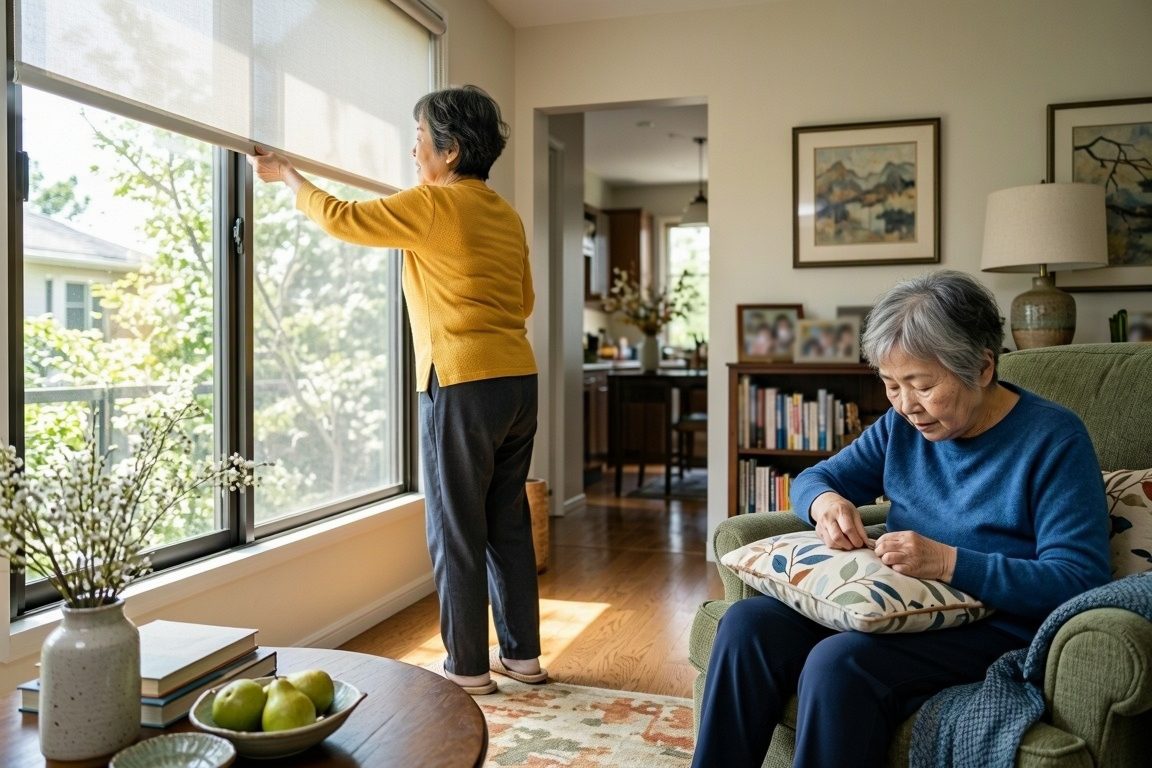
Uneven lighting, bright spots next to deep shadows, can be especially disturbing. Shadows can appear menacing, and glare from windows or glossy floors can cause disorientation. Sundowning, a common pattern of increased confusion and agitation in the late afternoon and evening, is often worsened by changing natural light. Keeping lighting even throughout the space, using night lights to reduce shadows, and maximizing natural light during the day help regulate the person’s internal clock and reduce fear.
How Color and Contrast Guide the Brain
Color choices can either soothe or overstimulate. Pale yellows, pale greens, and medium beiges have been shown to promote relaxation, while vibrant or monochrome schemes can confuse. High contrast between key objects, like a white toilet against a dark floor, or a brightly colored grab bar against a light wall, helps a person with depth perception issues locate and use these items independently. Conversely, low contrast (like a gray toilet on a gray floor) can make a room feel disorienting and unsafe.
Designing for Predictability and Safety
A cluttered or confusing layout increases cognitive load and can lead to wandering, falls, or frustration. Straight, clear walking paths from room to room, free of furniture obstacles, loose rugs, or cords, reduce the risk of tripping and help the person navigate with confidence. Familiar, consistent storage spots for everyday items (like glasses or a purse) build a sense of control and reduce suspicion. In memory care facilities, breaking large dining rooms into smaller, household-style groupings of 10–16 people creates a less overwhelming, more intimate environment.
Practical tools
3
Dimmable LED lamps (warm white, 2700K)
Provide soft, adjustable light without harsh glare or shadows.
Blackout curtains
Block late-day sun to reduce sundowning agitation.
Large-print color swatch fan deck
Helps select recommended pale yellows, pale greens, or medium beiges before painting.
Different situations
Lewy body dementia or frontotemporal dementia
These types often involve more severe visual hallucinations and paranoia. Covering mirrors and reducing shadows is even more critical. Consistent storage spots can significantly reduce accusations because memory encoding may be less impaired than in Alzheimer’s. Use high-contrast colors for safety items like grab bars and toilet seats.
Late-stage Alzheimer’s disease
The person may have severe memory loss, so consistent storage spots may not help as much, focus instead on safety and simplicity. Remove all clutter, lock away dangerous items (knives, medications), and use night lights and even lighting to prevent falls. Consider a weighted blanket for comfort and a baby monitor for safety.
Spouse vs. adult child caregiver
A spouse may find it harder to change long-established home layouts. Start with small changes (night lights, covering one mirror) and involve the person with dementia in decorating if they enjoy it. An adult child may have more authority to rearrange furniture or repaint, use that to create clear walking paths and calming colors.
Memory care facility setting
Work with staff to request a room with good natural light. Ask about the facility’s color scheme and lighting, if it is too bright or monochrome, bring in a personal lamp with a warm bulb and a soft-colored throw blanket. For activity staff, schedule high-stimulation activities in the morning and quiet, low-light activities in the late afternoon to reduce sundowning.
Medicaid or limited budget
You do not need expensive renovations. Use free or low-cost solutions: move furniture to create clear paths, tape down rugs, use a small night light from a dollar store, cover mirrors with a sheet, and play music from a phone or radio. Paint is inexpensive, ask a friend or family member to help repaint one room in a calming color.
For the doctor
4
- If sundowning symptoms are severe or include aggression, discuss with the doctor whether medication adjustments or melatonin supplements might help, never start these without medical supervision.
- If the person has a history of falls, ask the clinician or occupational therapist for a home safety evaluation and recommendations for grab bars, non-slip flooring, or other modifications.
- If the person is on medications that may worsen sleep or behavior (e.g., certain sleep aids or anticholinergics), review with the prescriber whether alternatives exist.
- If the person experiences hallucinations that are distressing or dangerous, consult a neurologist or geriatric psychiatrist for a full assessment and treatment options.