Step by step
What not to do
- Don't assume your loved one can handle the kiosk alone, dementia can change skills between trips.
- Don't leave your loved one alone at the kiosk even momentarily; stay close with a reassuring hand on their arm or back.
- Don't argue if your loved one insists on doing something a different way that is not a safety risk; gently redirect instead.
Key points
- Call the airline ahead of time to request a 'meet-and-assist' service, this can bypass the self-check-in kiosk entirely.
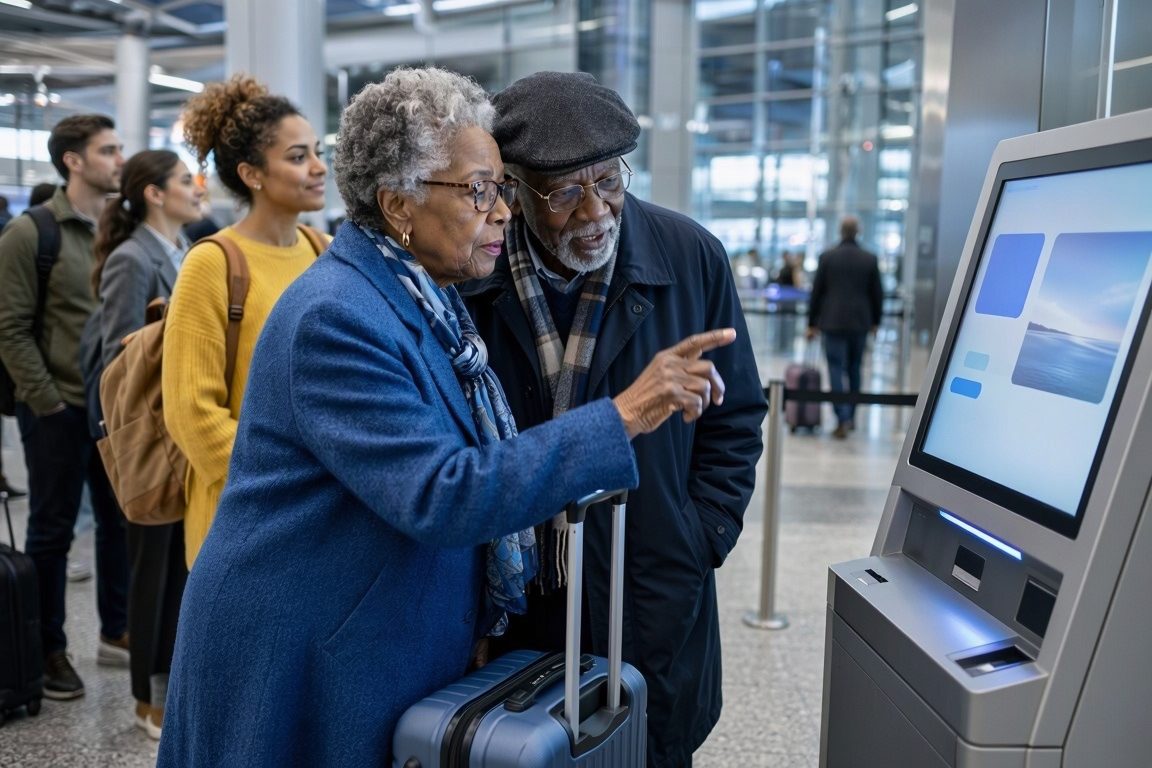
- Use simple, one-step commands and point to the exact spot on the screen to reduce confusion.
- Pack a sensory kit with earplugs, sunglasses, and a calming item to manage overstimulation.
- If the kiosk becomes overwhelming, step away and find a staff member for help, never force the process.
- Give your loved one a simple 'job' (like holding the boarding pass) to maintain dignity and engagement.
- Stay calm and patient; your emotional state directly affects your loved one's comfort and cooperation.
Videos
 Conscious Caregiving with L & L 'Seniors and Travel'Provides practical travel tips for seniors, including how to navigate airport check-in and security with a person who has cognitive challenges.
 Curious Conversations about Brain Change with Teepa Snow and the PAC™ TeamTeepa Snow explains how to use a wheelchair escort at the airport to reduce stress and get through security more easily, even if you don't need one physically.
 Travel with Dementia - How to Help with Making a Selection in a Retail StoreDemonstrates how to narrow down choices and use simple pointing and verbal cues, techniques directly transferable to a kiosk screen.
 Ask Teepa Anything! February 2020Teepa answers questions about using calming music and sensory tools during travel, which can help at the kiosk and on the plane.
2 more videos
 Dementia Toileting problemsOffers a toileting schedule strategy that is essential to prevent accidents during long airport waits and flights.
 How to Travel with Someone who had Dementia [5 tips]Covers realistic expectations, preparation, and problem-solving for travel, including how to handle unexpected changes like gate changes or delays.
Background
Why Self-Check-In Kiosks Are Challenging for Dementia
Self-check-in kiosks are designed for speed and efficiency, but they present multiple cognitive demands that can overwhelm a person with dementia. The bright, flashing screen, the need to read and follow multi-step instructions, and the pressure of a line of people waiting behind you all contribute to sensory overload. As one expert notes, being in a herd of people can drastically increase dementia symptoms, and the combination of noise, visual clutter, and time pressure can trigger confusion, anxiety, or even a meltdown. The person may struggle to understand what the machine is asking, forget what they are supposed to do, or become fixated on a single detail (like the credit card slot) and unable to move forward.
The Brain's Difficulty with Choices and Sequences
Dementia affects the brain's ability to process multiple pieces of information at once, follow a sequence of steps, and make choices. A kiosk presents a series of decisions: 'Do you have a bag to check?', 'Select your seat', 'Confirm your itinerary'. Each choice requires the person to hold information in working memory, compare options, and select one, all while the machine's timer may be counting down. This is why a person with dementia may freeze, repeat a question, or become agitated. As one source explains, when someone is having trouble making choices, you can narrow it down for them, point things out, and use simple, one-step commands. The goal is to reduce the cognitive load so the person can feel successful and safe.
The Role of Sensory Overload and Environmental Stress
Airports are inherently overstimulating: announcements, moving walkways, crowds, and bright lights all compete for attention. For someone with dementia, this sensory barrage can make even simple tasks feel impossible. The kiosk's touchscreen adds another layer, unfamiliar technology that may require precise taps or swipes. Experts recommend using earplugs to cut down on noise and sunglasses to reduce visual stimulation from flashing lights and bright screens. By managing the sensory environment, you can help your loved one stay calmer and more focused during the check-in process.
Practical tools
4
One-Step Command Script
Replace multi-step sentences with single actions. Instead of 'We need to check in, so scan your passport, then tap the screen,' say: 'Look at me. Good. Now, place your passport here (point). Perfect. Now, touch this button (point).'
Sensory Management Kit
A small pouch with noise-canceling earplugs or headphones, sunglasses, and a small fidget item (e.g., smooth stone or stress ball). Put these on before approaching the kiosk.
Pre-Trip Airline Call Checklist
Call the special assistance line and ask:
Write down the staff member's name and confirmation number.
Travel Comfort Kit
Pack
Show to airline or TSA staff if you need extra time.
Different situations
Early-stage dementia (still independent in many tasks)
You may be able to let the person try the kiosk first, with you standing nearby. Use the 'one-step command' script only if they get stuck. Avoid taking over unless they show clear signs of confusion. Praise their effort: 'You're doing great. I'm right here if you need me.'
Middle-stage dementia (needs help with most tasks)
Plan to do the check-in yourself while your loved one stands beside you. Give them a simple job (like holding the bag tag) to keep them engaged. Use the sensory kit proactively, put on earplugs and sunglasses before you enter the terminal. Accept the wheelchair escort if offered, as it reduces walking and decision-making.
Late-stage dementia (limited verbal communication, high confusion)
Avoid the self-check-in kiosk entirely. Use the airline's special assistance service from the moment you arrive. A staff member will handle all check-in and security steps. Your role is to provide comfort: hold their hand, speak in a soothing tone, and use calming music or a familiar object. Focus on keeping them calm, not on the logistics.
Lewy body dementia (sensitivity to visual stimuli, fluctuating attention)
The flashing lights and bright screens of a kiosk can be particularly distressing. Use sunglasses and a brimmed hat to reduce visual input. If the person becomes rigid or has a 'spell' (sudden confusion or loss of muscle tone), stop immediately and find a quiet area to sit. Do not try to push through. A wheelchair escort is strongly recommended.
Frontotemporal dementia (behavioral changes, impulsivity)
The person may become easily frustrated or make impulsive decisions (like walking away or touching the screen repeatedly). Use firm, calm redirection: 'Let's do this together. Touch here.' If they become agitated, remove them from the area and find a quiet spot. The 'pause and breathe' technique is especially helpful here.
For the doctor
4
- If your loved one takes medication for anxiety or agitation, ask the doctor if a PRN (as-needed) dose might be appropriate for the travel day, and how to time it to avoid drowsiness during the flight.
- If the person has a history of wandering, ask the clinician about using a GPS tracker or medical ID bracelet during travel, and whether any medication adjustments are needed for the trip.
- If your loved one has a condition like Parkinson's or Lewy body dementia that affects balance or movement, ask the doctor about using a wheelchair or walker at the airport, and whether any specific exercises or precautions are needed before travel.
- If the person has incontinence or frequent bathroom accidents, ask the clinician about a toileting schedule and whether products like absorbent underwear or a portable urinal are appropriate for the flight.