Step by step
What not to do
- Do not assume the lanyard will be recognized everywhere. In some airports or smaller travel hubs, staff may not know what it means. Always have a backup plan, like a printed card that says: 'I have dementia. Please help me find my gate.'
- Do not put the lanyard on the person without explaining it first. If they feel it labels them as 'different,' they may become upset or remove it.Instead, introduce it as a 'helper badge' that lets nice people know how to assist.
- Do not rely solely on the lanyard to prevent wandering. The lanyard signals a need for help, but it does not physically stop someone from walking away. Stay close, hold hands if needed, and use physical proximity as your primary safety measure.
- Do not remove the lanyard in crowded or unfamiliar areas just because you feel safe. The risk of separation is highest in busy terminals. Keep it on until you are seated on the plane or in your ride home.
- Do not expect the lanyard to work if the person is in a late stage of dementia and cannot understand or cooperate with staff. In that case, a wheelchair escort or a companion service may be more effective.
Key points
- The sunflower lanyard is a simple, low-cost tool that signals a hidden disability to trained airport staff, helping them offer extra support to find the gate.
- Always call the airline ahead to arrange assistance, even if you plan to use the lanyard. The lanyard is a supplement, not a replacement for advance planning.
- Stay physically close to your loved one at all times. The lanyard does not prevent wandering; it only helps staff know how to help if you get separated.
- Not all airports recognize the lanyard. Check the Hidden Disabilities Sunflower website before you travel, and have a backup plan like a printed card or a wheelchair escort.
- Adapt your approach based on the stage of dementia. The lanyard works best for early to middle stages; for late stages, a wheelchair escort or meet-and-greet service is more reliable.
- Use simple, warm phrases to guide your loved one, and avoid labels like 'wandering' or 'lost' that can cause shame or confusion.
Videos
 Is Using This Safe For Someone With Dementia?This video discusses the controversy around the sunflower lanyard, including safety concerns and how to decide if it is right for your situation.
 Travel with Dementia - How to Help with Finding the Gate NumberThis video shows practical techniques for helping a person with dementia locate and remember their gate number, including using the lanyard as a cue.
 Curious Conversations about Brain Change with Teepa Snow and the PAC™ TeamTeepa Snow demonstrates how to use the sunflower lanyard in an airport setting and explains how staff can respond to a person with dementia who is confused about their gate.
 Conscious Caregiving with L & L 'Seniors and Travel'This video covers general travel tips for seniors with dementia, including how to request assistance and use the sunflower lanyard to navigate airports.
2 more videos
 Travel with Dementia - How to Help with Making a Selection in a Retail StoreWhile focused on retail, this video teaches the skill of simplifying choices and using visual cues, which applies directly to helping someone find their gate.
 095. How to create a safe home for Dementia family membersThis video covers home safety and wandering prevention, which provides context for why airport wandering happens and how to apply similar principles in a travel setting.
Background
What the sunflower lanyard is and why it matters at the airport
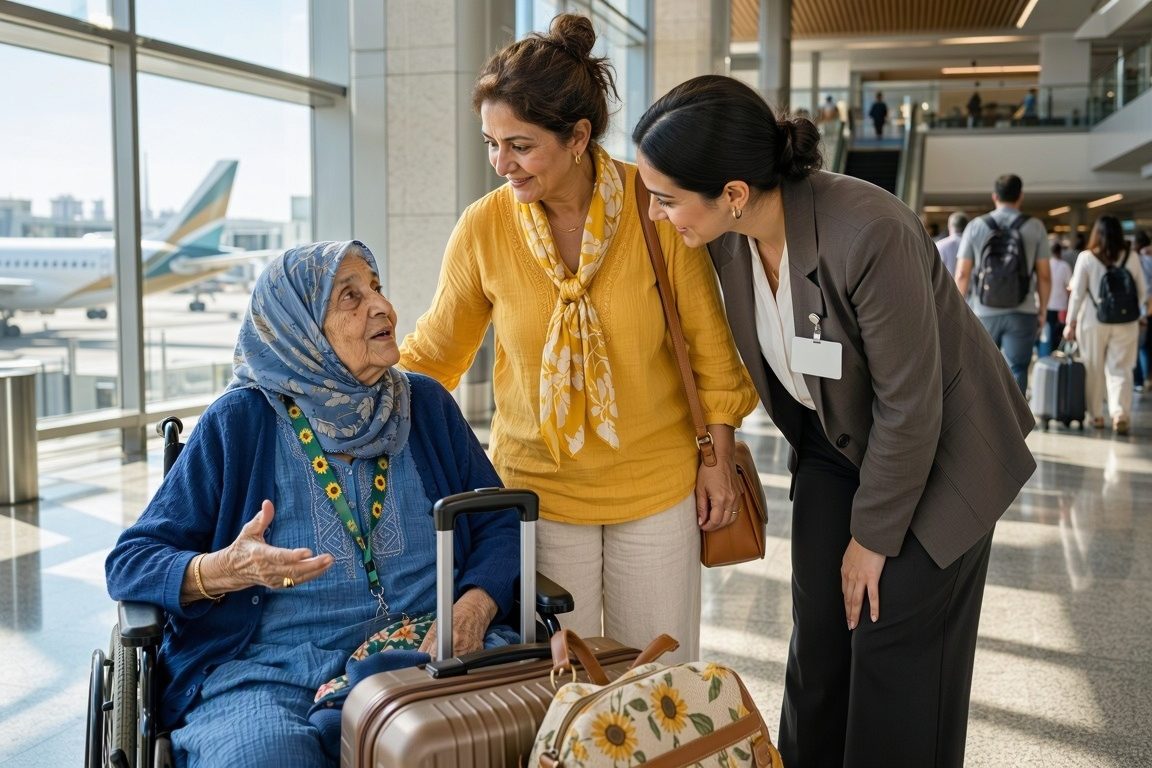
The hidden-disability sunflower lanyard is a green lanyard with yellow sunflowers that signals to trained staff that the wearer has a non-visible condition, such as dementia, autism, or anxiety. It started in the UK and is now recognized in many US airports and travel hubs. When a person with dementia wears it, airport employees know to offer extra patience, clear directions, and help navigating security and gates. This can make the difference between a chaotic, confusing trip and a manageable one.
However, the lanyard is not a magic fix. Not all airports or staff know about it, and in places where it is not recognized, it may not help. Also, some caregivers worry that wearing a visible symbol could make the person vulnerable to exploitation if they become separated. The key is to use it as one tool in a larger plan, not as the only strategy.
Why finding the gate is especially hard for someone with dementia
Airports are overwhelming environments: bright lights, constant announcements, crowds, and many signs. For a person with dementia, the cognitive load of processing all this information can cause confusion, anxiety, and a strong urge to wander. They may forget the gate number, misread signs, or become fixated on a different destination. The stress can trigger what looks like agitation or 'wandering' but is actually a desperate attempt to make sense of a disorienting situation.
Using the sunflower lanyard gives airport staff a clear, non-verbal cue that the person needs extra support. Instead of assuming the person is being difficult, staff are trained to approach with empathy, simplify instructions, and physically guide them to the correct gate. This reduces the chance of the person wandering off or becoming lost.
Practical tools
5
The sunflower lanyard itself
A green lanyard with yellow sunflowers. Available free at participating airports or for a few dollars online. Wear it visibly around the neck. It signals to trained staff that the wearer has a hidden disability and may need extra patience, clear directions, or physical help to find the gate.
The 'I need help finding my gate' card
A small card you can print or write on that says: 'I have a hidden disability (dementia). Please help me find gate [number]. Thank you.' Show this to airport staff if the lanyard is not recognized. Keep it in your pocket or attached to the lanyard.
The pre-trip call script
Before you travel, call the airline and say: 'I am traveling with someone who has dementia. We need assistance from check-in to the gate. I do not want a wheelchair unless necessary, but I need a staff escort. Can you arrange that?' Write down the confirmation number and the name of the person you spoke to.
The 'stay close' phrase
A simple, warm phrase to use when your loved one starts to wander: 'I need you to stay right next to me so we don't lose each other. Let's hold hands until we get to our gate.' This is more effective than saying 'don't wander' or 'stay put.'
The sunflower map check
Before your trip, go to hdsunflower.com and use their map to find airports that participate in the program. Print or screenshot the list. If your airport is not listed, plan to use other strategies like a wheelchair escort or a meet-and-greet service.
Different situations
Early-stage dementia / still independent
The person may be able to wear the lanyard willingly and understand its purpose. You can let them hold the boarding pass and lead the way, with you nearby. Use the lanyard as a backup, not a primary tool. If they resist, explain: 'This helps people know you might need a little extra time. It's like a VIP pass.'
Middle-stage dementia / frequent wandering
The person may not understand the lanyard and may try to remove it. Attach it to their backpack or jacket instead. Stay within arm's reach at all times. Use the lanyard to quickly get staff attention if they start to walk away. A wheelchair escort may be safer and less stressful.
Late-stage dementia / non-verbal or very confused
The lanyard may not be helpful because the person cannot cooperate with staff. Use a wheelchair escort or a meet-and-greet service instead. The care partner should wear the lanyard to signal that they are traveling with someone who needs help. Focus on physical safety: hold hands, use a gait belt, and stay close.
Care partner is an adult child vs. spouse
An adult child may feel more comfortable advocating and using the lanyard. A spouse may feel protective or embarrassed. If the spouse resists, frame it as: 'This is for my peace of mind, not to label you. Please wear it just for today.' If they still refuse, the care partner can wear it and explain to staff.
Traveling alone with dementia (early stage, independent)
The person can wear the lanyard and also request a 'meet-and-greet' service from the airline. This service escorts them through security and to the gate. They should also carry a card with emergency contact info and the gate number. The lanyard helps staff identify them quickly if they become confused.
For the doctor
3
- Ask your doctor if your loved one is safe to travel alone or with minimal supervision, especially if they have a history of wandering or agitation in unfamiliar places.
- Discuss whether a wheelchair escort is medically appropriate if the person has mobility issues or is at high risk of falling in a busy airport.
- Ask about medications that could help reduce anxiety during travel, and whether they should be taken before the flight or only if needed.