Step by step
What not to do
- Do not assume every airport employee knows the lanyard: Many staff, especially TSA agents, may not recognize it. Instead of relying solely on the lanyard, always verbally inform staff that your loved one has dementia and may need extra help.
- Do not leave the person with dementia alone while wearing the lanyard: The lanyard signals vulnerability, and while airports are generally safe, it is best to stay together. If you need to step away, remove the lanyard first or have the person sit in a visible, secure area.
- Do not use the lanyard as a substitute for a medical ID bracelet: The lanyard is for travel support, not emergency identification. Your loved one should still wear a medical ID bracelet or carry an ID card with emergency contact information and diagnosis.
- Do not force the person to wear it if they resist: Some people with dementia may feel the lanyard is a stigma or may not understand its purpose. If they refuse, do not push.Instead, you can wear a companion lanyard yourself and verbally ask for help when needed.
- Do not wear the lanyard in non-participating locations: In places where the program is not recognized, the lanyard may confuse staff or draw unwanted attention. Only use it in airports, train stations, or other venues that are listed on the Hidden Disabilities Sunflower website.
Key points
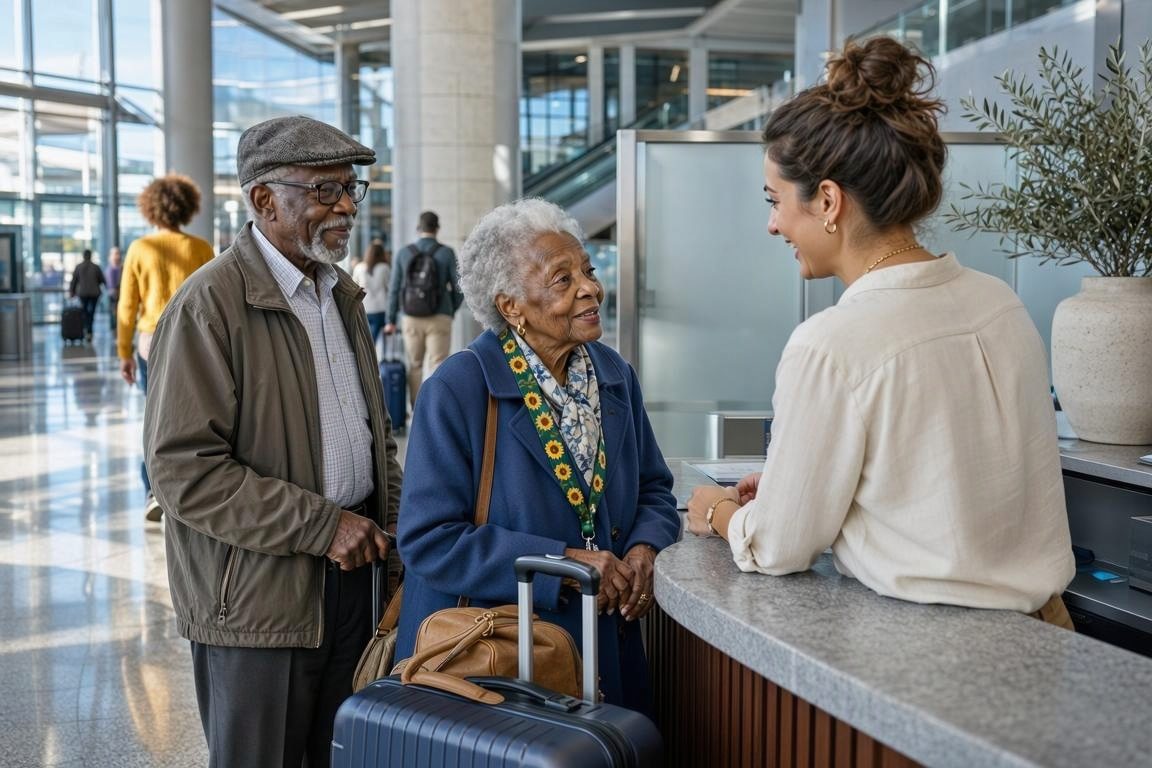
- The sunflower lanyard is a green lanyard with yellow sunflowers that signals a hidden disability like dementia to airport staff.
- Not all airports or TSA agents know the program, so always verbally inform staff about the dementia diagnosis.
- You can get a lanyard for free at many airport information desks or buy one online for a few dollars.
- The lanyard can help with early boarding, calmer security screening, and getting directions if the person becomes lost.
- Remove the lanyard if you are in a non-participating location or if you are concerned about safety in crowded areas.
- Always have a backup plan, such as a written medical card or a companion lanyard, in case the lanyard is not recognized.
Videos
 Is Using This Safe For Someone With Dementia?This video discusses the sunflower lanyard program, including its benefits and the controversy around safety and exploitation. It offers a balanced view to help you decide if it is right for your situation.
 Conscious Caregiving with L & L 'Seniors and Travel'This video features a person living with dementia who uses the sunflower lanyard while traveling. It provides real-world perspective on how the program works and how to get a lanyard.
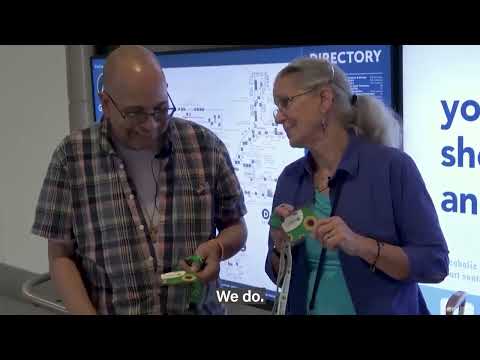 Travel with Dementia - How to Help with Finding the Gate NumberThis video offers practical tips for navigating airports with dementia, including how to use visual cues and ask for help. It complements the lanyard strategy with additional wayfinding techniques.
 Curious Conversations about Brain Change with Teepa Snow and the PAC™ TeamTeepa Snow discusses the sunflower lanyard program and its use in airports, including the fact that TSA does not train on it. She also shares tips for caregivers on how to communicate with airport staff.
Practical tools
6
Hidden Disabilities Sunflower website
Visit hdsunflower.com to
The site also has a map showing sunflower-friendly locations worldwide.
Simple verbal script for airport staff
Practice saying: 'My companion has dementia and is wearing a sunflower lanyard. We may need a little extra time or help.' Keep it brief and calm. You can also say: 'This lanyard means we have a hidden disability. Can you help us with early boarding or a quieter security lane?'
Companion lanyard (if available)
Some airports offer a second lanyard for the caregiver. Ask at the information desk or check the airport's website before your trip. Wearing matching lanyards helps staff understand that both of you are part of the same travel party.
Written travel card
Carry a small card that says: 'My travel companion has dementia. If I appear confused or need help, please assist me. Contact [your name and phone number].' Show this to staff if the lanyard is not recognized.
Pre-trip airport map review
Before you travel, look at the airport map online. Identify where the information desk, security checkpoint, and your gate are. Knowing the layout reduces anxiety for both of you.
Early boarding request phrase
At the gate, say: 'My companion has dementia and is wearing a sunflower lanyard. May we board early to avoid the crowd?' Most airlines will accommodate this request.
Different situations
Early-stage dementia / traveling alone
If the person is in early stages and traveling alone, the lanyard can be a discreet way to signal to airline staff that they may need help with directions or boarding. However, the person should also carry a medical ID and a written emergency plan. The lanyard alone is not enough; they should also inform the airline in advance and request a meet-and-greet service if available.
Middle-stage dementia / traveling with a caregiver
In middle stages, the person may be more easily overwhelmed by crowds and noise. The lanyard is very helpful here. The caregiver should wear a companion lanyard if possible, and both should practice using the lanyard at security and the gate. The caregiver should also have a backup plan in case the person becomes agitated and needs to step away from the line.
Late-stage dementia / non-verbal
For a person who is non-verbal or has significant cognitive decline, the lanyard is still useful but the caregiver must do all the communicating. The lanyard signals to staff that the person may not be able to respond to questions. The caregiver should carry a written note explaining the diagnosis and any specific needs (e.g., 'Please speak slowly and directly to me, not to my loved one').
Lewy body dementia or Parkinson's dementia
People with Lewy body dementia may have fluctuating attention, visual hallucinations, or sensitivity to crowds. The lanyard can help staff understand if the person seems confused or distracted. However, the caregiver should be prepared for the person to have moments of clarity and moments of confusion. The lanyard is a signal, not a guarantee of consistent behavior.
Traveling with a spouse vs. adult child
A spouse may be more comfortable advocating verbally, while an adult child may feel more hesitant. If you are an adult child, practice using the lanyard and the verbal script beforehand. Remember that the lanyard is a tool to make your job easier, not a sign of failure. If the person with dementia is your parent, you can say, 'My mom has dementia and we need help getting to our gate.'
For the doctor
3
- Ask your doctor if there are any medical reasons why your loved one should not travel, especially if they have a history of agitation, falls, or sundowning. The lanyard is a support tool, not a medical device.
- If your loved one takes medication for anxiety or agitation, discuss with the clinician whether a temporary adjustment might help during travel. Do not change medications without medical advice.
- If the person has a history of wandering, ask the clinician for strategies to keep them safe in the airport, including whether a GPS tracker or medical ID bracelet is appropriate.