Step by step
What not to do
- Don't wait until a crisis to start house calls, if getting to the doctor is already a struggle, explore now to prevent hospitalizations and improve quality of life.
- Don't show up unprepared, without a current medication list and written symptom log, the provider may miss important issues.
- Don't let pain go unspoken, people with advanced dementia may show pain through grimacing, moaning, or agitation; ask the provider to assess and treat it aggressively.
- Don't hide caregiver burnout, if you are exhausted or overwhelmed, tell the provider to open the door to support groups, counseling, or respite care.
- Don't assume a house call doctor replaces all other care, they provide medical oversight, but your loved one may still need home health aides, PT, or hospice.
Key points
- House calls bring comprehensive medical care to the home, reducing stress and improving quality of life for people with advanced dementia.
- Medicare Part B covers house calls for patients who are homebound, meaning leaving home is difficult and taxing.
- The INHOMESSS checklist ensures a thorough assessment of medical, functional, and environmental needs.
- House calls are ideal for palliative care, focusing on comfort, symptom management, and quality of life.
- Caregivers should be open about their own stress and needs; the provider can offer support and resources.
- House calls can be combined with home health, hospice, and other services for a complete care team.
Videos
 Home Health vs Palliative Care vs Hospice for Dementia Patients with Candance Ramos April 4 at 10This video clarifies the differences between home health, palliative care, and hospice, which is essential for understanding what house calls can and cannot provide.
 What Level Of Care Does A Dementia Patient Need?This video helps you assess the level of care your loved one needs, which informs whether house calls are appropriate and what other services might be needed.
 How Can Families Prepare for Late-Stage Dementia Progression? | TestThis video provides practical advice on preparing for the late stages, including the role of medical care at home.
Background
What Are House Calls and Why Do They Matter Now?
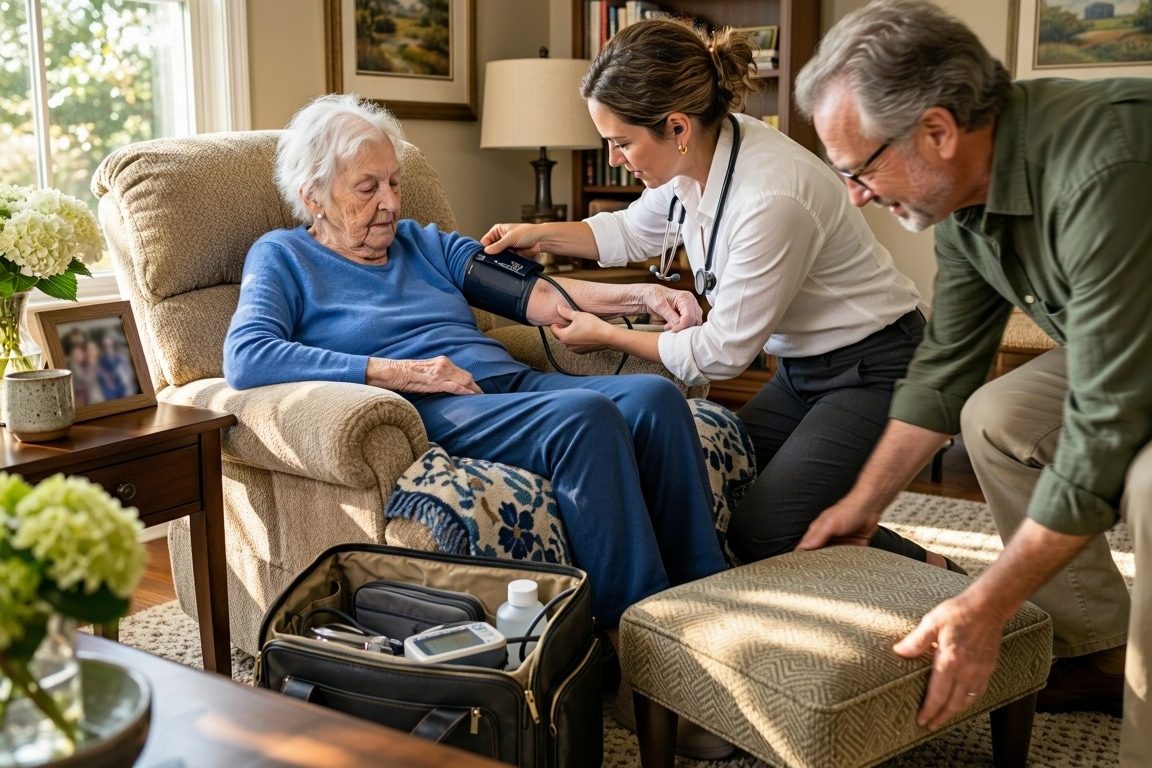
House calls are medical visits conducted by a healthcare provider in the patient's home. For someone with advanced dementia, leaving the house can be deeply disorienting and stressful. The unfamiliar environment of a clinic or hospital can trigger agitation, confusion, or even aggression. A house call eliminates that stress by bringing the exam room to the living room. The provider can see the person in their natural setting, which gives a much more accurate picture of their daily function, safety, and needs. This is especially important in late-stage dementia, where the focus shifts from curative treatments to comfort and quality of life.
How House Calls Help Manage Advanced Dementia and Chronic Illness
House calls allow for a comprehensive, unhurried assessment that is impossible in a rushed 15-minute office visit. The provider can use tools like the INHOMESSS mnemonic (Impairments/immobility, Nutrition, Home environment, Other people, Medications, Examination, Safety, Spiritual health, Services) to systematically evaluate every aspect of your loved one's life. They can check for pain, which is often missed in dementia because the person cannot communicate it. They can review all medications, looking for those that might be causing confusion or falls. They can assess the home for safety hazards, like loose rugs or poor lighting, that increase fall risk. They can also coordinate with home health aides, physical therapists, and hospice teams to ensure all needs are met. For chronic conditions like diabetes or heart disease, the provider can do point-of-care testing (like blood sugar or blood pressure checks) right in the home, adjusting treatments immediately.
The Shift to Palliative and Comfort-Focused Care
In advanced dementia, the goal of medical care changes. Curative treatments for the dementia itself are no longer effective. Instead, the focus becomes palliative care: relieving suffering, managing symptoms, and supporting the highest possible quality of life. House calls are ideal for this because they allow the provider to work closely with you, the caregiver, to develop a plan that prioritizes comfort. This might include managing pain, treating infections without sending the person to the hospital, addressing breathing difficulties, or providing emotional and spiritual support. The provider can also help you navigate the transition to hospice care when the time is right, ensuring that your loved one receives compassionate, dignified care at the end of life.
Practical tools
6
INHOMESSS Checklist
A comprehensive mnemonic for house call assessments:
Use it during visits to ensure nothing is missed.
Medication List Template
Create a table with
Keep it updated and give a copy to every provider at every visit to prevent dangerous interactions.
Symptom and Behavior Log
Daily notebook noting changes in
Patterns help adjust treatments before small problems escalate.
Advance Directive and POLST Form
Have a completed advance directive (living will and healthcare power of attorney) and POLST form. Discuss with the provider which treatments are desired or not (CPR, feeding tubes, hospital transfers) and keep the forms visible in the home.
Home Safety Checklist
Walk through the home with the provider to identify
Order modifications or equipment to reduce fall risk.
Emergency Plan Card
A card posted near the phone (and given to any caregiver) listing
Print in large type for quick access.
Different situations
Late-stage dementia with other chronic conditions (e.g., diabetes, heart failure, COPD)
The house call provider will need to manage multiple medications and conditions. They may do point-of-care testing (blood sugar, blood pressure, oxygen levels) during visits. They will coordinate with specialists like cardiologists or endocrinologists. The focus remains on comfort, but chronic conditions must be managed to prevent painful crises.
Spouse as primary caregiver
Spouse caregivers are often older and may have their own health issues. The provider should assess the spouse's health and offer support. House calls can reduce the physical and emotional strain of taking a loved one to appointments. The provider can also help the spouse plan for the future, including when home care is no longer enough.
Adult child as primary caregiver
Adult children often juggle caregiving with work and their own families. House calls can be scheduled at convenient times, like evenings or weekends. The provider can help the adult child navigate the healthcare system, coordinate with siblings, and address feelings of guilt or grief. They can also provide documentation for FMLA or disability leave if needed.
Patient is also receiving hospice care
House calls can continue alongside hospice. The house call provider manages medical issues (like infections or pain), while the hospice team provides nursing, aide services, and spiritual care. The two teams should communicate regularly. The house call provider can also help with the transition to hospice if not already enrolled.
Patient lives alone or with minimal family support
House calls are especially critical here. The provider can assess safety, arrange for home health aides or meal delivery, and connect the patient with community resources. They can also help the patient complete advance directives and designate a healthcare proxy. The provider may become the main point of contact for medical decisions.
For the doctor
6
- Ask your clinician: 'Is my loved one homebound enough to qualify for Medicare-covered house calls?'
- Ask your clinician: 'Can you refer us to a house call program or a home-based primary care practice?'
- Ask your clinician: 'What is the best way to manage pain in advanced dementia? Are there non-drug approaches we should try first?'
- Ask your clinician: 'Should we consider a do-not-hospitalize order or a POLST form? How do we start that conversation?'
- Ask your clinician: 'How do we handle infections like urinary tract infections or pneumonia at home, without going to the hospital?'
- Ask your clinician: 'What are the signs that my loved one is nearing the end of life, and how can we ensure comfort during that time?'