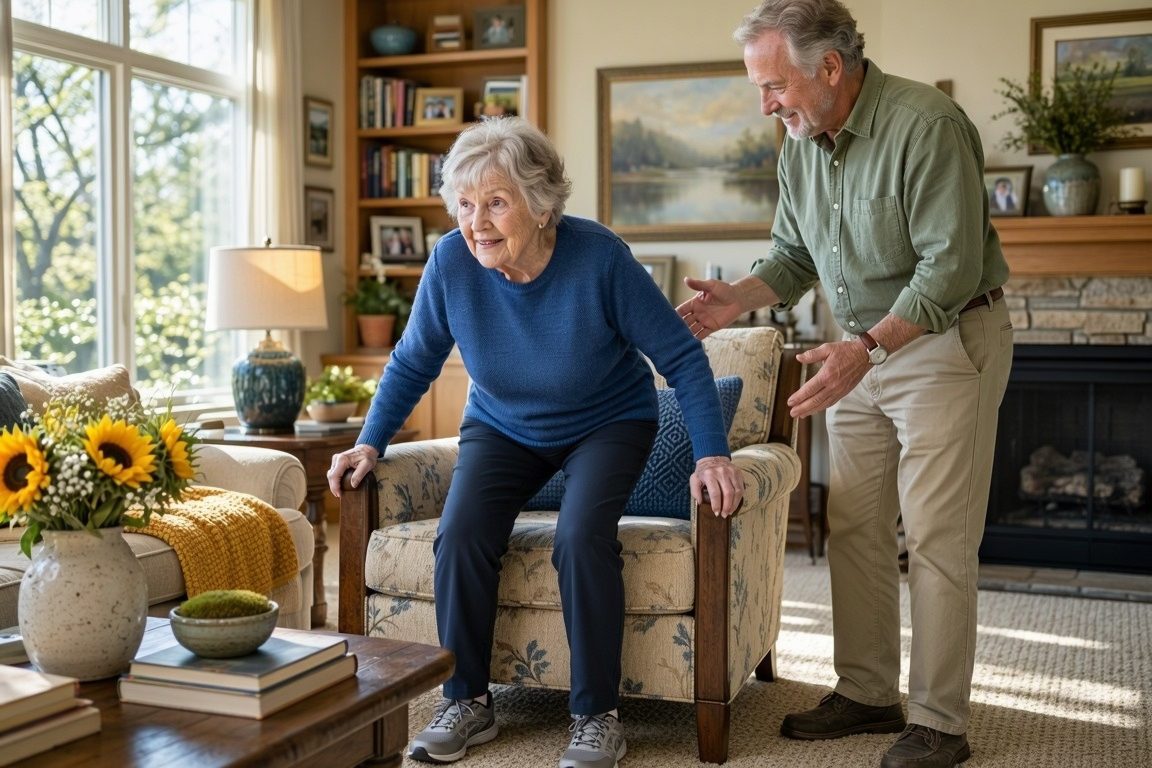
Step by step
What not to do
- Do not push your loved one to exercise when they are tired, agitated, or in pain. This can lead to falls, resentment, and a negative association with activity.Instead, wait for a calm moment or try a gentler activity like seated stretching.
- Do not use complex instructions or expect them to remember a sequence. For example, saying 'Do 10 squats, then march, then stretch' is too much.Instead, give one step at a time: 'Stand up. Good. Now sit down.' Repeat as needed.
- Do not ignore safety hazards like loose rugs, poor lighting, or slippery floors. Falls are a serious risk, one in four seniors has a serious fall. Before starting, clear the area, ensure good lighting, and have a sturdy chair or counter for support.
- Do not expect the person to exercise alone or without supervision. Dementia affects judgment and balance, so they may overestimate their abilities or forget safety precautions. Always stay within arm's reach during exercises.
- Do not compare their current performance to what they used to do. This can cause frustration or shame. Focus on the present moment and celebrate small wins, like standing up without help or walking a few extra steps.
- Do not stop the program if they have a bad day. Dementia symptoms fluctuate. If they refuse, try again later or offer a different activity, like a short walk or seated ball toss. Consistency over time matters more than daily perfection.
Key points
- The Safe Functional Home Exercise program is the first co-designed exercise program for dementia, created with input from people with dementia, carers, and support workers.
- It focuses on functional movements like sit-to-stand, marching, and balance exercises that mimic daily tasks and can be done at home.
- Co-design led to practical improvements like client videos and motivation tips, making the program more acceptable and easier to follow.
- Regular practice helps maintain physical function and may reduce fall risk, which is critical since one in four seniors has a serious fall.
- The program is low-cost and scalable because it uses support workers already in the home, but family caregivers can also lead it.
- Always get medical clearance, monitor for safety, and adapt exercises as dementia progresses to keep the person engaged and safe.
Videos
 How to make a daily dementia routine for homeThis video explains how to build a daily schedule that includes physical activity, which is essential for maintaining functioning. It aligns with the program's emphasis on routine and repetition.
 Ep. 201: Are Falls Just a Fact of Life with Dementia?This video discusses fall prevention strategies, which are a core goal of the Safe Functional Home Exercise program. It reinforces the importance of strength and balance training.
 What is Montessori for Dementia Patients (5 Ideas)Montessori activities, like sorting or assembling objects, can complement the exercise program by providing purposeful movement. This video offers ideas for integrating functional tasks.
 Discover the Cranium Crunches Workbook by Activity Connection with Co-Author Dr. Rob WinninghamThis workbook focuses on cognitive stimulation, which can be paired with physical exercise for a holistic approach. It supports the program's goal of maintaining both brain and body health.
2 more videos
 Sleep and DementiaRegular physical activity can improve sleep quality in dementia. This video provides context on why exercise is important for overall well-being, including sleep.
 What Activities Are Good For Dementia Patients? Module 1This module covers a range of engaging activities, including physical exercise. It offers practical tips for choosing and adapting activities, which complements the co-designed program.
Practical tools
6
Client Demonstration Video
The co-design panel suggested making a short video of the exercises being performed by someone with dementia. You can create your own using a smartphone: film yourself or a support worker doing each move slowly, with simple narration. Play it before each session to remind your loved one what to do. This reduces confusion and builds confidence.
Motivation Tips Checklist
Write down simple phrases to encourage participation: 'Let's do this together,' 'You are doing great,' 'One more, then we rest.' Also list preferred music or a favorite TV show to play during exercises. The co-design panel found that these tips help keep people engaged and reduce resistance.
Sturdy Chair with Armrests
Use a chair that does not slide or tip, with armrests for support during sit-to-stand exercises. Avoid wheeled chairs or low sofas. A dining chair or a firm armchair works well. Place it on a non-slip mat if floors are smooth.
Visual Schedule Board
Create a simple board with pictures or icons showing the daily routine, including exercise time. For example, a picture of a person standing next to a chair. Place it in a visible spot like the kitchen or living room. This reinforces the routine and reduces anxiety about what comes next.
Resistance Bands (Light Tension)
If the person is stronger, use light resistance bands for seated rows or leg presses. Always demonstrate first and supervise closely. Bands are low-cost and can be used for a variety of functional movements. Discuss with a physical therapist before starting to ensure proper form.
Fall Prevention Kit
Assemble a small kit with a non-slip mat, a grabber tool, and a phone or alert device within reach. Place it near the exercise area. Also, ensure the person wears supportive, non-slip shoes (not slippers) during exercise. This reduces fall risk and gives you peace of mind.
Different situations
Early-stage dementia (mild cognitive impairment)
In early stages, the person can follow more complex instructions and may enjoy learning new exercises. You can introduce 4-5 functional exercises, like heel raises, side leg lifts, and walking backward (with support). Use a pedometer or fitness tracker to set daily step goals. The program can be more challenging, but still prioritize safety and enjoyment. The co-design panel found that people in early stages benefit from variety and social interaction, so consider exercising together or in a small group.
Moderate dementia
Focus on 2-3 simple, repetitive exercises like sit-to-stand, marching in place, and arm circles. Use lots of repetition and verbal cues. The program should be shorter (10-15 minutes) to avoid fatigue. Incorporate familiar music from their youth to boost mood. The co-design panel emphasized that people with moderate dementia may need more encouragement and may forget the purpose of the exercises, so frame them as part of a daily routine, like 'time to get ready for the day.'
Late-stage or bed-bound dementia
Modify exercises to seated or lying down. For example, ankle pumps, knee bends, and arm reaches while in bed or a wheelchair. Use a physical therapist to guide you on safe range-of-motion exercises. The program should focus on maintaining joint flexibility and preventing contractures. Always monitor for discomfort or breathing changes. The co-design panel noted that even small movements can improve circulation and mood, but safety is paramount.
Lewy body dementia (with Parkinsonism or visual hallucinations)
Exercises must be done in a well-lit, clutter-free environment to reduce fall risk and visual confusion. Focus on balance exercises like standing on one foot (with support) and walking with a wide base. Avoid rapid movements or changes in direction. The person may have fluctuating attention, so keep sessions short (5-10 minutes) and repeat throughout the day. Discuss any new or worsening symptoms with their neurologist before starting.
Caregiver is a spouse vs. adult child
Spouses may need to balance their own health needs and may feel guilty about 'making' their partner exercise. Use the program as a shared activity that you both do together, like walking side by side or doing seated exercises simultaneously. Adult children may need to negotiate with the person's pride, frame exercises as 'helping me stay healthy too' rather than 'you need this.' Both roles benefit from using the co-designed motivation tips and video to reduce conflict.
For the doctor
5
- Ask the doctor: 'Is it safe for my loved one to do sit-to-stand exercises if they have had a hip replacement or osteoporosis?'
- Ask the physical therapist: 'What specific balance exercises are safest given their history of falls or dizziness?'
- Ask the neurologist: 'Are there any exercise restrictions due to their type of dementia, such as in Lewy body or vascular dementia?'
- Ask the pharmacist: 'Could any of their medications cause dizziness or affect heart rate during exercise?'
- Ask the occupational therapist: 'How can I modify the home environment to make exercise safer, like adding grab bars or removing rugs?'