Step by step
What not to do
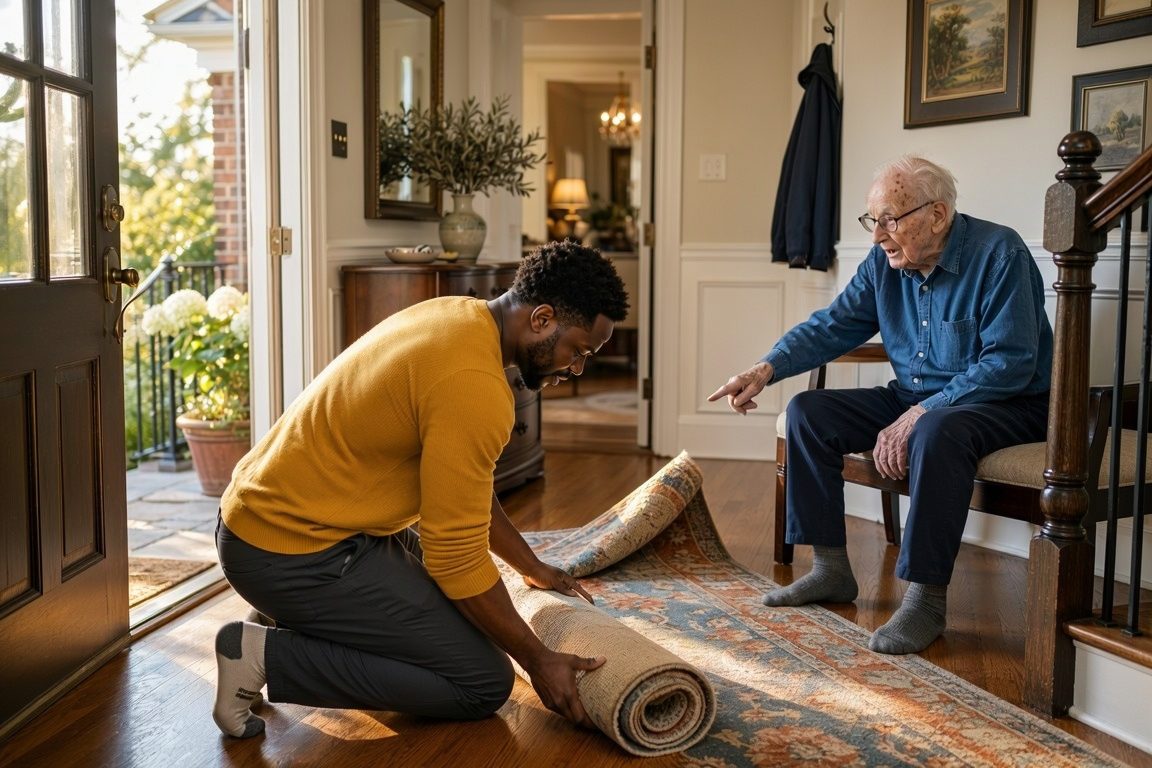
- Do not leave throw rugs or area rugs in place, even if labeled non-slip. Remove them entirely or secure with double-sided carpet tape.
- Do not assume your loved one will tell you if they feel dizzy or unsteady. Dementia can affect their ability to recognize or communicate these feelings.
- Do not rush your loved one when they are walking or getting up. Rushing causes panic and loss of balance.
- Do not rely solely on verbal reminders like 'be careful.' Dementia affects memory and judgment, so physical changes to the home are far more effective.
- Do not overlook medication side effects as a possible cause of falls. If you notice new unsteadiness after a prescription change, contact the doctor or pharmacist before the next dose.
Key points
- Falls are a leading cause of hospitalization for people with dementia, but most are preventable with environmental changes.
- Remove all loose rugs, clutter, and electrical cords from walkways, these are the most common tripping hazards.
- Improve lighting with night lights and automatic sensors, especially in hallways and bathrooms.
- Install grab bars and non-slip mats in the bathroom, and set water heater to 120°F or lower.
- Place frequently used items within easy reach to reduce unnecessary walking.
- Establish a calm, predictable routine and encourage gentle physical activity to maintain strength and balance.
- Use door alarms instead of locks to prevent wandering while allowing emergency egress.
Videos
 7 Reasons People With Dementia Fall (and how to help)This video explains the common causes of falls in dementia and offers practical strategies to address each one.
 Steady Steps: Practical Strategies for Managing Falls in DementiaA step-by-step guide to implementing fall prevention measures at home, with real-life examples.
 How Do You Ensure Home Safety For Dementia Patients? - Dementia Help HubCovers home safety modifications including lighting, grab bars, and securing dangerous areas.
 Home Safety For Your Loved OnesA comprehensive overview of home safety checks and modifications for dementia care.
2 more videos


Background
Why Falls Happen More Often with Dementia
Dementia affects more than just memory, it can impair balance, depth perception, judgment, and problem-solving skills. This means your loved one may not see a loose rug or a dark hallway as a hazard, and they may misjudge distances when stepping over a threshold or reaching for a handrail. Studies suggest that nearly half of older adults with dementia experience one or more falls, compared to about 30% of their peers without dementia. Falls can lead to fractures, head injuries, early hospitalization, and even a decline in cognitive function, so prevention is truly the best medicine.
The Role of the Environment and Routine
The home environment plays a huge role in fall risk. Clutter, loose rugs, dim lighting, and slippery bathroom floors are common culprits. Additionally, as dementia progresses, a person may become more disoriented in the evening (a phenomenon called sundowning), which can increase wandering and falls. Establishing a predictable daily routine helps the brain feel safe and calm, which in turn reduces anxiety and the likelihood of impulsive movements that lead to falls. By making small, intentional changes to the home and daily schedule, you can dramatically lower the risk.
Practical tools
7
Night Lights and Motion-Sensor Lights
Place warm-glow night lights in hallways, bedrooms, and bathrooms. Add motion-sensor lights that turn on automatically when your loved one passes by, especially helpful for nighttime trips to the bathroom.
Grab Bars and Non-Slip Mats
Install grab bars near the toilet and inside the shower or tub. Place non-slip mats both inside and outside the tub or shower, choosing textured mats that grip firmly even when wet.
Door Alarms and Motion Sensors
Use door chimes, alarms, or motion sensors that alert you when an exterior door is opened. Choose devices that do not lock the door, so your loved one can still exit in an emergency.
Pill Organizer and Medication Checklist
Use a weekly pill organizer with clearly labeled compartments to prevent missed or doubled doses. Keep an up-to-date list of every medication, dose, and prescribing doctor for fall-risk review at appointments.
Contrasting Colors for Stairs and Thresholds
Apply brightly colored tape or paint to the edge of each stair and to thresholds where flooring changes. Choose a color that stands out clearly from the floor, yellow or white on dark wood works well.
Medical Alert Bracelet or GPS Tracker
If wandering is a concern, a medical alert bracelet provides identification and emergency contact information, while a GPS tracker (worn as a watch, pendant, or clipped to clothing) helps find your loved one quickly. Many devices include automatic fall detection.
Raised Toilet Seat with Safety Frame
A raised toilet seat reduces the distance and effort needed to sit and stand, helping prevent dizziness and loss of balance. Choose one with built-in armrests or pair it with nearby grab bars.
Different situations
Early stage dementia
In early stages, your loved one may still be able to participate in fall prevention. Involve them in the process, ask about their comfort with changes. Encourage them to do balance exercises with a physical therapist. Use a pill organizer together and practice standing up slowly.
Middle stage dementia
At this stage, your loved one may need more supervision. Remove all throw rugs and secure furniture. Use childproof locks on cabinets with cleaning supplies or medications. Consider installing a bed alarm or a pressure mat that alerts you when they get up at night.
Late stage dementia
In late stages, your loved one may be bed-bound or use a wheelchair. Focus on preventing falls during transfers (e.g., from bed to chair). Use a transfer belt or a mechanical lift if needed. Keep the bed at a low height and use bed rails (with a doctor's guidance). Ensure the wheelchair is locked before transferring.
Spouse caregiver vs. adult child caregiver
As a spouse, you may be more familiar with your partner's habits and preferences, which can help you anticipate risks. However, you may also be more emotionally attached to keeping the home unchanged. As an adult child, you may have an easier time making objective changes, but you may need to navigate your parent's resistance. In both cases, approach changes with patience and involve your loved one in decisions when possible.
Christian faith context
If your loved one is comforted by faith, integrate prayer or scripture into the daily routine to reduce anxiety and agitation, which can contribute to falls. For example, say a short prayer before standing up or walking. Place a Bible or devotional within easy reach. Use calming Christian music during sundowning hours to create a peaceful environment.
Common questions
6
What low-cost home modification can deter elopement through a storm door?
Install a simple slide bolt lock high up or low down on the storm door, out of the person's usual line of sight, to prevent them from stepping out unnoticed.
What causes falls in dementia and what reduces the risk?
Falls often happen due to tripping hazards, poor lighting, and weakened balance, but most risks can be reduced by removing clutter, adding night lights, and encouraging gentle daily walking.
How can I assess fall risk, prevent falls, and know when to consult a doctor?
Watch for unsteady steps or recent stumbles, then remove throw rugs and improve lighting right away; consult a doctor if you notice a sudden change in walking or multiple near-falls in a week.
What can I do when a person with dementia starts to fall and policy prohibits catching them?
If the person starts to fall, gently guide them to the floor by supporting their back and hips, then cushion their head with a pillow or your hands, your priority is to slow the descent, not break policy.
How can a monitoring system help detect falls or health issues like UTIs?
A simple motion-sensor monitor can alert you to unusual nighttime activity or a fall, and a sudden increase in confusion or falls may signal a UTI needing prompt medical attention.
What changes to the home environment can reduce fall risk for a person with dementia?
Start by removing all loose rugs and clutter from pathways, then add automatic night lights in hallways and bathrooms, and install grab bars beside the toilet and in the shower, these three changes alone cut fall risk significantly.
For the doctor
7
- Ask your doctor or physical therapist about a balance and strength training program tailored for people with dementia.
- Discuss whether a medication review is needed, some medications can cause dizziness or low blood pressure, increasing fall risk.
- Inquire about the use of bed rails or a hospital bed if your loved one is at high risk for falling out of bed.
- Ask about a referral to an occupational therapist who can do a home safety assessment and recommend specific modifications.
- If your loved one has a history of falls, discuss the possibility of using a hip protector garment to reduce fracture risk.
- Ask your doctor: 'What is the safest way to secure doors to prevent wandering without creating a fire hazard? Should I use alarms instead of locks?'
- Ask your doctor: 'Are there any medications or dosages that might be increasing my loved one's fall risk, and could we review them?'