Step by step
What not to do
- Do not force a walker or cane on someone who cannot learn to use it. It will increase their fall risk, not decrease it.Instead, focus on environmental safety and physical support from a caregiver.
- Do not rely on alarms alone to prevent falls. Alarms may startle or agitate the person, and they do not address the reason they are moving. Combine alarms with environmental modifications and supervision.
- Do not leave the person alone in the bathroom or on the toilet. The bathroom is the most dangerous room for falls. Use a commode chair placed near the bed at night to reduce trips to the bathroom.
- Do not try to catch or lift the person if they start to fall. You will likely injure yourself.Instead, guide them gently to the floor, protecting their head. Then use a transfer lift or call for help.
- Do not assume a fall is just a fall. After any fall, check for injury, and discuss with the clinician. Falls can cause hidden fractures, head injuries, and a cognitive decline that may not be immediately obvious.
- Do not stop all physical activity out of fear. Gentle, supervised movement (like walking with assistance, seated exercises, or tai chi) helps maintain muscle strength and balance. Consult a physical therapist for a safe routine.
Key points
- Walkers often increase fall risk in mid-to-late stage dementia because the person cannot learn to use them properly and will lean forward and forget them.
- Environmental modifications (remove rugs, add grab bars, improve lighting, reorganize items) are the most effective fall prevention tools.
- Non-skid shoes worn indoors are essential; avoid slippers, slip-ons, and backless shoes.
- Address dehydration and blood pressure drops by offering fluids and encouraging slow standing.
- Use visual cues (dark rug in front of door, camouflaged doors) to prevent wandering toward dangerous areas, but monitor for distress and remove if needed.
- Caregiver safety is paramount: use a transfer lift to help someone up from a fall, and consider a personal emergency alert system for yourself.
Videos
 Quick Tips: Fall Prevention Tips for SeniorsProvides quick, actionable tips on footwear and home modifications that are especially relevant when walkers are not an option.
 Steady Steps: Practical Strategies for Managing Falls in DementiaOffers a deep dive into why traditional fall prevention fails in dementia and what to do instead, including environmental and behavioral strategies.
 Fall Safety TipsCovers general fall safety tips that can be adapted for dementia, such as removing tripping hazards and improving lighting.
 Caring For Aging Parents: Practical Tips & AdvocacyFocuses on caregiver advocacy and practical steps to prevent falls, including how to talk to doctors and family members about fall risk.
2 more videos
 Providing Support When Mobility Rules Are Not Regarded | Teepa's ClipsTeepa Snow explains why people with dementia cannot follow mobility rules and offers compassionate, hands-on strategies for support.
 HOW TO MANAGE Wandering, Pacing, Eloping ~ Smart Tricks When You Are DesperateProvides creative, low-cost tricks to manage wandering and elopement, which are common causes of falls in mid-to-late stage dementia.
Background
Why Walkers and Alarms Stop Working
In mid-to-late stage dementia, the brain's ability to learn new skills or remember the purpose of an object is severely compromised. A walker, which requires a person to remember to use it, to coordinate three points of contact, and to not lean forward, actually increases fall risk. Some studies suggest that walkers may increase fall risk in mid-to-late stage dementia. Always discuss mobility aids with the person's clinician or physical therapist before making changes. They lean forward into the walker, then forget it exists (out of sight, out of mind), and pitch forward into a fall. Alarms, too, become meaningless, the person may not understand the sound or may become agitated by it, and the alarm does nothing to address the underlying reason they are moving (restlessness, need to use the bathroom, sundowning). The protective reflex, the instinct to catch yourself, to step over an obstacle, to slow down, is lost because the brain no longer processes visual-spatial information correctly. A dark rug in front of a door may look like a black hole, a chair in the path may not be recognized as an obstacle at all.
What Is Really Happening: Vision, Balance, and the Body
The person with dementia is not being stubborn or careless. Their brain is changing. They may have trouble seeing objects at their feet or above eye level, their visual field narrows. They may also have a condition called 'scissor gait' where their legs cross or they shuffle, making tripping over their own feet common. Muscle weakness, dehydration, and blood pressure drops when standing up (orthostatic hypotension) are all common and can cause sudden falls. Fear of falling itself can cause a person to freeze, stiffen, and then fall. And if they have diabetes, a 'phantom limb' sensation can make them think a missing leg is still there, leading to a fall when they try to stand. The goal is not to stop all movement, that would lead to faster decline, but to make movement as safe as possible by removing triggers and supporting the body in ways the brain no longer can.
Practical tools
6
The 'Safe Zone' Setup
Create a small, clutter-free area in the living room or bedroom where the person can sit safely. Place
Use a non-slip mat under the chair. This becomes their 'home base' where they are least likely to fall.
The Transfer Lift (e.g., Indeelift)
A device that looks like a dolly with a seat. You slide it behind the person, secure a belt around them, and press a button to lift them to standing or chair height. It is invaluable for helping someone up after a fall without injuring yourself or calling 911. Practice using it before a fall occurs.
The 'Slow Stand' Script
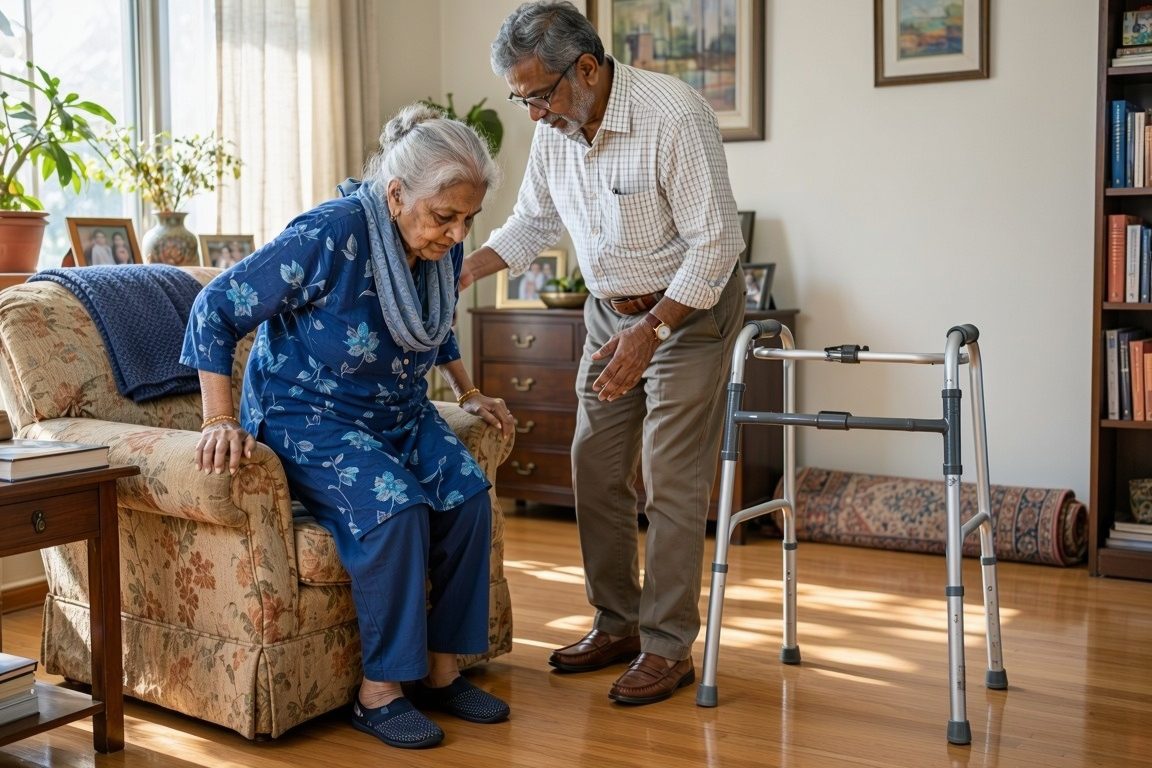
When the person is sitting and wants to stand, say: 'Let's do it together. First, scoot to the edge of the chair. Good. Now put both feet flat on the floor. Now, I'm going to count to three, and we'll stand up slowly. One... two... three... and up.' This reduces dizziness and gives them time to adjust.
The Sundowning Light Strategy
In the late afternoon, turn on all the lights in the house, especially in the bedroom and bathroom. Use warm, soft lighting to reduce shadows and confusion. Close curtains to block the fading daylight that can trigger agitation. This can reduce the restless wandering that leads to falls.
The 'No-Slip' Shoe Checklist
Check shoes daily:
If yes, replace them. Keep a pair of sturdy, non-skid shoes by the bed and another by the front door. If the person refuses shoes, try non-skid socks with rubber grips, but understand they offer less support than shoes.
The 'Hydration Station'
Place a small cup of water or a hydrating snack (like melon or cucumber slices) in the person's safe zone. Offer a sip every time you pass by. Dehydration is a common cause of falls because it leads to low blood pressure and dizziness. Aim for at least 6-8 cups of fluid per day, but adjust for their needs and discuss with the clinician.
Different situations
Lewy Body Dementia (LBD)
People with LBD are extremely sensitive to medications, especially antipsychotics and some Parkinson's drugs, which can cause severe rigidity, falls, and even neuroleptic malignant syndrome. Discuss ALL medication changes with the clinician. They also have fluctuating cognition and visual hallucinations, so a dark rug may be especially terrifying or confusing. Use solid, light-colored flooring. They may also have REM sleep behavior disorder, so ensure the bed is low to the ground and use bed rails if needed.
Late Stage (bed-bound or very limited mobility)
The focus shifts from preventing falls to preventing injury from falls out of bed or from a chair. Use a low bed (mattress on the floor) or a hospital bed with side rails. Use a fall mat on the floor beside the bed. For transfers, use a mechanical lift (Hoyer lift) and get training from a physical therapist. The goal is to keep the person comfortable and safe, not to maintain walking.
Spouse vs. Adult Child Caregiver
If you are an elderly spouse, your own fall risk is high. You must prioritize your safety. Use a transfer lift, a personal emergency alert system, and do not try to lift or catch the person. If you are an adult child, you may be stronger but also may have other responsibilities (work, kids). Consider hiring a home health aide for supervision during high-risk times (sundowning, overnight). Both roles benefit from respite care to prevent caregiver burnout.
In a Facility (Assisted Living or Nursing Home)
Advocate for a person-centered fall prevention plan. Ask the staff to remove throw rugs, use non-skid socks, and provide a low bed with fall mats. Request that the person be checked every hour during the night for bathroom needs. If they wander, ask about a wander management system (not just an alarm) that alerts staff to their location. You can also bring in familiar items (a favorite blanket, photos) to reduce agitation.
Medicaid or Limited Budget
Many fall prevention tools are affordable. Grab bars can be installed by a handyman for under $100. Non-slip mats are $10-20. A transfer lift can be rented or purchased used. Contact your local Area Agency on Aging for free or low-cost home safety assessments and equipment loan programs. Some states have Medicaid waivers that cover home modifications.
For the doctor
9
- Ask the doctor to review all medications (including over-the-counter) for side effects that increase fall risk, such as dizziness, low blood pressure, or muscle weakness.
- Ask about a physical therapy evaluation for safe mobility techniques, proper use of any assistive device, and a home exercise program to maintain strength and balance.
- Ask about a bone density test and whether calcium, vitamin D, or medication to prevent fractures is appropriate.
- Ask about a hydration plan if the person is at risk of dehydration, especially if they have kidney issues or take diuretics.
- Ask about a referral to an occupational therapist for a home safety assessment and recommendations for adaptive equipment.
- Ask the doctor: 'Is a walker or cane still appropriate for my loved one, given their dementia stage? If not, what alternatives can we consider for safe mobility?'
- Ask the doctor: 'Are there any medication adjustments that could reduce dizziness or blood pressure drops when standing?'
- Ask the doctor: 'What is the safest way to help my loved one up after a fall? Should I use a transfer lift, and can you recommend one?'
- Ask the doctor: 'Are there any specific stop-conditions I should watch for when using visual cues like dark mats or door camouflage?'