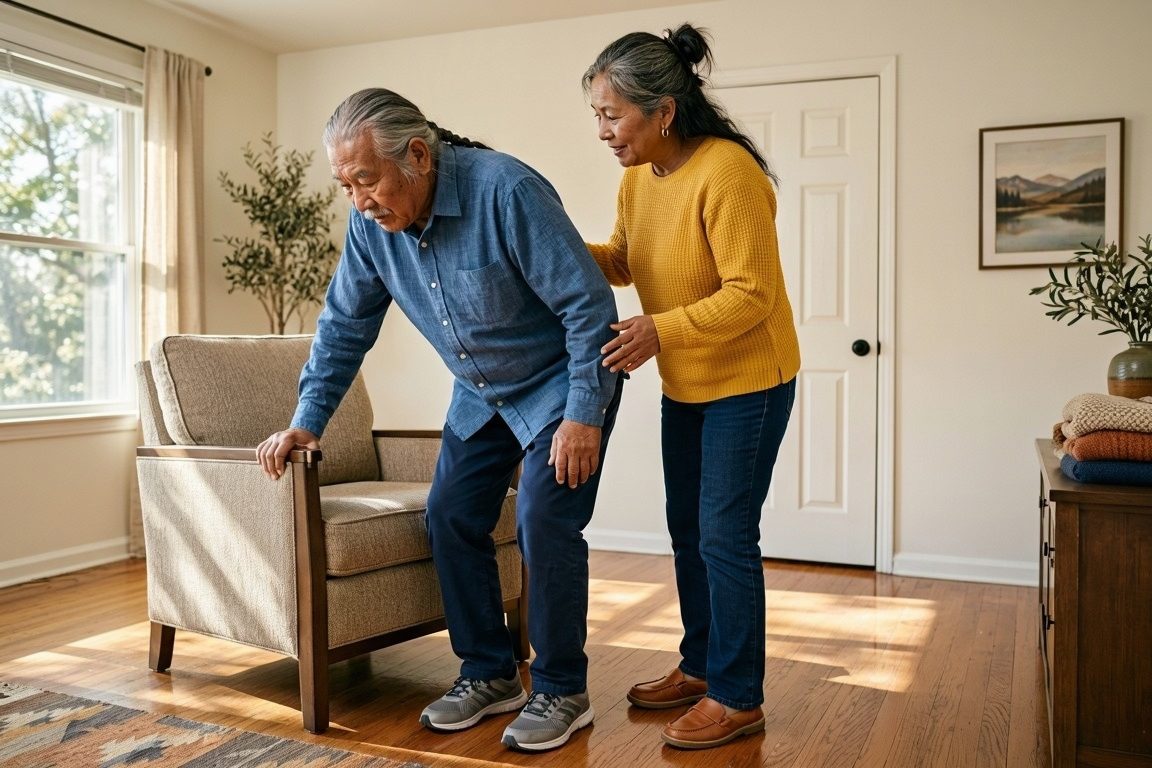
Step by step
What not to do
- Do not wait for a fall to start mobility practice: Many caregivers think PT is only needed after an injury. But intervening early can prevent falls and the fear that follows. Start strength and balance training as soon as you notice unsteadiness or shuffling.
- Do not push the person to walk faster or farther than they can: Forcing a faster pace can cause tripping and frustration.Instead, match their speed and celebrate small distances. Safety and enjoyment matter more than distance.
- Do not use a walker or cane without professional guidance: An ill-fitting or incorrectly used aid can actually increase fall risk. A PT can adjust the height and teach proper technique. Avoid using a walker if the person cannot remember to lift it over thresholds.
- Do not ignore the bathroom as a high-risk zone: Many falls happen when the person closes their eyes to wash their face or hair, losing balance. Always use a shower chair and grab bars. Encourage sitting to wash hair or face.
- Do not stop exercise if the person resists: Resistance may come from fear, confusion, or fatigue. Break exercises into smaller steps, use music, or do them together. If they refuse, try again later. Consistency is more important than intensity.
Key points
- Falls in dementia are often due to brain damage affecting motor control, not laziness or carelessness.
- Start mobility practice early, before a fall, to build strength and confidence.
- Focus on sit-to-stand, balance, and seated exercises; keep sessions short and positive.
- Use proper footwear, clear the environment, and always supervise practice.
- Hydration and slow standing are simple but powerful fall prevention tools.
- Work with a physical therapist for personalized guidance, especially for mobility aids.
Videos
 7 Reasons People With Dementia Fall (and how to help)Explains the brain-based causes of falls and gives practical caregiver strategies.
 Steady Steps: Practical Strategies for Managing Falls in DementiaOffers step-by-step balance and strength exercises tailored for dementia.
 Ep. 201: Are Falls Just a Fact of Life with Dementia?Discusses how to optimize mobility skills and avoid the fear-of-falling trap.
 Discover the Cranium Crunches Workbook by Activity Connection with Co-Author Dr. Rob WinninghamShows how cognitive and physical exercises can be combined for brain health.


Background
Why Dementia Increases Fall Risk
Falls are not just 'accidents' in dementia, they are often a direct result of brain changes. The motor cortex, pre-motor cortex, limbic system, and basal ganglia can all be damaged by different types of dementia, leading to unsteady gait, shuffling, muscle weakness, and slower reaction times. This means your loved one may trip over a crack in the sidewalk before their brain can process the danger. Studies show people with dementia fall eight times more often than those without, and falls are a leading cause of hospitalization. But understanding this helps you shift from blame to proactive care.
The Role of Fear and Inactivity
After a fall or near-fall, many people with dementia become afraid of moving. This fear can cause them to do less, sitting more, walking less, which leads to muscle weakness and worse balance, creating a vicious cycle. On the other hand, some may continue to move but without building skills, leading to repeated falls. The goal is to find a middle ground: gentle, consistent practice that builds strength and confidence without pushing too hard. Even 20 minutes of exercise twice a week can improve mobility and independence, even in later stages.
Exercise as Brain Protection
Aerobic exercise stimulates the release of brain-derived neurotrophic factor (BDNF), a chemical that helps grow and protect memory centers in the brain. This is one reason physical activity is strongly recommended for both preventing and managing dementia. While the evidence for exercise improving cognition in moderate dementia is still emerging, its benefits for balance, mood, and fall prevention are well-supported. Think of mobility practice as medicine for both body and brain.
Practical tools
6
The 'Slow Stand' Script
Say: 'Let's practice standing up slowly.
' Repeat 5 times. This builds leg strength and reinforces the habit of standing slowly to avoid dizziness.
Seated Marching Routine
This strengthens hip flexors and improves coordination. Add arm movements for more challenge: raise arms overhead while marching.
The 'Heel-Toe' Walk Practice
This improves balance and gait precision.
Hydration Reminder System
Dehydration can cause dizziness and falls, so this simple tool is powerful.
Fall Risk Self-Check List (for caregivers)
Each week, ask: '
' Use this to adjust exercise intensity or consult a therapist.
Community Fall Prevention Programs
Search the National Council on Aging's website by zip code for local fall prevention classes. These often include Tai Chi, Stepping On, or Matter of Balance programs, designed for older adults and adaptable for dementia. Attending together can provide social support and expert guidance.
Different situations
Lewy body dementia or Parkinson's dementia
These types often involve more severe balance issues and rigidity. Focus on seated exercises and use a walker with wheels (if PT-approved) to avoid freezing. Avoid quick turns; practice slow, wide turns. Be extra cautious with medications that can cause dizziness. Discuss with a neurologist about medication timing to minimize fall risk.
Late-stage dementia (bedbound or chairbound)
Even if the person cannot stand, you can do passive range-of-motion exercises: gently move their arms and legs through their full range while they lie in bed. This prevents contractures and maintains some muscle tone. Use a lift or transfer board for safe position changes. Focus on comfort and dignity, falls are less likely but pressure injuries and stiffness are risks.
Spouse vs. adult child caregiver
Spouses may be older themselves and at risk of injury when assisting. Use a gait belt (a padded belt around the person's waist) to help steady them without straining your back. Adult children may need to set boundaries: practice together but also schedule respite care to avoid burnout. Both should learn proper body mechanics from a PT.
Person lives in a facility (nursing home or assisted living)
Advocate for the person to receive PT/OT services regularly. Ask staff to incorporate exercises into daily care (e.g., walking to meals, standing during transfers). Ensure the facility uses bed alarms or chair alarms if the person is at high risk. Request a fall risk assessment upon admission and quarterly.
Person has Medicaid or limited resources
Many community centers and senior centers offer free or low-cost exercise classes. Check with your local Area Agency on Aging for grants or sliding-scale PT. Use household items as weights (e.g., soup cans for arm exercises). Focus on walking and seated exercises that require no equipment.
For the doctor
5
- Ask the doctor: 'Could my loved one's medications (e.g., blood pressure meds, sedatives, or dementia drugs) be increasing their fall risk? Can we review and adjust?'
- Ask the doctor: 'Should we get a physical therapy evaluation to create a personalized exercise plan? How often should they be seen?'
- Ask the doctor: 'Is orthostatic hypotension (blood pressure drop when standing) a concern? How can we monitor and manage it?'
- Ask the doctor: 'Are there any medical conditions (e.g., heart disease, osteoporosis) that affect what exercises are safe?'
- Ask the doctor: 'If my loved one has had a fall, should we get imaging to rule out a fracture or head injury, even if they seem fine?'