Step by step
What not to do
- Do not force oral fluids if aspiration risk or refusal, offer sips, ice chips, or thickened liquids safely, then discuss hypodermoclysis.
- Do not assume IV is the only option, hypodermoclysis is less invasive and often available in nursing homes/palliative care.
- Do not ignore early dehydration signs due to recent drinking; check urine color and output daily.
- Do not stop hypodermoclysis or remove catheter yourself, call nurse. If patient pulls it out, cover with gauze and call nurse; never reinsert.
- Do not continue hypodermoclysis in final days without palliative discussion, forced fluids may cause discomfort when natural shutdown begins.
Key points
- Hypodermoclysis (fluids under the skin) is a safe, comfortable alternative to IV for older adults with mild to moderate dehydration.
- It can be used in long-term care or at home with a nurse's help, avoiding hospital visits.
- The catheter is changed every 72 hours and the site must be checked for redness or swelling daily.
- Hypodermoclysis can also deliver pain medication when the person can no longer swallow.
- In late-stage dementia or end-of-life, discuss with the care team whether hydration aligns with comfort goals.
- Always review medications for dehydrating side effects and ask about alternatives.
Videos
 The Dangers of Dehydration in SeniorsThis video explains why older adults are at higher risk for dehydration and the serious consequences, reinforcing the importance of early detection and options like hypodermoclysis.
 How To Get Someone With Dementia To Drink WaterProvides practical tips for encouraging oral hydration, which can complement or reduce the need for hypodermoclysis.
Background
What is Hypodermoclysis and Why Is It Used?
Hypodermoclysis is a method of delivering fluids by inserting a small needle into the skin of the belly, thigh, or upper chest and slowly infusing a sterile solution (usually normal saline) into the fatty tissue just beneath the skin. This technique has been used for nearly a century and is considered safer and more comfortable for older adults than traditional intravenous (IV) therapy, which requires a vein and often causes discomfort, bruising, or infection. In studies of frail elderly patients with mild to moderate dehydration, hypodermoclysis was found to be safe and effective, with significantly fewer adverse effects compared to IV fluids. It is especially valuable in long-term care or palliative settings because it can be started quickly, does not require a hospital bed, and allows the person to remain in their familiar environment.
When Is Hypodermoclysis Appropriate?
Hypodermoclysis is most appropriate when an older adult cannot take enough fluids by mouth to maintain hydration, for example, because of swallowing difficulties, advanced dementia, nausea, or refusal to drink. It is also used in palliative care to prevent or treat agitated delirium that can arise from dehydration, and it can be a vehicle for giving certain pain medications (like morphine or hydromorphone) when the person can no longer swallow pills. The decision to start hypodermoclysis should always involve a clinician, but it is a good option when the goal is comfort and quality of life, not aggressive life extension. In very late-stage dementia or during the final days of life, some experts argue that invasive rehydration may not be beneficial; however, others point out that maintaining hydration can prevent distressing symptoms like confusion and restlessness. Your care team can help weigh these considerations based on your loved one's specific condition and wishes.
What to Expect During Hypodermoclysis
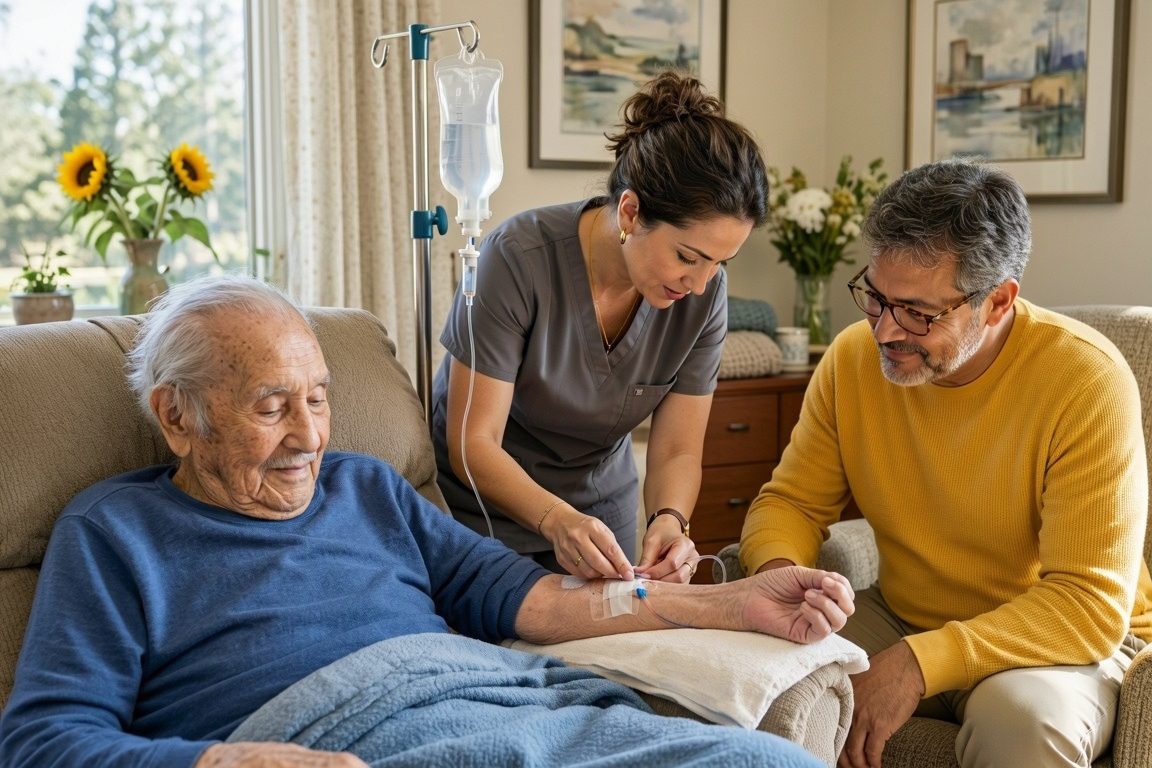
The procedure is straightforward: a small, flexible catheter is placed under the skin, usually on the abdomen or thigh, and secured with a transparent adhesive dressing so the site can be checked for redness or swelling. The catheter is typically replaced every 72 hours or sooner if any signs of infection appear. Fluids are infused slowly over several hours, often using a small pump or gravity drip. Your loved one may feel a slight pinch during insertion, but afterward most people find it comfortable and barely noticeable. The infusion can be done while the person sits in a chair, lies in bed, or even walks around with a portable pump. Because the fluid is absorbed gradually, there is less risk of fluid overload than with IV therapy. The care team will monitor urine output, skin turgor, and mental status to ensure the treatment is working.
Practical tools
4
Daily Hydration Log Checklist
Track:
Share with nurse each shift.
Medication Dehydration Risk Card
Catheter Site Observation Guide
Normal: small soft bump, cool, not hard. Red flags: spreading redness, warmth, tenderness, swelling, leakage, pus, or peeling dressing. Report immediately to nurse.
Infusion Comfort Kit
Bag containing:
Dress patient in loose clothing that can be rolled up to keep site visible but covered during 1–4h infusion.
Different situations
Late-stage dementia (e.g., unable to recognize thirst or swallow)
Hypodermoclysis may be the primary hydration method. Focus on comfort: use the smallest needle possible, keep the infusion rate slow, and monitor for signs of fluid overload carefully. The goal is to prevent dehydration-related delirium, not to achieve perfect hydration. Discuss with the palliative team whether hydration aligns with the person's wishes.
Palliative care / end-of-life
In the final days, some experts argue that dehydration may be natural and that forcing fluids can cause discomfort (e.g., swelling, breathing difficulty). However, hypodermoclysis can still be used to deliver pain medication or to prevent agitated delirium. The decision should be made jointly with the hospice team, respecting the person's advance directives. If the person is restless and pulling at the catheter, it may be better to stop and focus on mouth care and comfort.
Family caregiver vs. clinician role
Family caregivers should not insert or adjust the catheter, that is the nurse's job. Your role is to monitor, report changes, and advocate. If you notice the person seems more confused or uncomfortable during infusions, speak up. Clinicians should ensure the site is rotated every 72 hours and that the infusion rate is appropriate for the person's kidney function and fluid status.
In a long-term care facility
Ask the facility's medical director or nurse practitioner if they have a protocol for hypodermoclysis. Some facilities may not offer it routinely, so you may need to request it. Bring printed information from reliable sources (like the AAFP article) to support your request. Ensure the staff knows how to monitor the site and when to call you.
Frailty without dementia
For a frail older adult without cognitive issues, hypodermoclysis can still be a good option if they have difficulty drinking due to nausea, weakness, or medication side effects. The same monitoring applies, but the person may be more able to communicate discomfort. Encourage them to sip fluids between infusions if safe.
For the doctor
5
- Ask the doctor: 'Is hypodermoclysis safe for my loved one given their kidney function and current medications?'
- Ask: 'What is the target fluid volume per day, and how will we know if it's enough?'
- Ask: 'Are there any medications my loved one is taking that could be causing dehydration? Can any be changed?'
- Ask: 'If hypodermoclysis is started, how will we monitor for complications like infection or fluid overload?'
- Ask: 'In the context of palliative care, what are the benefits and risks of continuing hydration versus allowing natural dehydration?'