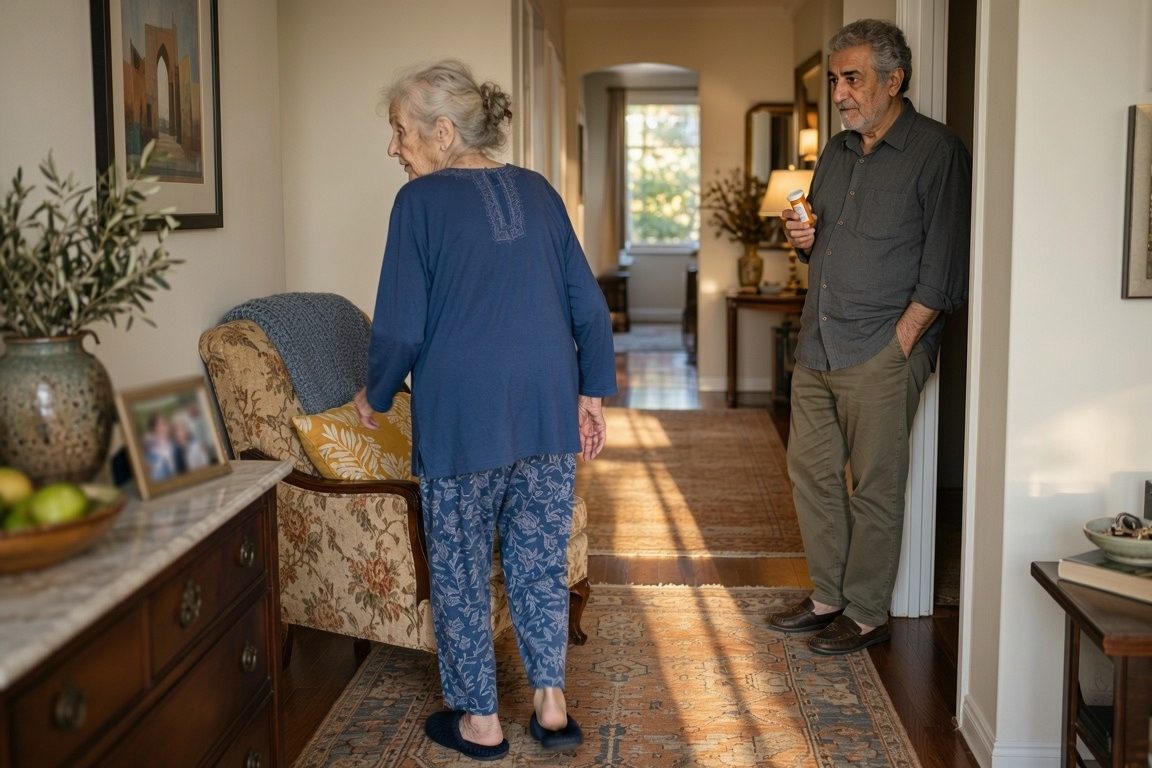
Step by step
What not to do
- Do not assume the pacing is 'just the dementia' and ignore it. Many caregivers are told that pacing is a normal part of dementia, and while it can be, a sudden change deserves investigation. You might miss a reversible cause like a medication side effect.
- Do not stop or change any medication on your own. Some drugs, especially benzodiazepines and certain antidepressants, can cause dangerous withdrawal symptoms if stopped abruptly. Always work with the doctor.
- Do not add a new medication to 'calm' the pacing without first reviewing existing drugs. Adding an antipsychotic or sedative to a person who is already restless from a medication side effect can make things worse, more confusion, more falls, and more sedation during the day.
- Do not blame yourself or your loved one for the pacing. It's not a behavior problem or a sign of poor care. It's a possible medical side effect, and it's your job to be the detective, not the judge.
- Do not rely only on the doctor who prescribed the medication. Sometimes primary care doctors are not experts in dementia or medication side effects in older adults. Consider asking for a geriatrician, a pharmacist, or a dementia specialist for a second opinion.
- Do not ignore other possible causes of pacing while you investigate medications. Pain, constipation, hunger, or a need to use the bathroom can also cause restlessness. Address those first, as they are often easier to fix.
Key points
- Pacing that starts or worsens suddenly is a red flag for a medication side effect, don't ignore it.
- Common culprits include bladder medications (oxybutynin), benzodiazepines, pain meds, and anticholinergic drugs.
- Keep a log of pacing episodes and medication timing to share with the doctor.
- Never stop or change a medication without medical guidance, some require a slow taper.
- Always rule out other causes like pain, infection, or environmental triggers before assuming it's the dementia.
- A medication reconciliation (review of all drugs) is a powerful tool, request one from the doctor or pharmacist.
Videos
 Caregiver Strategies How to Deal with Dementia Care Challenges Sundowning, Anxiety, and RestlessnessThis video offers practical non-drug strategies for restlessness and pacing, which you can use while investigating medication causes.
 Is dementia reversible?Explains that some dementia-like symptoms, including those caused by medications, can be reversed or improved, gives hope and motivation to investigate.
 THIS Pill Causes Dementia!!!Highlights specific medications (like anticholinergics) that can cause or worsen cognitive symptoms, including restlessness and pacing.
 Steady Steps: Practical Strategies for Managing Falls in DementiaCovers how medication side effects can increase fall risk, important because pacing can lead to falls, and this video offers safety strategies.
2 more videos
 The 7 Stages Of Dementia: Stage 6Describes common behaviors in stage 6, including pacing, and offers non-drug calming techniques that can help while you address medication issues.
 Medications Used in Dementia: What Caregivers Should Know | Sarah Mourra MD | UCLAMDChatA doctor explains how to recognize medication side effects like confusion, restlessness, and falls, and how to work with your healthcare team.
Background
Why Pacing Might Be a Medication Side Effect
Pacing is a common behavior in dementia, but when it appears suddenly or gets much worse, it's worth asking whether a medication is the cause. Some drugs can directly cause restlessness or agitation as a side effect. For example, medications for an overactive bladder (like oxybutynin) can increase confusion and agitation in older adults with dementia, which may show up as pacing. Pain medications, especially certain opioids, can sometimes cause a paradoxical reaction where the person becomes more restless instead of calmer. Even medications meant to help with sleep or anxiety, like benzodiazepines, can backfire and cause increased agitation or restlessness in some people, especially at higher doses or when used for a long time.
How to Tell If It's the Medication vs. the Dementia
The key clue is timing. If the pacing started or got worse within days or weeks of starting a new medication, increasing a dose, or stopping a medication, that's a strong signal. Also look for other side effects that often go along with medication-induced restlessness: new or worsening confusion, drowsiness, dizziness, falls, or trouble speaking. If your loved one seems 'drugged' or overly sleepy at times but then bursts into pacing, that pattern can also point to a medication issue. Another clue is if the pacing happens at specific times of day, for example, right after a dose of a medication wears off or peaks. Keep a simple log for a few days: note when the pacing happens, what medication was given in the previous 4-6 hours, and any other changes you see.
The Bigger Picture: Medication Interactions
Sometimes it's not one medication but the combination of several that causes the problem. When multiple drugs are taken together, they can interact in ways that increase side effects. For example, a person might be on a bladder medication, a pain reliever, and a sleep aid, each might be fine alone, but together they can cause confusion, restlessness, and pacing. This is why a 'medication reconciliation', where a doctor or pharmacist reviews every single drug, including over-the-counter ones and supplements, is so important. Don't assume that because a medication has been taken for years, it can't be causing a new problem. As the brain changes with dementia, it becomes more sensitive to medications, so a drug that was fine a year ago might now be causing trouble.
Practical tools
6
Medication Side Effect Log
A simple notebook or a note on your phone. For each day, write: date, time of pacing episode, what your loved one was doing before, what medications were given in the last 4-6 hours (name, dose, time), and any other symptoms (confusion, drowsiness, falls, trouble speaking). Bring this to every doctor visit.
The 'Red Flag' Checklist for Medication Problems
Print or save this list:
If you see any of these, especially after a medication change, call the doctor.
The 'Ask Your Doctor' Script
Say this: 'I'm worried that [loved one's name]'s pacing might be a side effect of a medication. Could we do a medication review? I've been keeping a log of when the pacing happens and what meds they've taken. I'm especially concerned about the [bladder medication / pain med / sleep aid]. Is there a safer alternative or a way to reduce the dose?'
The 'Redirect to Calm' Toolkit
While you wait for the medication review, try these: offer a soft blanket or a stuffed animal to hold, play calming music (nature sounds or their favorite old songs), give them a simple task like folding washcloths or sorting socks, or take a slow walk together. These can reduce pacing without drugs.
The 'Pharmacy Check'
Ask your pharmacist for a free medication review. Many pharmacies offer this. Bring a list of all drugs (including OTC and supplements). Ask: 'Are any of these anticholinergic? Could any of them cause restlessness or confusion in an older adult with dementia?' Pharmacists often catch interactions that doctors miss.
The 'Non-Drug Bladder Solution'
If a bladder medication is suspected, ask the doctor about non-drug approaches:
These can sometimes replace the need for the medication.
Different situations
Lewy body dementia
People with Lewy body dementia are extremely sensitive to antipsychotic medications, they can cause severe rigidity, sedation, and even death. If pacing is being considered for treatment with an antipsychotic, get a second opinion from a dementia specialist first. Also, medications for Parkinson's (like levodopa) can sometimes cause restlessness or dyskinesia that looks like pacing. Work closely with a neurologist.
Late-stage dementia (stage 6 or 7)
In late stages, pacing may be less about restlessness and more about discomfort or pain. Check for physical causes like constipation, urinary tract infection, or joint pain before assuming it's a medication side effect. Also, the person may not be able to communicate what's wrong, so your log and observation are even more critical. Any medication change should be done with extreme caution, starting at the lowest possible dose.
Spouse caregiver vs. adult child caregiver
Spouse caregivers may be more hesitant to question a doctor, especially if the doctor has been treating their loved one for years. It can help to bring a friend or another family member to the appointment for support. Adult children may need to be careful not to come across as confrontational, use the 'I'm worried' script and frame it as a request for help, not a criticism.
Person lives in a facility (nursing home or assisted living)
Facility staff may be quick to suggest medication for pacing because it's easier to manage. You have the right to request a medication review and to refuse new medications. Ask for a team meeting with the doctor, nurse, and pharmacist. Also, check if the facility's environment is overstimulating (loud noises, too many people) or understimulating (boredom), both can cause pacing. Sometimes a simple change in routine or a walk outside helps more than any drug.
Person is on Medicaid or has limited access to specialists
If you can't see a geriatrician or dementia specialist, start with the primary care doctor and ask for a medication review. You can also call your local Area Agency on Aging or Alzheimer's Association helpline (1-800-272-3900) for free guidance. Some pharmacies offer free medication reviews. Don't let cost or access stop you from asking questions, you are your loved one's best advocate.
For the doctor
6
- Ask your doctor: 'Could any of my loved one's medications be anticholinergic? I've heard these can cause confusion and restlessness in dementia.'
- Ask your doctor: 'Is it safe to reduce or stop the [specific medication]? If so, how should we taper it?'
- Ask your doctor: 'Are there any non-drug alternatives for the condition this medication is treating (e.g., bladder issues, pain, anxiety)?'
- Ask your doctor: 'Could the pacing be a sign of a urinary tract infection or other medical problem, not just a medication side effect?'
- Ask your doctor: 'If we do need to add a medication for the pacing, what is the safest option with the fewest side effects for someone with dementia?'
- Ask your pharmacist: 'Can you review all my loved one's medications for potential interactions that could cause restlessness or confusion?'