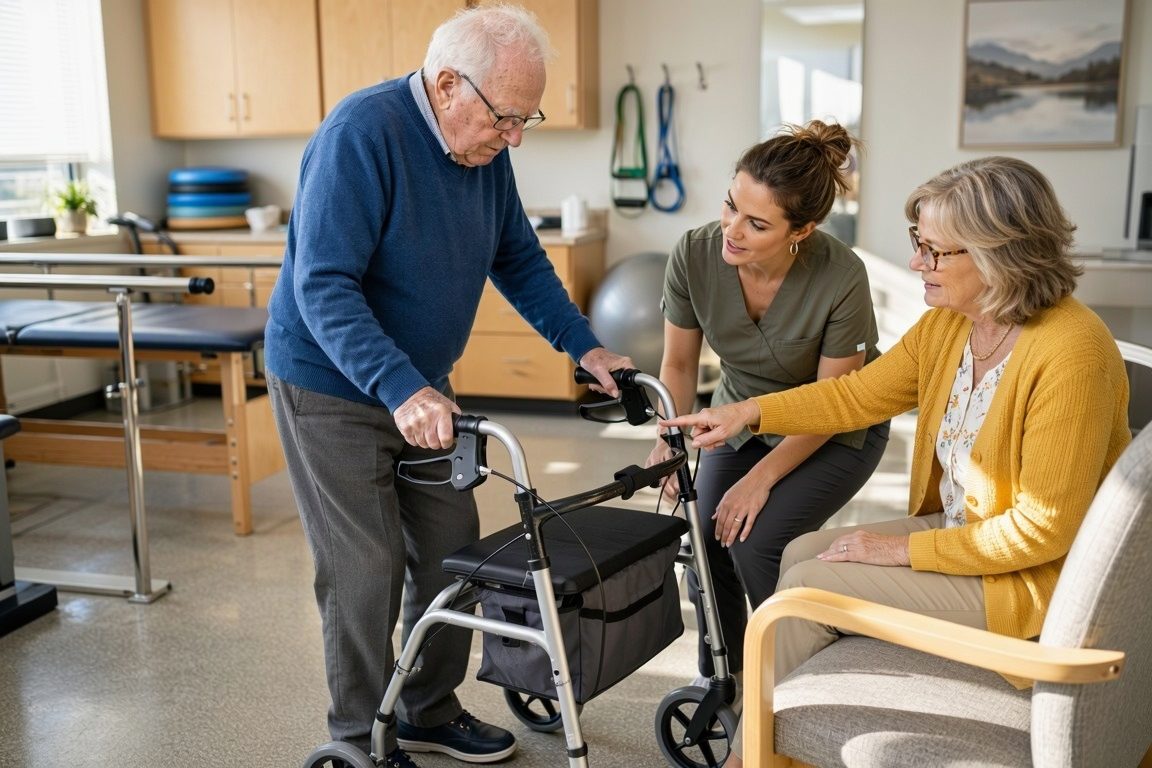
Step by step
What not to do
- Do not assume a walker is always safer. For someone in middle to late stage dementia, a walker can actually increase fall risk because they may lean forward, forget to use it, or fail to lock wheels.Instead, prioritize environmental safety and professional assessment first.
- Do not choose a wheeled walker with a basket for someone with dementia. The basket encourages leaning forward, and the wheels can roll away if not locked. The person may also forget to lock the brakes before standing. Opt for a standard walker without wheels or with simple push-down brakes.
- Do not force the person to use a walker if they resist or cannot remember how. Forcing can lead to frustration, agitation, and a higher risk of falls as they try to use it incorrectly.Instead, work with a therapist to find an alternative or focus on non-device strategies.
- Do not ignore the environment. Even with a walker, clutter, loose rugs, poor lighting, and slippery floors are major fall hazards. Remove all tripping risks and improve lighting before relying on a mobility aid.
- Do not assume the person will remember to use the walker every time. Dementia affects memory and judgment, so they may stand up and walk without it, especially if it's out of sight. Keep the walker within arm's reach at all times, and consider using a reminder or cue.
Key points
- A walker can increase fall risk in middle to late stage dementia because the brain cannot learn to use it correctly, leading to forward leans and forgotten steps.
- If you do use a walker, choose a standard four-point model without wheels that need locking (e.g., the classic silver walker with tennis balls).
- Introduce the walker early, with professional training, and monitor daily for unsafe use.
- Environmental safety, removing rugs, improving lighting, securing cords, is often more effective than a walker in reducing falls.
- Always consult a physical therapist, doctor, and pharmacist before introducing or changing mobility aids.
- A first fall is a major warning sign, immediately reassess all factors with a professional.
Videos
 Providing Support When Mobility Rules Are Not Regarded | Teepa's ClipsTeepa Snow explains why walkers often increase fall risk in mid to late stage dementia and what to do instead.
 7 Reasons People With Dementia Fall (and how to help)Covers key fall causes including medication side effects, environmental hazards, and gait changes.
 Steady Steps: Practical Strategies for Managing Falls in DementiaOffers concrete home safety tips and strategies for reducing fall risk without relying solely on mobility aids.
 095. How to create a safe home for Dementia family membersWalks through room-by-room home modifications to prevent falls.

Background
Why a Walker Can Backfire in Dementia
When a person has dementia, their brain is already working hard to coordinate walking, balance, and awareness of their surroundings. Adding a walker introduces a new cognitive load, like trying to text while driving. For a healthy brain, using a walker is almost automatic, but for someone with dementia, it can become one more thing to process, which actually interferes with walking rather than helping. Research and clinical experience suggest that in mid to late stages, giving a walker often leads to an increase in fall-related injuries within six months to a year. This happens because the person may lean forward into the walker, forget it's there (out of sight, out of mind), and then take a forward fall because they've gotten used to that momentum.
The Forward-Lean and Forgetfulness Trap
A common pattern is that the person starts using the walker as a support but gradually leans their weight forward onto it. This shifts their center of gravity, making them more likely to fall forward if the walker slips or if they forget to move it with them. Many people with dementia also forget to lock the wheels on a wheeled walker before standing up, causing the walker to roll away and the person to fall. The classic silver walker with tennis balls on the back legs is often safer because it doesn't have wheels that need locking, it stays put when the person stands. But even then, if the person forgets to use it at all, they may suddenly stand and walk without it, relying on the forward momentum they've built up.
When a Walker Can Help, and When It Can't
A walker can be beneficial if introduced early, when the person still has the cognitive ability to learn and practice using it correctly. Physical therapy is key: a therapist can fit the walker to the person's height, teach the proper gait pattern (step, plant, step), and assess whether the person can use it safely. However, if the person is already in middle or late stages, their ability to learn a new skill is severely limited. In that case, a walker may do more harm than good. The best approach is to focus on environmental safety, removing clutter, securing rugs, improving lighting, and to consider other mobility aids like a cane only if the person's balance issue is one-sided (e.g., after a hip replacement). For general balance problems, a walker with four points of contact is usually better than a cane, but only if the person can use it correctly.
Practical tools
5
The 'Walker Check' Daily Observation Log
Create a simple checklist to observe each day:
Note any changes and share with the therapist or doctor. This helps catch problems early.
Exact Phrases to Say When Introducing a Walker
Instead of 'Use your walker,' try: 'Let's walk together. I'll hold your arm, and you can hold the walker.' Or: 'See how this walker helps you feel steady? Let's practice taking a few steps.' Use a calm, encouraging tone and demonstrate yourself. Never scold if they forget.
Home Safety Audit Checklist
The 'Sit to Shower' Setup
This prevents falls when closing eyes to wash hair or face.
Medication Timing Chart
Different situations
Early stage vs. middle stage
In early stage, a walker can be introduced with physical therapy and practice. In middle stage, the person may no longer be able to learn new skills, so a walker is often counterproductive. Focus on environmental safety and consider a cane only if balance issues are one-sided.
Lewy body dementia or Parkinson's disease
These conditions often involve significant balance problems and shuffling gait. A walker may be needed earlier, but the person may also have visual hallucinations or fluctuations in attention that make using the walker harder. Work closely with a neurologist and physical therapist. Consider a walker with a seat for resting if fatigue is an issue.
Spouse vs. adult child caregiver
A spouse may be more likely to accept the walker if introduced gently and with love. An adult child may need to approach the conversation with respect for the parent's autonomy. In both cases, avoid nagging. Use 'we' language: 'We're going to try this walker to keep you safe so we can enjoy more time together.'
Home with stairs vs. single-level home
If there are stairs, a walker is dangerous on stairs unless the person can carry it or use a stairlift. Consider installing a stairlift or moving the bedroom and bathroom to the main floor. For single-level homes, a walker is easier to manage, but still requires clear pathways.
For the doctor
6
- Ask the doctor or physical therapist: 'Is a walker appropriate for my loved one's current stage of dementia? What type would be safest?'
- Ask the pharmacist: 'Do any of my loved one's medications increase fall risk? Can any be taken at bedtime instead of during the day?'
- Ask the neurologist: 'Are there specific balance or gait issues related to the type of dementia that affect walker use?'
- Ask the occupational therapist: 'Can you do a home safety assessment and recommend specific grab bars, lighting, or other modifications?'
- If the person has already fallen, ask: 'Should we consider a medical alert system or hip protectors?'
- If you observe dangerous behaviors with the walker, ask: 'What alternative mobility strategies should we use? Can you help us transition safely?'