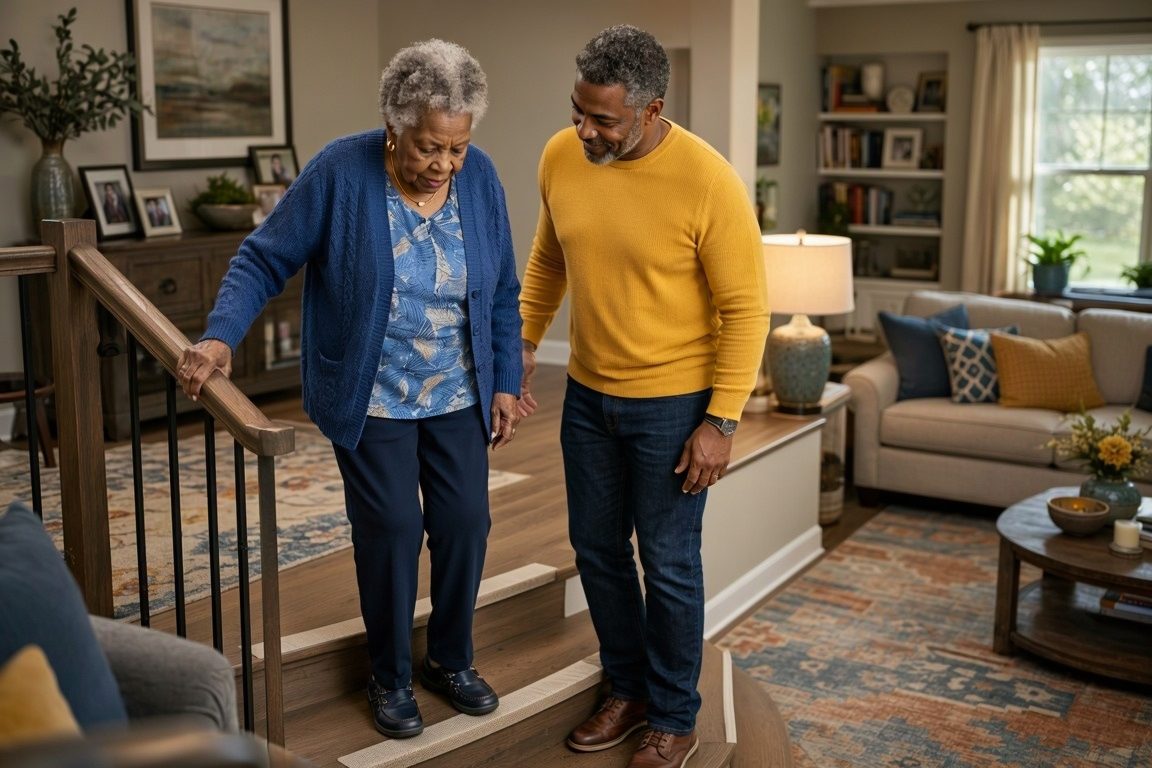
Step by step
What not to do
- Do not use a wheeled walker with a basket without first training the person to lock the brakes every time they stand. The basket encourages them to lean forward, and if they forget to lock it, the walker can roll away, causing a forward fall.Instead, start with a standard walker without wheels, or use one with a seat that requires sitting to rest.
- Do not rearrange furniture or change the layout of rooms. People with PCA rely on spatial memory to navigate. Moving the couch or table can cause them to bump into it or lose their bearings. Keep the environment consistent and familiar.
- Do not rush them when walking or transferring. Hurrying increases anxiety and the risk of missteps. Allow extra time for every movement. Use a calm, encouraging tone and give them time to process your instructions.
- Do not assume they are being stubborn if they refuse to use a walker or cane. They may not be able to see it properly or remember to use it. Instead of forcing the issue, work with the PT to find a device that feels comfortable and natural. Sometimes a different color or style can make it more acceptable.
- Do not let them walk on slippery surfaces in socks or loose-fitting clothing. Long robes or pants can trip them. Always have them wear shoes with good traction, even indoors. If they resist, try slip-on shoes with non-slip soles that are easy to put on.
- Do not ignore signs of depression or anxiety. People with PCA often have insight into their declining abilities, which can lead to sadness, withdrawal, or fear of falling. These mood changes are treatable with counseling or medication. A happier, more confident person is more likely to stay active and safe.
Key points
- PCA affects visual-spatial processing first, making falls more likely even when memory is intact. Adapt the environment with high-contrast markers, consistent furniture placement, and non-slip surfaces.
- Choose mobility aids carefully: a standard four-legged walker with tennis balls is often safer than a wheeled walker for someone who may forget to lock the brakes.
- Always have your person wear supportive, non-slip shoes indoors, never socks on wood or tile floors.
- Work with a physical therapist early to build strength and balance, and to select the right aid. Do not wait until after a fall.
- Use a padded gait belt with handholds for safe transfers and walking assistance.
- Monitor for myoclonus (rhythmic jerks) and discuss with the neurologist if it affects balance.
- Keep a consistent daily movement routine to maintain strength and confidence.
- Address depression and anxiety, they can reduce motivation to move and increase fall risk.
Videos
 Steady Steps: Practical Strategies for Managing Falls in DementiaOffers general fall prevention strategies that are adaptable to PCA, with a focus on environmental safety and mobility aids.
 095. How to create a safe home for Dementia family membersProvides visual examples of home modifications (grab bars, non-slip mats, lighting) that are essential for PCA-related visual-spatial challenges.
 PCALECTURE with UCSD neurologist Dr. Douglas GalaskoDirectly addresses PCA symptoms including myoclonus, visual processing issues, and the importance of early intervention, essential for understanding the medical basis of fall risk.
 Dementia Care Partner Talk Show Podcast, Ep 69: Walkers, Wheelchairs and MoreDiscusses the pros and cons of different walker types for people with dementia, including the safety concerns of wheeled walkers, directly relevant to PCA.
2 more videos
 Quick Tips: Fall Prevention Tips for SeniorsQuick, actionable tips on footwear and home safety that can be applied to PCA care.
 The Baffled Brain: Demystifying Dementia Episode 25 May 15, 2021Covers the emotional and practical aspects of adapting to changing abilities, which is key for PCA where insight is preserved.
Background
Why PCA Changes Mobility and Fall Risk Differently
As PCA progresses, some individuals develop a movement disorder called myoclonus, brief, rhythmic jerks, often in the fingers or hands, but sometimes affecting the whole body. While usually mild, in some cases myoclonus can be strong enough to throw someone off balance or out of a chair. Additionally, changes in walking (gait) can occur, sometimes due to neurological changes, but often simply because the person becomes more cautious as they struggle to interpret their surroundings. Understanding that these symptoms are part of the PCA process, not a failure of effort, helps you respond with patience and targeted strategies rather than frustration.
Practical tools
6
The 'Tennis Ball Walker' Setup
For a standard four-legged walker, cut tennis balls and place them on the back legs. This allows the walker to slide smoothly without needing to lift it, and it stays close to the person when they stand up. It eliminates the need to remember to lock brakes and reduces the risk of the walker rolling away. Ask your PT or home health company to help fit it properly.
High-Contrast Tape and Floor Markers
Use brightly colored tape (e.g., yellow or red) to mark the edges of steps, door thresholds, and changes in floor level. Place a contrasting mat at the bottom of stairs. This helps the person with PCA see where one surface ends and another begins, reducing missteps.
Padded Gait Belt with Handholds
A gait belt with multiple padded handholds gives you a secure, comfortable grip to assist with transfers and walking. It is more comfortable than a standard belt and provides better coverage. Practice putting it on together so it becomes a normal part of getting ready to move. Look for one with a plastic snap closure that is easy to fasten.
Non-Slip Footwear Checklist
Create a simple checklist for footwear:
Keep this list near the door or in the closet as a reminder.
Daily Movement Routine Card
Write or print a short, simple routine for daily movement: e.g., 'Morning: 5-minute walk to the kitchen. Afternoon: 10 seated leg lifts. Evening: 5-minute walk to the bathroom.' Post it on the refrigerator. This builds strength and balance consistently, and makes activity a predictable part of the day.
Visual Cue Cards for Transfers
Create small cards with simple pictures or words for common movements: 'Stand up,' 'Sit down,' 'Step up,' 'Turn around.' Hold up the card while giving the verbal instruction. This can help the person with PCA process the action more easily, especially if they are feeling overwhelmed or confused.
Different situations
Early-stage PCA (still independent but with visual-spatial challenges)
Focus on education and environmental modifications. The person can often participate in choosing their own aids and strategies. Encourage them to attend a falls prevention program or a community class like Tai Chi for balance. Work with an occupational therapist to adapt the home. The person may benefit from using a cane with a wide base, but only after PT training. Emphasize that these changes are proactive, not a sign of decline.
Middle-stage PCA (needs more assistance, possible myoclonus or gait changes)
Increase supervision during transfers and walking. Use a gait belt consistently. Consider a standard walker with tennis balls if they cannot remember to lock a wheeled walker. If myoclonus is present and affects balance, discuss with the neurologist whether medication is appropriate. Simplify the environment further, remove clutter, use high-contrast markers everywhere. The person may need help with eating (e.g., using hands instead of utensils) due to visual-spatial issues, which can also affect balance if they lean forward too much.
Late-stage PCA (significant visual and cognitive decline, possible immobility)
Focus on comfort and preventing injury from falls. Use a wheelchair for mobility if walking is unsafe, but still encourage standing and weight-bearing with support to maintain bone density and circulation. Use a padded transfer belt and a lift if needed. Keep the bed low to the ground or use bed rails to prevent rolling out. Consider a hospital bed with side rails. All movements should be slow and supported. The goal is to prevent fractures and maintain dignity.
For a spouse caregiver vs. adult child caregiver
Spouse caregivers may need to adjust their own expectations and pace, they are used to walking quickly and may need to slow down. Adult children may need to negotiate with the parent about accepting help. In both cases, use 'we' language: 'Let's take a walk together' rather than 'You need to use your walker.' Spouses may benefit from respite care to avoid burnout, as constant supervision is exhausting. Adult children should involve the parent in decisions as much as possible to preserve autonomy.
For the doctor
5
- Ask the neurologist: 'Could my person's myoclonus be contributing to falls? Are there medications that might help without causing sedation or other side effects?'
- Ask the primary care doctor: 'Are any of my person's current medications increasing fall risk? Can we review and possibly reduce them?'
- Ask the physical therapist: 'What specific exercises can we do at home to improve balance and leg strength, given the visual-spatial challenges of PCA?'
- Ask the occupational therapist: 'What adaptive equipment (e.g., raised toilet seat, shower chair, grab bars) would be safest for our home layout and my person's specific needs?'
- Ask the doctor about a referral to a falls prevention program or a community-based balance class (e.g., Tai Chi for older adults).