Step by step
What not to do
- Do not grab or pull them suddenly if they start to fall. This can cause injury to both of you and may make them more agitated.Instead, lower them gently to the floor by supporting their back and guiding them down. Call for help if needed.
- Do not leave area rugs on the floor, even if they are secured with tape. The edge can still catch a foot. Remove all area rugs from rooms they use. If you need a rug for comfort, choose a low-pile carpet that is wall-to-wall or use a large, flat mat that is taped down on all sides.
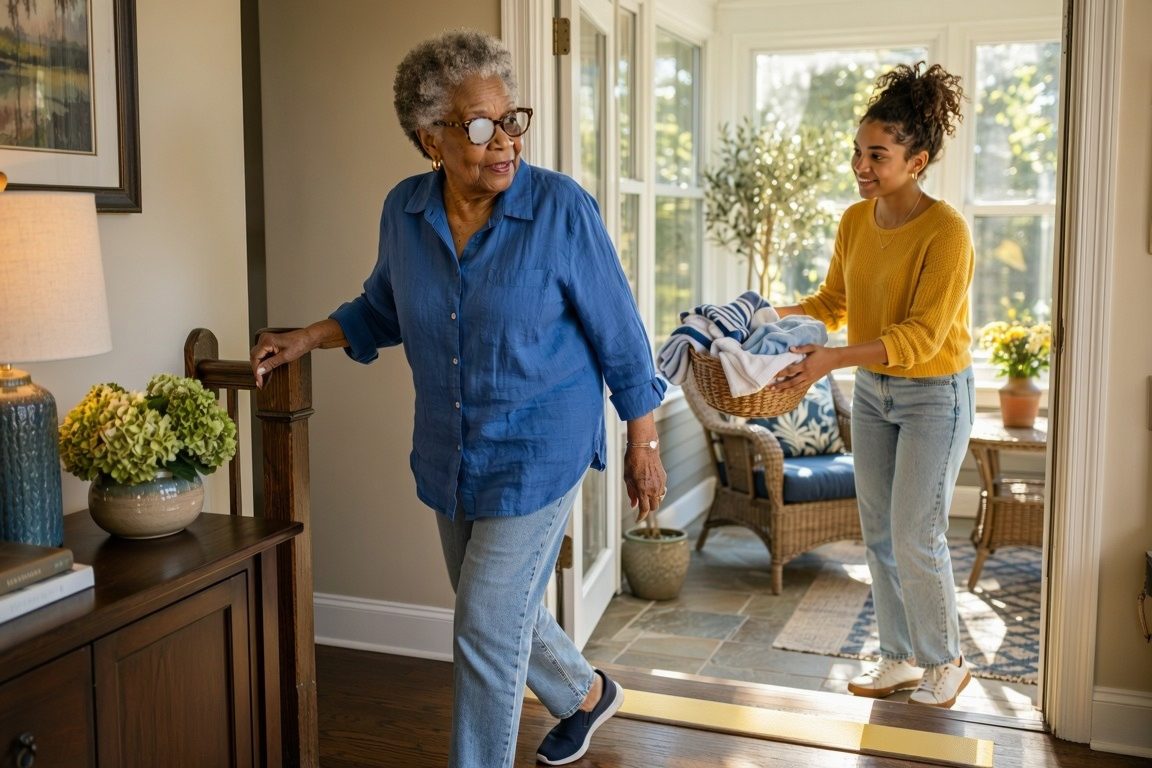
- Do not assume they can see obstacles just because you can. With monocular vision, depth perception is impaired. Place brightly colored tape on the edge of steps, the threshold of doorways, and the front edge of furniture like coffee tables. This gives their brain a visual cue to slow down.
- Do not let them walk in the dark, even for a moment. Install motion-sensor nightlights in every room and hallway. If they get up at night, the light will come on automatically. This is especially important for bathroom trips, which are a common time for falls.
- Do not try to reason with them during a Ruby state episode. Their brain is not processing logic well. Instead of saying, 'You need to sit down or you'll fall,' use a redirection phrase like, 'Let's go see what's in the kitchen. I need your help with something.' This channels their energy into a safer activity.
Key points
- The Ruby state (high energy) combined with monocular vision (poor depth perception) creates a high fall risk. Prevention is key.
- Remove all clutter and area rugs from walkways. Use bright, even lighting to eliminate shadows, especially in the evening.
- Use a shower chair for any task that involves closing the eyes, like washing hair or face.
- Keep frequently used items within arm's reach to reduce the need to walk around.
- Use redirection phrases to channel their restless energy into seated or slow-moving activities.
- Ensure they wear non-slip shoes or socks with grips. Avoid bare feet or socks on hard floors.
- Stand up slowly and drink enough water throughout the day to prevent dizziness from blood pressure changes.
- Talk to their clinician about medications, vision aids, and physical therapy to further reduce fall risk.
Videos
 7 Reasons People With Dementia Fall (and how to help)This video explains the common causes of falls in dementia, including vision issues and environmental hazards, which directly relate to the monocular vision and Ruby state challenges.
 Steady Steps: Practical Strategies for Managing Falls in DementiaOffers step-by-step strategies for fall prevention, including home modifications and mobility aids, which are essential for someone with monocular vision.
 Learn How to Help Prevent Falls With a Person Living with DementiaA caregiver-focused video that demonstrates how to assist someone with dementia during movement, which is especially useful when the person is in a high-energy Ruby state.
 Movement and Dementia - Ask Teepa Anything! Live on YoutubeTeepa Snow discusses movement challenges and how to support someone with dementia, including tips for managing restlessness and preventing falls.
2 more videos
 What is Orthostatic Light Headedness? Dr. Khushboo VermaExplains orthostatic hypotension, a common cause of falls in dementia, and how to prevent it, critical for someone with monocular vision who may already have balance issues.
 Dementia Proofing Your HomeA practical guide to making the home safer, including lighting, clutter removal, and bathroom modifications, all of which are key for fall prevention.
Background
Why the Ruby State and Monocular Vision Together Create a High Fall Risk
The Ruby state is characterized by high energy, restlessness, and a strong drive to move or do things. Your person may pace, try to help, or seem unable to settle. This is not willful behavior; it is a symptom of their dementia. Their brain is telling them to keep going, even when their body is tired or their balance is off. When you add monocular vision, seeing with only one eye, the brain loses a key tool for judging distance, depth, and the position of objects in space. This combination means they are more likely to misjudge a step, bump into furniture, or lose their balance while moving quickly.
How Sundowning and Evening Shadows Increase the Danger
Many people with dementia experience sundowning, a state of increased confusion and agitation that often begins in the late afternoon or early evening. Shadows from the setting sun can look like holes, steps, or moving objects to a person with monocular vision. Their brain may interpret a shadow on the floor as a drop-off, causing them to freeze, step back, or try to avoid it, and that sudden movement can lead to a fall. The Ruby state can make this worse because they are already in motion and less able to pause and re-evaluate. Keeping the environment well-lit and reducing shadows is a critical prevention strategy.
The Role of Dehydration and Blood Pressure Changes
Dehydration is a common cause of falls in people with dementia. When the body is low on fluids, blood pressure can drop when standing up, causing lightheadedness or dizziness. This is especially dangerous for someone who is already moving quickly in a Ruby state. They may not recognize the warning signs or be able to communicate them. Monocular vision adds another layer: if they feel dizzy, their depth perception is already compromised, making it even harder to steady themselves. Ensuring they drink enough water throughout the day and stand up slowly can prevent many falls.
Practical tools
6
The 'Within Reach' Caddy
A small basket or caddy attached to the arm of their favorite chair or placed on a side table. Fill it with
This reduces the need to get up and walk across the room for items they use often. Check it daily and restock.
Non-Slip Socks with Grips
Socks with rubber dots or strips on the bottom. Buy several pairs so they are always clean and available. If they refuse shoes, these are a good alternative. Look for ones with a wide, non-binding top so they are comfortable. Wash them in a mesh bag to keep the grips intact.
Shower Chair or Bench
A plastic or aluminum chair that fits inside the tub or shower. Place it so they can sit while washing. Say, 'This chair is for you to sit on while you wash your hair. It's much easier.' Make sure it has rubber feet to prevent slipping. Test it yourself first to ensure stability.
Bright Tape for Visual Cues
Use brightly colored tape (like neon yellow or orange) to mark
Apply it in a straight line. This provides a visual warning for someone with monocular vision who may not see the depth change. Replace tape when it wears.
Motion-Sensor Nightlights
Plug-in nightlights that turn on automatically when they detect movement. Place
Choose ones with a warm, soft light to avoid startling them. Test them weekly to ensure they work.
Redirection Script for Ruby State
A short list of phrases to use when they are restless and moving quickly. Examples: 'I need your help folding these towels.' 'Let's go look at the bird feeder together.' 'Can you show me how to do this puzzle?' These phrases redirect their energy into a purposeful, seated or slow-moving activity.
Different situations
Lewy body dementia (LBD)
People with LBD often have more severe visual hallucinations and fluctuations in attention. Monocular vision can make these hallucinations more confusing. Use even more lighting to reduce shadows, and avoid patterned wallpaper or busy floors that might be misinterpreted. Discuss with their clinician about medications that might affect balance.
Late-stage dementia
In late stages, the person may be less mobile but still at risk for falls when transferring from bed to chair or toilet. Use a transfer belt and get training from a physical therapist. Keep the bed at its lowest position and use bed rails only if recommended by a clinician (they can be a fall risk themselves).
Spouse vs. adult child caregiver
Spouses may have more difficulty setting limits or using redirection because of a long history of equal partnership. Practice saying redirection phrases in a calm, neutral tone. Adult children may need to be firm but gentle, and should avoid sounding like they are giving orders. Both roles benefit from taking breaks and asking for help from other family or respite care.
Living in a facility (assisted living or nursing home)
Work with the facility staff to ensure the room is clutter-free and well-lit. Ask for a shower chair to be provided. Request that staff use the same redirection phrases you use at home. If the person wanders, ask about a wander-alert system or a low bed with a floor mat to cushion a fall.
Medicaid or limited budget
Many fall prevention tools are low-cost. Use a sturdy plastic chair from a thrift store as a shower chair. Make your own non-slip socks by applying puffy fabric paint to the soles of regular socks. Use a lamp with a bright bulb instead of expensive lighting. Contact your local Area Agency on Aging for free or low-cost home safety assessments.
For the doctor
4
- Ask the doctor if any of their current medications could be causing dizziness or increasing fall risk. Some blood pressure meds, sedatives, or antidepressants can affect balance.
- Ask about a referral to physical therapy for balance and strength training. A PT can also recommend the right type of walker or cane and teach you both how to use it safely.
- Ask about a vision evaluation to see if their monocular vision can be improved with glasses or other aids. Even small improvements can help with depth perception.
- Ask about a home safety evaluation by an occupational therapist. They can recommend specific grab bar placements, bed heights, and other modifications tailored to your home.