Step by step
What not to do
- Do not ask 'Do you want to take a bath?' This invites a 'no' and sets up a power struggle.Instead, say something like 'It's time to freshen up. Let's get you warm and clean.' Use a matter-of-fact, positive tone. Avoid framing it as a choice when it is a necessity.
- Do not rush or hurry the person. Moving quickly increases anxiety and raises the risk of a fall. Allow plenty of time, and if they are resistant, take a break and try again later. A calm, unhurried approach is safer and more effective than forcing the issue.
- Do not leave the person alone in the bathroom, even for a moment. A person with Alzheimer's can become confused, fall, or turn on hot water without realizing the danger. Stay within arm's reach at all times. If you need something, take them with you or wait until you are done.
- Do not use harsh, scented soaps or lotions that can irritate sensitive skin. Fragrances can also be overwhelming and confusing. Stick to mild, hypoallergenic, or no-rinse products designed for sensitive skin. Avoid using bath oils or bubbles that can make the tub dangerously slippery.
- Do not argue or scold if the person resists. Arguing escalates anxiety and can lead to aggression.Instead, validate their feelings: 'I know the water feels strange. Let's just get your arms washed quickly, then we'll wrap you in a warm towel.' Redirect their attention to a positive outcome like warmth or comfort.
Key points
- Prepare the bathroom completely before involving the person: warm the room, gather supplies, and set up safety equipment.
- Use a shower stool or transfer bench for every bath to prevent falls. Never leave the person alone.
- Set your water heater to 120°F or lower and test water temperature yourself to prevent scalding.
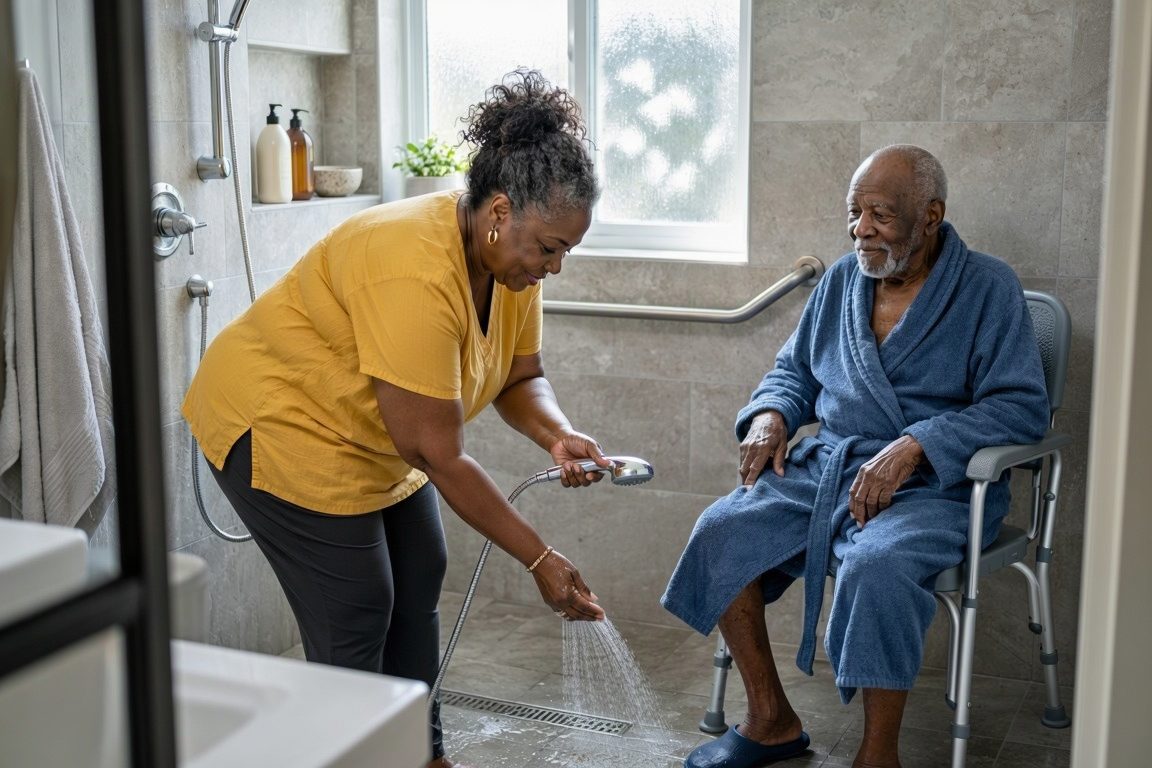
- Use a handheld shower head to control water direction and keep it out of the person's face.
- If the person resists, do not argue. Validate their feelings, try a sponge bath, or come back later.
- After bathing, check the skin thoroughly for rashes or sores, especially in skin folds and if the person is incontinent.
Videos
 Alzheimer's LA Caregiver Tips - Ep. 5 'Bathing'This video directly addresses the common challenge of bathing resistance and offers practical, respectful strategies from a caregiver support organization.
 How Do You Persuade Someone With Dementia To Bathe?Provides specific phrases and a calm approach to reduce resistance, which is a key part of making bathing safer by reducing agitation.
 Quick Tips: Bathing Tips for DementiaA concise, actionable video that reinforces the importance of preparation and a gentle approach, directly supporting the safety measures outlined here.
 When Someone With Dementia REFUSES to Bathe: Do This!Focuses on the most common caregiver frustration, refusal, and offers step-by-step de-escalation techniques that prevent the situation from becoming unsafe.
2 more videos
 123. Replay: How to create a safe home for Dementia family membersCovers broader home safety, including bathroom modifications like grab bars and non-slip mats, which are essential for bathing safety.
 Why Elderly Parents Refuse to BatheExplores the underlying fears and reasons for refusal, helping you understand why safety measures like a warm room and gentle approach are so effective.
Background
Why Bathing Becomes Unsafe and Scary
For a person with Alzheimer's, the bathroom can feel like a foreign and threatening place. Depth perception problems can make stepping into a tub or shower feel like stepping into a void, triggering a genuine fear of falling. The sound of running water, the cold air on bare skin, and the unfamiliar feel of a spray nozzle can all be overwhelming. Many individuals also lose the ability to regulate their body temperature, so a room that feels comfortably warm to you may feel freezing to them, making them reluctant to undress. This is not stubbornness; it is a neurological and sensory response to a confusing environment.
The Hidden Risks: Falls, Burns, and Skin Breakdown
Beyond the emotional challenge, there are real physical dangers. Wet, slippery floors are a leading cause of falls, and a fall in the bathroom can be devastating for an older adult. Hot water poses another serious risk: a person with dementia may not recognize when water is too hot, or they may be unable to quickly adjust the temperature, leading to scalding. Additionally, if bathing is avoided due to fear, the skin can become dry, irritated, or develop rashes and sores, especially if the person is incontinent or has limited mobility. These skin issues can quickly lead to infections if not caught early. Understanding these risks helps you see that safety measures are not just about comfort, they are about preventing serious medical complications.
Practical tools
6
The 'Warm Room' Setup
This simple environmental change can dramatically reduce resistance.
The 'No-Rinse' Sponge Bath Kit
Purchase a no-rinse soap product (often called 'bath wipes' or 'shampoo caps') from a pharmacy or online. These are pre-moistened, warmable cloths that clean without needing water. Use them for a quick, safe, and less stressful clean on days when a full shower is too much. They are especially useful for bed-bound individuals or during late-stage care.
The 'Grab Bar and Stool' Safety Duo
This equipment is not optional; it is essential for preventing falls and making the person feel secure.
The 'Handheld Shower Head' Control
Replace a fixed shower head with a handheld model that has a long hose (at least 60 inches). This lets you sit beside the person, control the spray direction, and avoid spraying water in their face. It also allows you to rinse their back and legs without them having to turn around or stand.
The 'After-Bath Skin Check' Routine
After drying, while the person is still seated, do a quick but thorough skin check. Look for redness, rashes, or sores, especially in skin folds, under the arms, and in the groin area. Use a flashlight if needed. Apply a gentle lotion to dry areas. This routine helps catch skin breakdown early, which is critical for preventing infections.
The 'Phrase Script' for Resistance
When the person refuses, use these exact phrases: 'I know you don't feel like it. Let's just do a quick wash of your face and hands.' Or 'The water is so warm and nice. Let me help you get in.' Avoid arguing. If they still refuse, say 'Okay, let's try again in a little while' and step away. Return in 15-30 minutes with a fresh, calm approach.
Different situations
Early-stage Alzheimer's (mild cognitive decline)
The person may only need a reminder and supervision. Focus on preserving independence: let them choose the time of day, the soap scent, or the towel color. Use a shower stool as a precaution, but allow them to stand if they are steady. Safety measures are more about prevention than active intervention. Encourage them to do as much as they can themselves.
Middle-stage Alzheimer's (moderate decline)
This is when resistance and fear peak. You will need to provide hands-on assistance. Use the 'warm room' setup and the handheld shower head every time. Prepare the bathroom completely before calling them. Use a transfer bench to avoid stepping over the tub edge. Be ready to stop and try again later if they become agitated. Consider a no-rinse sponge bath on difficult days.
Late-stage Alzheimer's (severe decline, bed-bound or chair-bound)
Full baths or showers may become impossible. Use bed baths with no-rinse wipes or a basin of warm water. Safety focuses on preventing skin breakdown: check for sores daily, keep the person dry, and use a waterproof pad under them. Never leave them unattended on a shower chair or in a tub. Discuss with a clinician about using a hospital bed or specialized bathing equipment for safety.
Caregiver is a spouse vs. adult child
A spouse may feel more comfortable with intimate care but may also struggle with the loss of the marital role. An adult child may feel embarrassed or the parent may feel ashamed. In both cases, use draping (a towel over the shoulders or lap) to preserve dignity. If the person is resistant to a child, consider hiring a trained caregiver for bath days. The key is to find a routine that reduces stress for both of you.
Person is incontinent
Bathing becomes even more critical for skin health. Use a no-rinse foam or wipes for quick clean-ups between full baths. After each incontinence episode, clean the skin gently, pat dry, and apply a barrier cream to prevent rashes. Check for sores daily. Bathing twice a week may be sufficient if you are diligent with spot-cleaning. Discuss with a clinician about using a peri-wash bottle or specialized wipes.
For the doctor
4
- Ask your doctor or a physical therapist for a home safety evaluation to identify fall risks and recommend specific grab bar placements or equipment.
- Discuss with your clinician if the person has frequent urinary tract infections (UTIs) or skin infections, as this may require a different bathing frequency or the use of medicated cleansers.
- If the person is on blood thinners or has fragile skin, ask about the safest way to prevent bruising or skin tears during bathing. A clinician can recommend gentle techniques or protective padding.
- If the person becomes aggressive during bathing, ask your doctor about non-pharmacological strategies or, if needed, medication options that can reduce anxiety without over-sedation. Never use medication without a doctor's guidance.