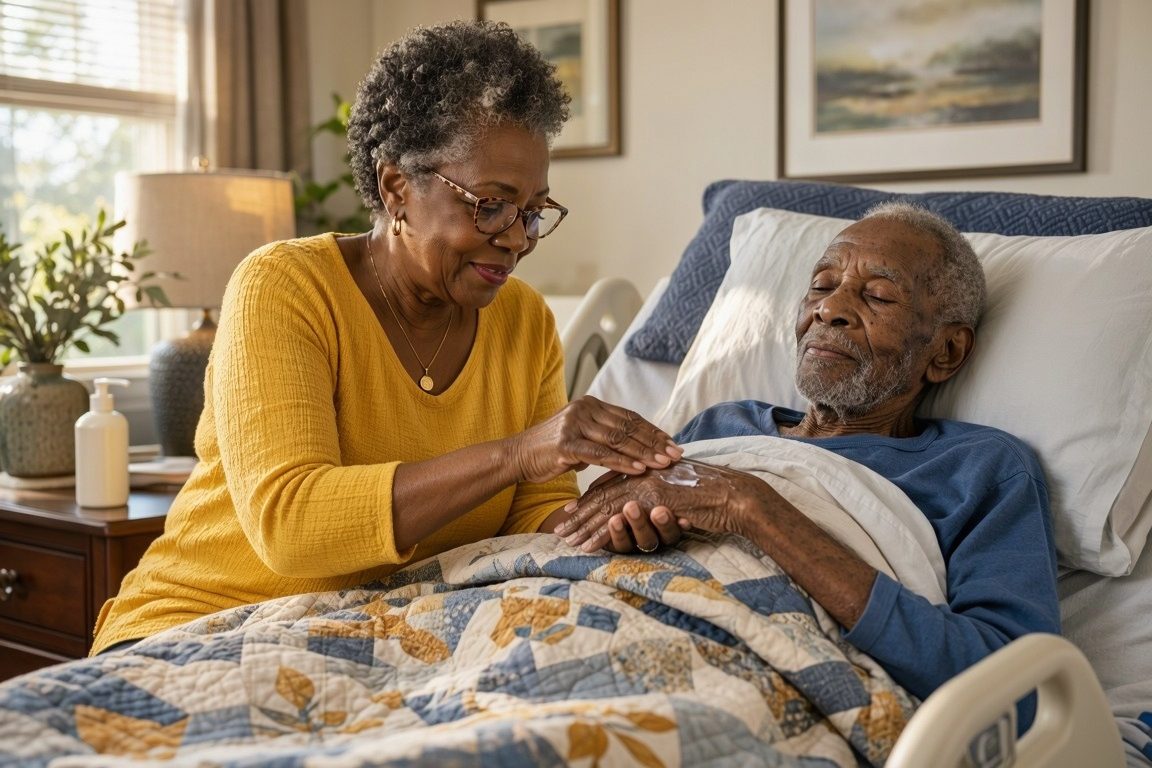
Step by step
What not to do
- Do not force a full bath or shower if your loved one becomes agitated, break the task into small steps, use a warm washcloth on one area at a time, or try a bed bath with a no-rinse cleanser when they are mostly sleeping.
- Do not massage reddened skin or bony prominences, friction and deep pressure can damage fragile tissue and worsen the breakdown you are trying to prevent.
Key points
- Skin breakdown in end-stage dementia is often unavoidable due to the body shutting down, it is not a reflection of your care.
- Turn your loved one every 2 hours during waking hours and check their skin at every change for redness that does not fade.
- Keep the skin clean and dry using gentle, fragrance-free products; pat dry, never rub.
- Use pressure-relieving surfaces like a special mattress overlay and float the heels off the bed.
- Offer small sips of fluid and soft, nutrient-dense foods to support skin health from the inside.
- Involve your hospice team for supplies, education, and emotional support, you do not have to do this alone.
Videos
 End-of-Life Parkinson’s and How Dementia is RelatedThis video explains how end-stage dementia and Parkinson's look similar and why skin breakdown is a major risk. It offers reassurance that this is a natural part of the process, not a failure of care.
 How Do Dementia Caregivers Prevent Burnout? - Dementia Help HubCaring for a bed-bound loved one is exhausting. This video provides practical tips on self-care, respite, and building a support network so you can sustain your caregiving role.
 How to improve sleep in dementiaGood sleep is essential for both you and your loved one. This video offers strategies to improve nighttime rest, which can reduce agitation and help the body heal.
 How does someone die from DementiaUnderstanding the end-stage process, including the risk of pressure ulcers and infections, helps you prepare emotionally and practically. This video explains what to expect.
2 more videos
 What is Sundowning Syndrome in Dementia and How Can You Manage It?Sundowning can make evening care more challenging. This video offers calming strategies that can be adapted to create a soothing environment for skin care and rest.
 Ep. 118: How to Maintain Dignity and Minimize Aggression in Dementia CareThis video teaches gentle communication and care techniques that reduce agitation during bathing and turning, making skin care safer and more dignified for your loved one.
Practical tools
4
Daily Skin Check Checklist
Keep a clipboard near the bed and at every brief change or turn, inspect and initial
; note any redness that does not blanch, warmth, firmness, blisters, or open skin, and report new findings to your nurse.
Turning and Positioning Schedule
Write out turn times for waking hours (for example, 8 a.m., 10 a.m., noon, 2 p.m., 4 p.m., 6 p.m., 8 p.m., 10 p.m.) and check off each one as it is done, noting the position used so you can alternate sides and avoid prolonged pressure on the same area.
Bedside Care Kit
Assemble a small caddy with
so everything is within arm's reach during a change.
Positioning Pillows and Wedges
Keep two or three regular pillows and one foam wedge by the bed:
Different situations
Lewy body dementia (LBD) / late stage
People with Lewy body dementia may have more sensitivity to medications and may experience fluctuations in alertness. They may also have stiffness and rigidity that makes turning more difficult. Use extra pillows to support their body in side-lying positions. Be aware that they may be more prone to falls if they try to get up, so keep the bed rails up and the bed in a low position. Also, they may have visual hallucinations, so keep the room well-lit during the day and use a nightlight at night to reduce shadows.
Spouse vs. adult child caregiver
As a spouse, you may feel a deep emotional burden and may be more likely to neglect your own needs. It is vital to accept help from family, friends, or respite care. Join a caregiver support group to share feelings and get practical advice. As an adult child, you may be balancing care with work and your own family. Schedule regular breaks and use a shared calendar with siblings to coordinate visits. Remember that caring for yourself is not selfish, it is essential for sustained caregiving.
In a facility (nursing home or hospice house)
Even if your loved one is in a facility, you can still be an advocate. Ask the staff about their turning schedule and what products they use for skin care. Visit during care times if possible, and gently remind staff of your loved one's preferences (e.g., 'She likes to be turned on her left side more than her right'). Bring in your own barrier cream or moisturizer if you prefer a specific brand. Stay in communication with the charge nurse about any skin changes you notice.
Medicaid / limited resources
If you are on a tight budget, focus on the basics: a consistent turning schedule, keeping the skin clean and dry, and using inexpensive barrier creams like petroleum jelly. You can make your own no-rinse cleanser by mixing a small amount of baby shampoo with warm water. Use old towels or sheets as waterproof pads (chucks) by layering them under your loved one. Contact your local hospice or Alzheimer's association for free or low-cost supplies.
If your loved one is combative or agitated during care
Approach slowly and speak in a calm, gentle voice. Use the 'positive approach' technique: get at their eye level, smile, and use their name. Explain what you are going to do in simple terms ('I am going to help you roll onto your side so you can be more comfortable'). If they resist, stop and try again in a few minutes. Break the task into smaller steps, just clean one area at a time. Use distraction: play their favorite music or talk about a happy memory while you work. If they are very agitated, ask your doctor about pain or anxiety medication that can be given before care.
For the doctor
5
- Ask your hospice nurse or doctor: 'What type of pressure-relieving mattress or overlay is best for my loved one's stage of care?'
- Ask about pain management: 'My loved one cannot tell me if they are in pain. What signs should I look for, and what medications can we use to keep them comfortable during turning and bathing?'
- If you notice any broken skin, blisters, or dark areas, ask: 'Do we need a wound care nurse to evaluate this? What dressings or ointments should we use?'
- Ask about safe swallowing: 'My loved one is having trouble drinking. Can a speech therapist evaluate them, and should we use a thickener in their liquids?'
- Ask about medication side effects: 'Could any of my loved one's medications be contributing to skin fragility or agitation? Should we adjust the timing or dosage?'