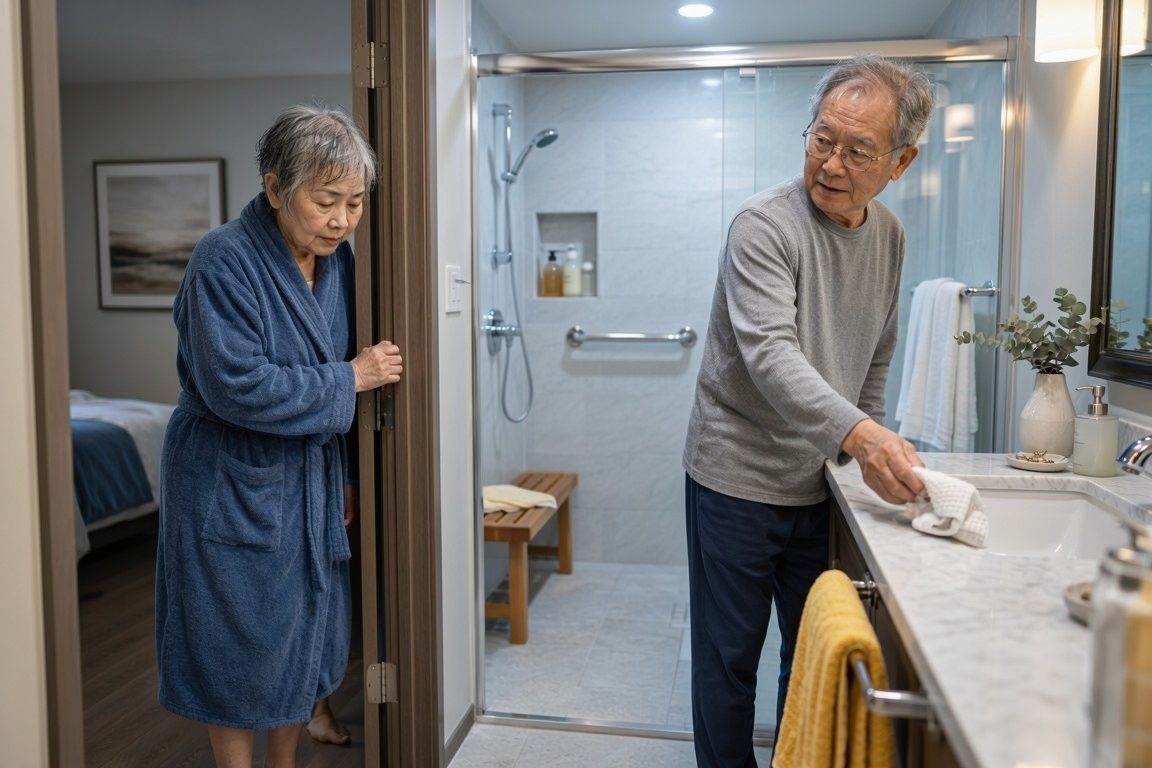
Step by step
What not to do
- Do not argue or use logic. 'But you need to shower, you'll get an infection!' will not work. The brain with dementia cannot process complex reasoning during a refusal.Instead, validate the feeling: 'I know you don't want to. Let's just sit for a moment.'
- Do not use a pleading or desperate tone. 'Please, just do this for me!' signals your anxiety and can make them feel pressured.Instead, use a calm, matter-of-fact tone: 'Time for a wash. Let's go together.'
- Do not bribe or threaten. 'If you don't take your meds, I'll take away your TV time' creates a power struggle and can increase resistance.Instead, link the task to something they enjoy: 'After we take these, let's have a cup of tea and look at that photo album.'
- Do not take the refusal personally. Their resistance is not about you; it's about their brain's response to fear, confusion, or loss of control. Remind yourself: 'This is the disease talking, not my loved one.'
- Do not force or physically restrain. This can lead to combative behavior, injury, and trauma for both of you. If a task is truly essential (like medication), call your clinician for guidance on alternative forms or timing.
- Do not ignore your own needs. If you are exhausted, hungry, or overwhelmed, your ability to respond calmly is compromised. Take a break before approaching the task. Self-care is not optional; it is part of the care plan.
Key points
- Your behavior, tone, and stress level directly influence whether your loved one refuses care. Calmness is contagious.
- Refusal is often a communication of unmet needs (fear, loss of control, pain, embarrassment), not stubbornness.
- Avoid arguing, pleading, bribing, or forcing. These escalate resistance and damage trust.
- Use validation, choice, and distraction to shift the dynamic. Get on their level and match their pace.
- Take care of yourself first. A regulated caregiver can better regulate the care recipient.
- Personalize your approach based on the dementia type, stage, and your relationship history.
Videos
 What to do when a person with dementia refuses care: 6 simple strategiesOffers six concrete, easy-to-remember strategies that directly address how your approach can reduce refusal, including sticking to routines and using outside help.
 Family Caregiving Discussions With Elderly Parents Who RefuseFocuses on communication dynamics and how to have conversations that respect autonomy while addressing care needs, especially useful for adult children.
 Quick Tips: Caring for a Loved One and Dealing with ResistanceProvides quick, actionable tips for de-escalating resistance in the moment, emphasizing caregiver self-awareness.
 Is Your Aging Parent With Dementia Refusing Help? Do This!Explores the emotional roots of refusal and offers a step-by-step approach to shift from conflict to cooperation.
2 more videos
 3 Steps to Get Someone with Dementia to Stop Refusing CareBreaks down a simple three-step process that helps you identify the cause of refusal and respond effectively, reducing power struggles.
 The Baffled Brain: Demystifying Dementia Episode 13 February 20 , 2021Explains the brain changes behind refusal, helping you understand why your loved one reacts the way they do and how to adapt your behavior.
Practical tools
6
The 'Two-Question' Script for Refusals
When they refuse, ask: 1) 'What feels hard about this right now?' (even if they can't answer, it opens a dialogue). 2) 'Is there a way we could do this that feels better?' Offer a simple option: 'Would you like to sit or stand? Hot water or warm?' This gives them a sense of agency.
The 'Emotion Labeling' Checklist
Before speaking, quickly check: What emotion am I seeing? (Fear, frustration, embarrassment, confusion). Then name it: 'You look worried about the shower.' This validates their experience and often reduces resistance because they feel heard.
The 'Environment Reset' Kit
Keep a small basket nearby with:
If refusal escalates, pause the task and offer one of these items to shift the mood. For example, 'Let's just sit and listen to this song first.'
The 'Mirror and Match' Technique
If they are sitting, sit. If they are speaking slowly, slow your speech. If they are looking away, look away for a moment, then gently turn back. This non-verbal attunement builds trust. Avoid standing over them or using a fast, high-pitched voice.
The 'One-Step' Prompt
Instead of saying 'Let's get dressed,' break it into one step: 'Here is your shirt. Can you hold it?' Then, 'Let's put your arm in.' This reduces overwhelm. Use a gentle, guiding touch on their hand or elbow to lead, not push.
The 'Caregiver Pause' Timer
Set a timer for 3 minutes when you feel frustration rising. Step into another room, take slow breaths, and repeat a mantra: 'This is not an emergency. I can handle this calmly.' Return with a reset mindset.
Different situations
Late-stage dementia (when verbal communication is limited)
Focus entirely on non-verbal cues. Use a soft, low voice, gentle touch, and slow movements. Refusal may look like turning away, stiffening, or crying. Stop the task and offer comfort first. Try a familiar song or a hand massage before re-attempting. If they resist consistently, consult a clinician about whether the task is truly necessary at that moment.
Lewy body dementia (with fluctuating cognition and visual hallucinations)
Be aware that hallucinations or paranoia may be driving refusal. Do not argue about what they see. Instead, say, 'I see you're upset. Let's move to another room where it feels safer.' Use calm, reassuring language. Avoid sudden movements or loud noises, which can trigger confusion. Keep the environment well-lit and clutter-free to reduce misperceptions.
Spouse caregiver vs. adult child caregiver
Spouses may have a longer history of roles and power dynamics. If your spouse resists, they may be reacting to the role reversal. Use phrases like, 'I need your help with this,' or 'Let's do this together.' Adult children may face resistance due to the parent-child dynamic. Avoid a 'parenting' tone. Instead, say, 'I'm worried about you, and I want to help. Can we try this my way this time?'
In a facility setting (nursing home or assisted living)
Coordinate with staff to ensure consistency. Share what works at home: favorite music, phrases, or routines. If a staff member triggers refusal, request a different caregiver. Advocate for a person-centered approach: ask staff to use the same calming techniques you use. If refusal leads to medication use, discuss alternatives with the facility's clinical team.
When the person has a history of trauma or abuse
Refusal may be a trauma response. Avoid any physical touch without warning. Use slow, visible movements and explain each step: 'I'm going to touch your arm now.' Offer choices that give control: 'Do you want me to stand here or there?' Consider consulting a dementia-trained therapist or social worker for trauma-informed strategies.
For the doctor
4
- If refusal of essential medications (like for heart failure or diabetes) persists despite all behavioral strategies, ask your doctor about alternative forms (liquid, patch, or injectable) or timing.
- If refusal leads to physical aggression or self-harm, discuss safety plans and possible short-term medication adjustments with a geriatric psychiatrist or neurologist.
- If your loved one refuses food or fluids for more than 24 hours, consult a doctor or hospice team to rule out underlying medical issues (pain, infection, swallowing problems) and discuss comfort feeding strategies.
- If you feel your own stress or anger is escalating to a point where you might lose control, seek immediate support from a therapist, support group, or crisis line. Your well-being is critical to safe care.