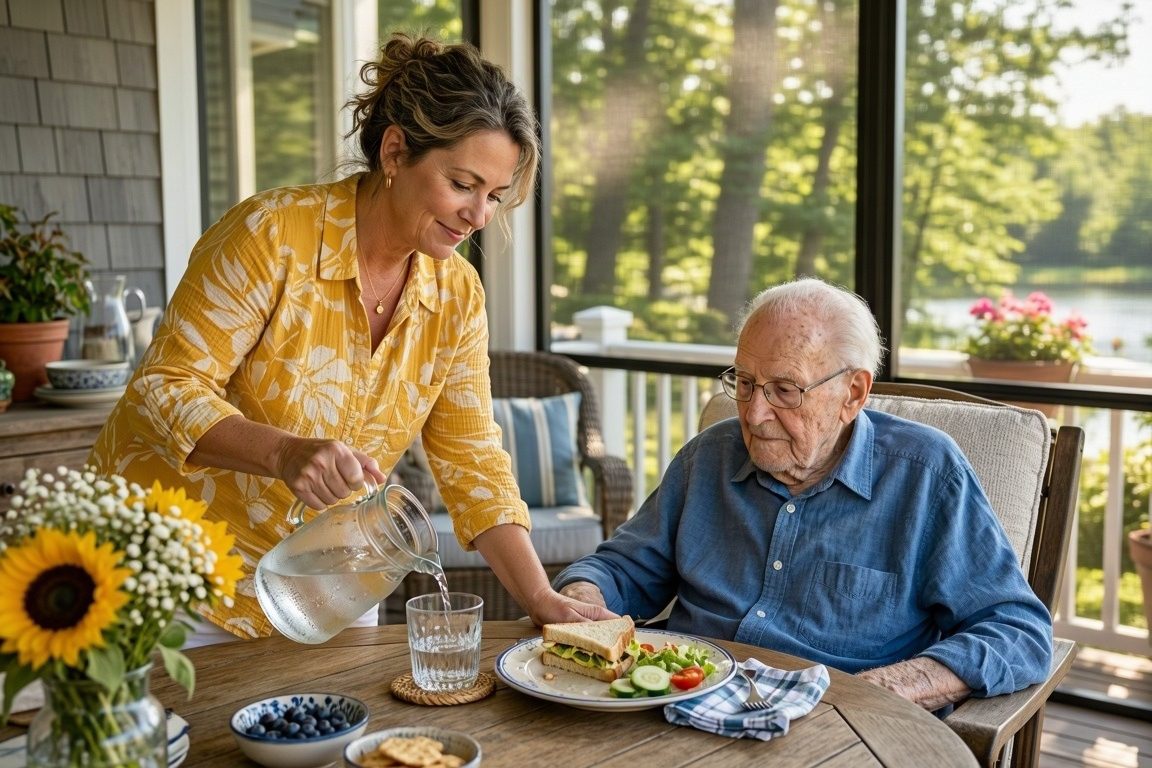
Step by step
What not to do
- Do not rely on thirst as a signal: Many older adults, especially those with dementia, do not feel thirsty even when dehydrated. Never assume that because they aren't asking for water, they don't need it.Instead, proactively offer fluids on a schedule.
- Do not give large amounts of water at once: This can overwhelm the person, cause choking, or lead to resistance. Small, frequent sips are much more effective and safer.
- Do not use caffeinated or sugary drinks as the main source of hydration: Caffeine is a diuretic and can worsen dehydration. Sugary drinks can cause blood sugar spikes and crashes, which can affect cognition and balance. Water, diluted juice, and electrolyte drinks (with a doctor's approval) are better choices.
- Do not ignore the role of medications: Some medications, especially diuretics ('water pills'), antihistamines, and certain blood pressure drugs, can cause dehydration. Do not stop or change any medication without talking to the doctor, but do ask about side effects and whether alternative medications are available.
- Do not wait until the person is thirsty to offer fluids: By the time they feel thirst, they are already dehydrated. Prevention is key. Keep a water bottle visible and offer drinks regularly.
- Do not assume that if they are eating, they are getting enough fluids: Many foods contain water, but not enough to meet daily needs. Continue to offer fluids even after meals.
Key points
- Dehydration is a common, preventable cause of falls and cognitive decline in dementia, it can be reversed with consistent hydration.
- Thirst is not a reliable signal in older adults; proactively offer fluids on a schedule.
- Use the urine color check as a daily, non-invasive hydration gauge.
- Offer a variety of hydrating foods and fluids, not just water, soups, fruits, popsicles, and diluted juices work well.
- Keep a water bottle within arm's reach at all times, especially at night and after waking.
- Work with the doctor to review medications for dehydration side effects and to set a safe fluid goal.
- Small, frequent sips are more effective and safer than large amounts at once.
Videos
 What is Orthostatic Light Headedness?Explains the mechanism of dizziness upon standing, which dehydration worsens, key to understanding fall risk.
 5 things your doctor should ask aboutCovers medication side effects and other medical factors that contribute to dehydration and falls.
 What EXACTLY is Lewy Body DementiaDetails autonomic dysfunction in LBD, which makes hydration even more critical for fall prevention.
 How To Get Someone With Dementia To Drink WaterPractical, gentle strategies for encouraging fluid intake in resistant individuals.


Background
Why Dehydration Hits Harder in Dementia
As we age, the natural thirst signal weakens. Many older adults simply don't feel thirsty even when their body needs water. For someone with dementia, this is compounded by memory loss: they may forget to drink, forget they have a water bottle nearby, or not recognize the sensation of thirst at all. The brain, which is already struggling with plaques and tangles, becomes even more vulnerable when dehydrated. As one dementia specialist explains, when the brain gets dehydrated it starts 'misinterpreting, misunderstanding, having lots of problems with all the data that's out there' and can even trigger delirium, a sudden, dangerous worsening of confusion that can mimic dementia progression. Dehydration can contribute to delirium, and rehydration may help, but immediate medical evaluation is essential because delirium can have many causes and can be dangerous if not promptly addressed.
The Direct Link to Falls
Dehydration reduces blood volume, which can cause a drop in blood pressure when standing up, a condition called orthostatic hypotension. This leads to lightheadedness, dizziness, and a high risk of falling. One dementia doctor notes that dehydration is 'a very common cause for having falls' in the dementia population, and that simply drinking water and standing up slowly can prevent many of them. Falls are devastating: they are a leading cause of hospitalization for people with dementia, and they often trigger cognitive decline, fractures, and even early placement in memory care. Preventing dehydration is one of the most powerful things you can do to keep your loved one safe and stable.
How Dehydration Worsens Cognition
When the body is dehydrated, the brain's organs don't get enough hydration to function properly. The result is slower thinking, increased confusion, and difficulty with memory and decision-making. Many caregivers report that their loved one's cognition improves dramatically after they start drinking more water. One dementia care specialist shares stories of clients who 'simply weren't hydrated and they've improved so drastically' once they began drinking adequate fluids. Dehydration also increases the risk of urinary tract infections (UTIs), which are notorious for causing sudden, severe confusion in older adults, especially those with dementia. A UTI can mimic or worsen dementia symptoms, leading to unnecessary hospitalizations and setbacks.
Practical tools
6
The 'Urine Color Chart'
Print or draw a simple chart showing urine colors from pale yellow (hydrated) to dark amber (dehydrated). Tape it near the toilet or in the bathroom. Each time you assist, glance at the color and compare. This is a quick, objective way to assess hydration without relying on the person's report.
Hydration Schedule Checklist
Create a daily checklist with times (e.g., 8am, 10am, 12pm, 2pm, 4pm, 6pm, 8pm) and check off each time a drink is offered. Include a column for 'urine color check' and 'notes.' This helps you stay consistent and track patterns. You can use a paper chart or a simple app on your phone.
The 'Sip and See' Game
Turn hydration into a playful activity. Say: 'Let's see who can take the biggest sip without spilling!' or 'I bet you can't finish this little cup before the commercial ends.' Use a timer or a favorite song. This reduces resistance and makes drinking a positive interaction. Important: Do not use this game if your loved one has any swallowing difficulties. If you notice choking, coughing, or a wet voice, stop immediately and consult a clinician.
Hydrating Finger Foods
Prepare small, easy-to-eat foods that are high in water content:
Offer them as snacks between meals. These are often more appealing than a glass of water.
The 'Water Bottle Buddy'
Choose a clear, colorful, spill-proof water bottle with a straw. Attach a small note or sticker that says 'Drink me!' or a photo of a favorite grandchild. Keep it in the same spot (e.g., beside the TV remote or on the kitchen counter) so it becomes a visual cue. Refill it every morning and evening.
Medication Side-Effect Review Checklist
Make a list of all medications (prescription, over-the-counter, and supplements) and note any that list 'dehydration,' 'dizziness,' or 'low blood pressure' as side effects. Bring this list to the next doctor's appointment and ask: 'Could any of these be contributing to dehydration or fall risk? Is there a safer alternative?'
Different situations
Lewy Body Dementia (LBD)
In LBD, the autonomic nervous system is often affected, leading to severe orthostatic hypotension. Dehydration can worsen this dramatically. Be extra vigilant about hydration, especially in the morning and after meals. Also, some medications used for LBD (like cholinesterase inhibitors) can cause nausea and reduce appetite, making it harder to drink. Offer small, frequent sips and consider electrolyte solutions (with doctor approval). Avoid sudden position changes, always have them sit on the edge of the bed for a minute before standing.
Late-Stage Dementia
In late stages, the person may have difficulty swallowing (dysphagia) and may not be able to drink from a cup. Use thickened liquids (as recommended by a speech therapist) or offer hydration through a spoon, a syringe, or a specialized cup with a spout. Offer ice chips or frozen popsicles. Monitor for signs of aspiration (coughing, choking, wet-sounding voice). Work closely with the care team to ensure safe hydration. If the person is bedbound, offer sips every 15-30 minutes during waking hours.
Spouse vs. Adult Child Caregiver
Spouses may feel more comfortable with intimate care but may also be more emotionally drained. Use gentle, familiar language: 'Honey, let's have a drink together.' Adult children may need to be more directive but still warm: 'Mom, I'm going to bring you some water now. Let's take a few sips.' Both should remember to take care of their own hydration too, caregiver stress can lead to neglecting your own needs.
Living in a Facility (Assisted Living or Nursing Home)
Advocate for your loved one. Ask staff to keep a water bottle in the room and to offer drinks at every meal and between meals. Request that the care plan include a hydration schedule. Visit during meal times to encourage drinking. If the person is resistant, ask staff to try the strategies above. You can also bring in a favorite cup or water bottle to make it more personal.
Medicaid or Limited Resources
Hydration doesn't have to be expensive. Use tap water (if safe), make your own popsicles from diluted juice, and reuse clean plastic bottles. Many community centers and senior programs offer free water bottles. Focus on simple, low-cost strategies like setting a timer and using a urine color chart. If you need help, contact your local Area Agency on Aging for resources.
For the doctor
6
- Ask the doctor: 'Could any of my loved one's medications be causing dehydration or contributing to orthostatic hypotension? Are there safer alternatives?'
- Ask: 'What is the right daily fluid goal for my loved one, considering their kidney function, heart health, and other conditions?'
- If the person has difficulty swallowing, ask: 'Should we see a speech therapist for a swallowing evaluation? Are thickened liquids recommended?'
- If the person has recurrent UTIs, ask: 'Could chronic dehydration be a factor? What steps can we take to prevent UTIs beyond hydration?'
- If the person has diabetes or heart failure, ask: 'Are there any special considerations for fluid intake? Should we use electrolyte drinks or avoid them?'
- If the person is on diuretics, ask: 'Should we monitor weight or urine output more closely? What signs of dehydration should I watch for?'