Step by step
What not to do
- Do not try to catch them mid-fall or rush to lift them afterward, as grabbing an arm can dislocate a shoulder and moving them can worsen a fracture or head injury.
- Do not scold, blame, or dismiss their fear after a fall, as this deepens anxiety and makes future falls more likely.
- Do not accept bed rails or physical restraints as the default answer; ask for a low bed, floor mats, and bed alarms instead, since rails can cause strangulation or fractures from climbing over them.
- Do not overlook over-the-counter sleep aids, antihistamines, or blood pressure medications that can cause dizziness and increase fall risk.
Key points
- Falls in dementia are common and predictable; prevention is the most effective strategy.
- Facility policies against catching a person are designed to prevent greater harm to both people.
- Create a 'soft landing' environment with low beds, floor mats, and padded surfaces.
- Use a fall alert device and a clear response plan to ensure immediate help.
- After a fall, address the person's emotional fear to prevent a cycle of inactivity and more falls.
- Work with the care team to identify and address underlying triggers like medication side effects, poor lighting, or clutter.
Videos
 Steady Steps: Practical Strategies for Managing Falls in DementiaProvides concrete prevention strategies and how to respond when a fall happens, directly addressing the caregiver's dilemma.
 7 Reasons People With Dementia Fall (and how to help)Explains the underlying causes of falls, helping you understand why your person is falling and what you can do about it.
 What if the caregiver needs help? Get peace of mindAddresses the caregiver's own safety and the use of fall alert devices, which is crucial if you are elderly or have health concerns.
 Why Do Elderly Parents With Dementia Become AgitatedHelps you understand the emotional and behavioral responses that can follow a fall, such as agitation or fear.
2 more videos
 Live Webinar with Teepa Snow and the Elizabeth Kubler-Ross FoundationTeepa Snow discusses fall risk and protective reflexes in later stages, giving you insight into why head protection is so important.
 5 Strategies to Handle Paranoia and False Accusations in DementiaAfter a fall, the person may become paranoid or accuse staff of causing the fall; this video helps you respond without escalating conflict.
Practical tools
3
Fall Prevention & Soft-Landing Checklist
Share with the care team:
Fall Response Script for Staff and Family
When a fall occurs:
Fall Log & Pattern Review Template
After every fall, record: date and time, location, what the person was doing (getting out of bed, reaching for something, walking to the bathroom), any obvious triggers (recent medication, missed meal, fatigue, agitation), injuries sustained, and how staff responded. Review the log monthly with the clinical team to spot recurring patterns and adjust the care plan.
Different situations
Early-stage dementia (still mobile and aware)
Focus on prevention and education. The person can still participate in strength training and learn safe falling techniques. Use a fall alert device and teach them how to call for help. Work with the facility to keep them active and engaged, as fear of falling can lead to inactivity and muscle weakness.
Late-stage dementia (limited mobility, unable to follow instructions)
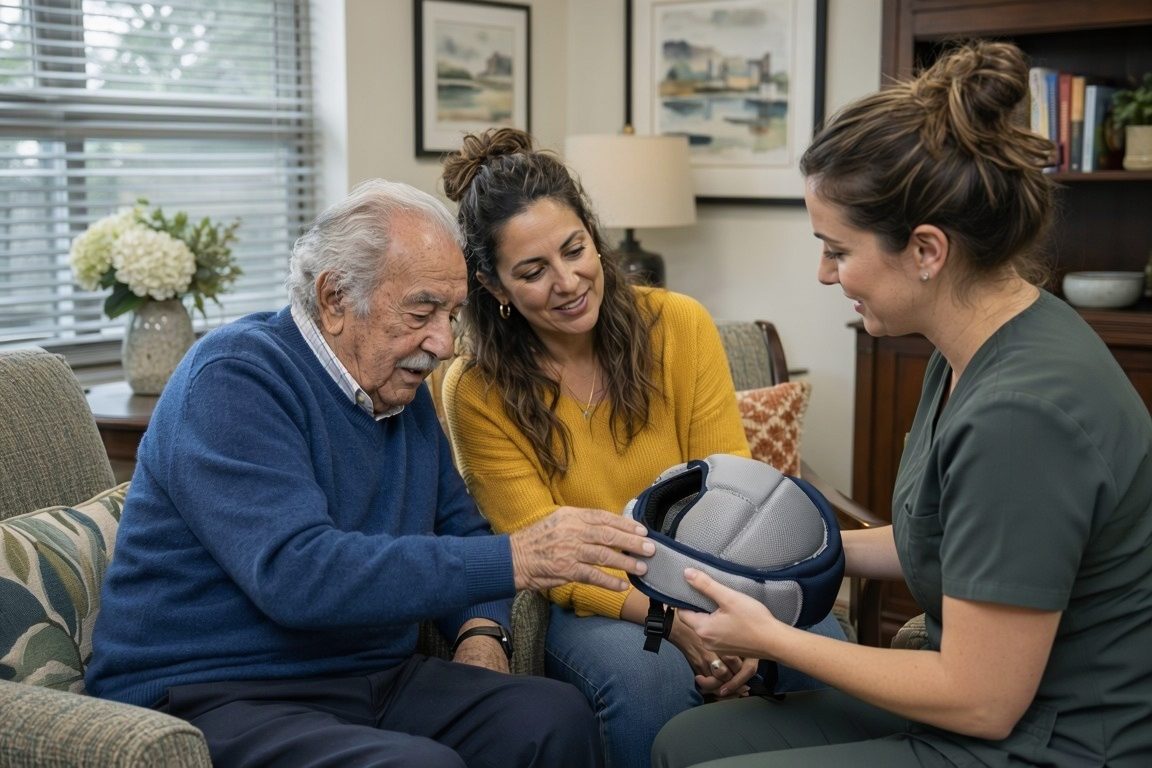
The priority shifts to environment and supervision. Use a low bed with floor mats, a bed alarm, and a wheelchair with a seatbelt (if appropriate). The person may not be able to use a fall alert device, so rely on staff monitoring and environmental safeguards. Head protection becomes critical; consider a soft helmet if they have already fallen and hit their head.
Lewy body dementia (fluctuating cognition, visual hallucinations, Parkinsonism)
Falls are even more common due to motor symptoms and visual disturbances. Ensure the environment is well-lit and free of shadows or patterns that might be misinterpreted. The person may have 'freezing' episodes; provide a walker with a laser guide or a simple verbal cue like 'step over the line' to initiate movement. Avoid using restraints, as they can increase agitation and fall risk.
Spouse caregiver vs. adult child caregiver
Spouse caregivers may be elderly themselves and at risk of injury if they try to catch the person. They should prioritize their own safety and use a fall alert device for themselves as well. Adult children may feel more able to intervene physically, but must follow facility policy. Both should advocate for the person's needs while respecting the care team's expertise.
In a facility vs. at home
In a facility, you have a team to rely on, but you must communicate clearly with them. Create a written fall prevention plan and review it with the care manager. At home, you have more control over the environment but less support. Consider installing grab bars, removing tripping hazards, and using a medical alert system. In both settings, the principles of prevention and soft landing zones apply.
For the doctor
6
- Ask the doctor: 'Is a soft helmet or hip protector appropriate for my person given their fall history and stage of dementia?'
- Ask the pharmacist: 'Could any of my person's medications be contributing to dizziness, low blood pressure, or balance problems?'
- Ask the physical therapist: 'What specific exercises can we do safely to improve strength and balance, given the person's cognitive and physical limitations?'
- Ask the facility's clinical team: 'What is the protocol for assessing head injury after a fall? When should we go to the emergency room versus monitor in place?'
- Ask the doctor: 'Are there any underlying medical conditions, like a urinary tract infection or dehydration, that could be increasing fall risk?'
- Ask the doctor: 'If my person falls and is unconscious or vomiting, what should I do while waiting for help? When is it safe to move them?'