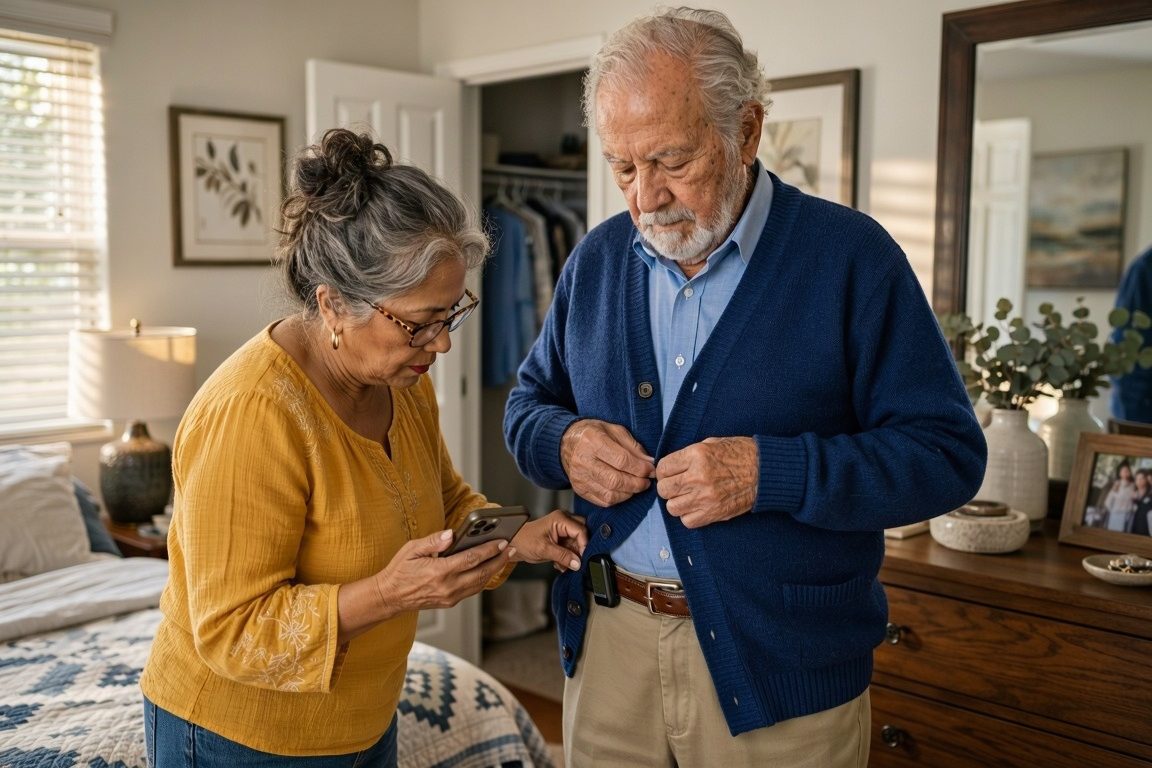
Step by step
What not to do
- Do not rely solely on a GPS tracker and neglect other safety measures. A tracker is a tool, not a cure. Without door alarms, locks, a wandering safety plan, and regular supervision, your loved one could still wander into danger before you even get the alert. Always use multiple layers of protection.
- Do not force the tracker on your loved one if they strongly resist. Forcing it can cause agitation, anger, and a loss of trust, which may make wandering worse.Instead, try a different form factor (e.g., a pendant instead of a wristband) or attach it to something they already wear, like a watch or a favorite hat. If they still refuse, wait a few days and try again with a calm, positive approach.
- Do not assume the tracker will work everywhere. GPS signals can be weak in dense urban areas, inside buildings, or in remote locations. Some devices also require cellular coverage. Test the tracker in the places your loved one is most likely to go, and have a backup plan (like a MedicAlert bracelet or an ID card) for areas with no signal.
- Do not ignore the tracker's alerts or assume they are false alarms. Every alert is a potential emergency. Even if your loved one is just in the backyard, check on them immediately. Wandering can happen quickly, and a few minutes can make a big difference. If you get multiple false alerts, adjust the geofence size or check the device's sensitivity settings.
- Do not forget to update the tracker's information and your contact details. If you change your phone number or move, update the tracker's settings and the associated account. Also, regularly update your loved one's photo and medical info in your wandering safety plan. Outdated information can delay a rescue.
- Do not use the tracker as a way to monitor your loved one's every move without their knowledge or consent (if they are still able to understand). In early stages, involve them in the decision and explain how it helps keep them safe. Secretly tracking someone can damage trust and may have legal implications. Always prioritize dignity and respect.
Key points
- GPS trackers provide real-time location alerts when your loved one leaves a safe zone, but they are not perfect, always have a backup plan.
- Introduce the tracker gently and positively to avoid resistance; involve your loved one in the process if possible.
- Combine the tracker with other safety measures like door alarms, a wandering safety plan, and informing neighbors and police.
- Test the tracker in your home and neighborhood to understand its limitations (e.g., signal loss in buildings or remote areas).
- Act quickly on alerts, but stay calm; use the tracker's location data to guide your response, and call 911 if needed.
- Review wandering incidents to identify triggers and adjust your plan; keep a journal to share with your loved one's doctor.
- Regularly check the tracker's battery and subscription status to ensure it works when needed.
- Consider enrolling in MedicAlert Safe Return as an additional layer of protection.
- Always discuss wandering and tracker use with your loved one's healthcare team for personalized guidance.
Background
Why Wandering Happens and How GPS Trackers Help
Wandering is not a deliberate act of defiance; it is a symptom of the brain changes caused by dementia. As the disease progresses, the part of the brain responsible for memory, wayfinding, and time awareness breaks down. Your loved one may become disoriented even in familiar places, lose the ability to recognize their own home, or feel a strong urge to go somewhere, like 'going home' or 'going to work', even if they are already home. This can happen at any stage, but it is especially common in the early and middle stages. The risk is serious: studies show that about 60% of people with dementia will wander at least once, and if not found within 24 hours, half are at risk of serious injury or death. GPS trackers directly address this danger by letting you see your loved one's location in real time and alerting you if they leave a safe zone, so you can respond quickly. However, no tracker is perfect; always have a backup plan.
How GPS Trackers Work in Practice
Modern GPS trackers are small, easy-to-wear devices that use satellite technology to pinpoint a person's location in real time. When your loved one steps outside a pre-set safe area (called a 'geofence'), the device sends an alert to your smartphone or computer, along with their current location. This instant notification allows you to start looking for them right away, rather than discovering they are missing hours later. Many trackers come as wristbands, pendants, or even insoles that fit inside shoes, making them discreet and comfortable. Some are waterproof and have long battery life. The key is that they are designed to be simple for you to use, you do not need technical training to set up or check the location. Think of it as a safety net: it does not prevent wandering, but it dramatically shortens the time your loved one is lost and helps you find them before they get hurt.
GPS Trackers Are Part of a Larger Safety Plan, Not a Replacement
It is crucial to understand that a GPS tracker is a supportive tool, not a substitute for supervision, medical care, or other safety measures. It works best when combined with other layers of protection: home safety modifications (like door alarms, motion-sensor lights, and locks out of sight), a wandering safety plan (including informing neighbors and local police, keeping an up-to-date photo and medical info), and regular check-ins. The tracker gives you the ability to act fast, but you still need to have a plan for what to do when you get the alert. Also, not all devices are available everywhere, and many require a monthly subscription fee. When choosing a tracker, consider how easy it is for your loved one to wear, how comfortable it is, and whether it fits their lifestyle, for example, a pendant might be better for someone who dislikes wristbands. Always discuss with your loved one's healthcare team to find the best safety options for your situation.
Practical tools
6
GPS Tracker (Wristband, Pendant, or Shoe Insole)
Choose a device that fits your loved one's comfort and lifestyle. For someone who dislikes wristbands, a pendant on a breakaway necklace or a shoe insole (like GPS SmartSole) can be more discreet. Look for features like
Test the device in your home and neighborhood before relying on it. Many require a monthly subscription (typically $20-$40/month).
MedicAlert Safe Return Program
This program, in partnership with the Alzheimer's Association, provides a 24-hour emergency hotline and works with local law enforcement to help reunite lost individuals with their families. Enrollees receive an ID bracelet or pendant with a unique ID number. When found, authorities call the hotline, and the program contacts you. It is an excellent backup to a GPS tracker. Cost is about $50 for the first year, then $25/year. Visit the Alzheimer's Association website to enroll.
Wandering Safety Plan Checklist
Create a one-page document with the following:
Keep a copy in your car, by the door, and on your phone. Update it every six months or after any major change.
Door Alarm and Motion Sensor Lights
Install simple, battery-operated door alarms that chime when a door is opened. Place them on all exterior doors and any doors leading to the garage or basement. Motion-sensor lights in hallways and near exits can help your loved one see where they are going and may deter wandering at night. These are inexpensive (under $20 each) and easy to install.
Daily Wandering Journal
Keep a small notebook or a note on your phone to track when wandering happens, what your loved one was doing before, and any possible triggers (e.g., after meals, during sundowning, when needing the bathroom). Over time, patterns will emerge that help you prevent future episodes. Share this journal with your loved one's doctor to guide care.
Comforting Phrases for When They Are Found
When you locate your loved one after a wandering episode, stay calm and use a warm, reassuring tone. Say things like, 'Oh, there you are! I was looking for you. Let's go inside and have a cup of tea.' Avoid scolding or asking 'Why did you leave?', they likely do not know. Focus on reconnecting and redirecting to a calming activity.
Different situations
Early-stage dementia (still aware and able to make decisions)
Involve your loved one in choosing and setting up the tracker. Explain it as a safety tool that allows them more freedom to go for walks or run errands without you worrying. Use phrases like, 'This helps me know you are safe, so I don't have to call you every hour.' Let them practice using the tracker themselves (e.g., pressing a button to send an alert). Respect their autonomy as much as possible.
Middle-stage dementia (more confusion, less insight)
You will likely need to take full responsibility for the tracker. Choose a discreet form factor they will not remove, like a shoe insole or a pendant under their shirt. Introduce it casually: 'This is your new watch, it tells me the time too.' If they resist, try attaching it to a favorite jacket or hat. Combine with door alarms and locks to make leaving the house harder. Be prepared for them to forget they are wearing it.
Lewy body dementia (fluctuating cognition, visual hallucinations, movement issues)
Be aware that visual hallucinations may cause your loved one to wander in response to something they 'see' (e.g., a person calling them). A GPS tracker is still useful, but you may need to address the underlying hallucination first (e.g., with reassurance or medication changes, discuss with a doctor). Also, movement issues (like stiffness or falls) mean the tracker should be lightweight and not interfere with walking. A pendant or a clip-on device may be better than a wristband if they have tremors.
Adult child caregiver vs. spouse caregiver
If you are an adult child, you may have more authority to introduce a tracker, but you also need to be sensitive to your parent's feelings of losing independence. Frame it as a way to keep them safe so they can stay at home longer. If you are a spouse, your loved one may be more resistant to being 'tracked' by you. Use a gentle, collaborative approach: 'I worry about you when I am not here. This helps me feel better.' Consider having a third party (like a doctor or a trusted friend) recommend the tracker.
Living in a facility (assisted living or nursing home)
Check with the facility about their policies on GPS trackers. Some facilities may have their own wandering prevention systems (like door alarms or bracelets). If allowed, a discreet tracker (like a shoe insole) can still be helpful if your loved one wanders off the premises. Coordinate with staff so they know about the tracker and can alert you if your loved one leaves. The facility's safety plan should be your primary layer; the tracker is a backup.
For the doctor
6
- Ask your loved one's doctor if there are any medical reasons for the wandering (e.g., pain, infection, medication side effects, or unmet needs like needing the bathroom) that should be addressed before relying on a tracker.
- Discuss whether a GPS tracker is appropriate given your loved one's specific dementia stage and any physical or cognitive limitations. Ask: 'Are there any risks or downsides I should be aware of for this particular device or approach?'
- Inquire about medication adjustments that might reduce wandering urges or address underlying causes like anxiety or sundowning. Ask: 'Could a change in medication help reduce the wandering behavior itself?'
- Ask your doctor for recommendations on specific GPS tracker brands or models that have been used successfully by other families in similar situations.
- Discuss how to handle situations where the tracker signal is lost or the device fails. Ask: 'What should I do if I can't locate my loved one despite the tracker?'
- If your loved one has Lewy body dementia, ask about strategies for managing visual hallucinations that may trigger wandering, and whether any medication changes are needed.