Step by step
What not to do
- Do not use locks that require a key to exit from inside the home, this is a serious fire hazard; use childproof covers, slide bolts, or door chimes instead.
- Do not place dark rugs on light-colored floors, as the person may perceive them as holes and fall; choose rugs matching the floor color or remove them entirely.
- Do not rely on verbal warnings or signs alone to keep someone away from a hazard, always physically secure cleaning supplies, medications, sharp objects, and the stove.
- Do not turn the home into a hospital: avoid stark white walls, harsh fluorescent lighting, and institutional grab bars; choose warm lighting and grab bars that blend with the bathroom décor.
- Do not rearrange furniture after setting up a safe layout, as people with dementia navigate by memory of familiar spaces and even small moves can cause confusion and falls.
- Do not dismiss the person's complaints about feeling cold, dress them in easy layers and use electric blankets with automatic shut-off, but monitor closely to prevent burns.
Key points
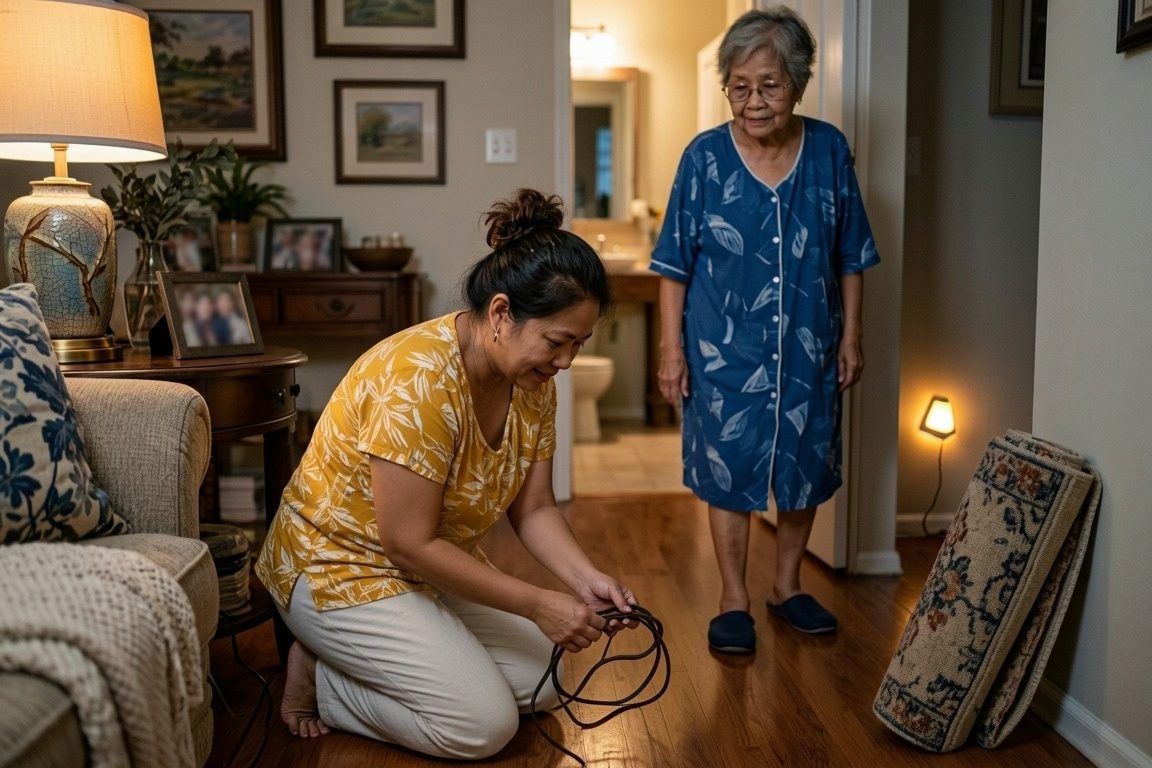
- Remove all tripping hazards: loose rugs, cords, clutter. This is the single most effective change you can make.
- Improve lighting everywhere, especially at night. Use night lights and automatic sensors to prevent falls in the dark.
- Secure dangerous items: lock up cleaning supplies, medications, sharp objects, and toxic plants. Use stove knob covers and automatic shut-off devices.
- Prevent wandering with childproof doorknob covers, slide bolts, door alarms, and camouflage techniques. Never use locks that require a key to exit.
- Make the bathroom safe with grab bars, non-slip mats, and a water heater set to 120°F or lower.
- Adapt as the disease progresses: what works in early stages may need to be changed later. Reassess the home every few months.
Videos
 How Do You Ensure Home Safety For Dementia Patients? - Dementia Help HubThis video provides a clear, room-by-room overview of safety modifications, including lighting, grab bars, and wandering prevention.
 Steady Steps: Practical Strategies for Managing Falls in DementiaFocuses specifically on fall prevention, which is the most common home safety issue for people with dementia.
 Creating a Dementia-Proof HomeOffers 11 practical tips for making the home safer and more calming, with an emphasis on maintaining independence.
 095. How to create a safe home for Dementia family membersA caregiver-focused video that addresses common concerns and gives step-by-step advice for home modifications.
2 more videos
 7 Reasons People With Dementia Fall (and how to help)Explains the underlying causes of falls, like depth perception issues and balance problems, and how to address them through environmental changes.
 095. How to create a safe home for Dementia family membersAnother version of the same helpful video, offering additional perspectives and tips for home safety.
Background
Why the Home Becomes Risky
Dementia affects more than memory. It can impair a person's sense of balance, depth perception, judgment, and problem-solving skills. This means they may not see a step, misjudge the distance to a chair, or fail to recognize that a hot stove is dangerous. They may also become easily confused by patterns, shadows, or clutter, which can trigger anxiety or a fall. As the disease progresses, the person may lose the ability to know what is safe and what isn't, making it essential for you to change the environment rather than rely on their judgment.
The Goal: Safety Without Restriction
The aim is not to make the home feel like a hospital or a prison. Instead, you want to create a space that is easy to navigate, familiar, and calming. This means removing tripping hazards, improving lighting, and securing dangerous items, all while preserving the person's dignity and independence. For example, you can lock away cleaning supplies without making the person feel watched, and you can camouflage an exit door so it doesn't trigger a wandering urge. Every change should feel natural and unobtrusive.
How Dementia Changes Perception of the Home
A person with dementia may interpret the world differently. A dark rug on a light floor might look like a hole, causing them to stop or fall. A mirror can be confusing, they may think a stranger is in the room. Deep shadows in a hallway can look like a step or a barrier. Even temperature perception changes: they may feel cold when the room is warm, or dress inappropriately for the weather. Understanding these perceptual shifts helps you make modifications that actually work.
Practical tools
3
Room-by-Room Safety Checklist
Create a simple checklist for each area:
Review and adjust weekly as the disease progresses.
Exact Phrases to Say When Making Changes
If your loved one resists a new safety feature, use calm, matter-of-fact language that frames the change as helpful. For a grab bar say: 'This is to help you feel steady when you wash up: I put it here so you can hold on if you need to.' For a locked cabinet: 'I'm keeping these in a special place so nothing gets mixed up.' Avoid saying 'you're not safe' or 'you might fall'; instead say 'this will help you feel more comfortable.'
Stove Knob Covers and Automatic Shut-Off Devices
Clear plastic covers that snap over stove knobs prevent accidental or purposeful ignition; for extra protection, install a stove shut-off device that cuts power or gas after a set time, or remove the knobs entirely when the stove is not in use. This is a critical kitchen change because cooking accidents are a leading cause of fire-related injury in people with dementia.
Different situations
Early-stage Alzheimer's or mild cognitive impairment
Focus on subtle changes that don't feel restrictive. Remove tripping hazards, improve lighting, and label rooms. The person may still be able to use the stove with supervision, so consider stove knob covers rather than removing knobs. Keep a daily routine and use a pill organizer. Introduce changes gradually and explain them as helpful additions, not restrictions.
Middle-stage dementia (moderate cognitive decline)
This is when wandering, falls, and confusion about the environment become more common. Secure all dangerous items (cleaning supplies, medications, sharp objects). Install grab bars in the bathroom and non-slip mats. Use door locks and alarms. Camouflage exits. Remove mirrors if they cause agitation. The person may need help with bathing and dressing, so provide seating near the bed and in the shower.
Late-stage dementia (severe cognitive decline)
The person may be bed-bound or use a wheelchair. Focus on fall prevention around the bed and chair. Use a hospital bed with side rails (discuss with clinician). Keep the floor clear of clutter. Ensure the path to the bathroom is wide enough for a walker or wheelchair. Use a commode or bedpan if getting to the bathroom is too difficult. Supervision is needed for all activities. Consider a home safety assessment by an occupational therapist.
Lewy body dementia or Parkinson's disease dementia
These conditions often involve visual hallucinations and severe sensitivity to medications. Avoid mirrors and busy patterns that could trigger hallucinations. Use soft, even lighting to reduce shadows. Be extra cautious with fall prevention because these individuals have a high risk of falls due to motor symptoms. Discuss any medication changes with the clinician, as some drugs can worsen confusion or movement problems.
In a memory care facility or assisted living
You may not be able to make major structural changes, but you can still personalize the room. Bring familiar furniture, photos, and bedding. Use a night light. Ensure the room is clutter-free. Talk to staff about the person's wandering patterns and ask about their safety protocols. You can also request a room near the nursing station for closer monitoring.
Common questions
11
What low-cost change deters elopement through a storm door?
To deter elopement through a storm door, apply a childproof doorknob cover or install a slide bolt high up out of sight.
What physical devices keep my loved one safe at home?
Use childproof doorknob covers, slide bolts, door alarms, stove knob covers, automatic shut-off devices, and grab bars to keep your loved one safe.
What physical modifications can I make to my home to keep my loved one safe?
Remove all loose rugs and clutter, improve lighting with night lights and sensors, and secure dangerous items in locked cabinets.
How should I correct my loved one with dementia when safety is at risk?
Gently redirect your loved one with a calm, reassuring distraction rather than correcting them, saying something like 'Let’s sit here instead, it’s much cozier.'
What home changes protect a loved one with thin skin from injuries?
To protect thin skin, remove any sharp-edged furniture or clutter, and add soft padding to corners or edges that could cause a bruise or cut.
How should I modify holiday decorations to keep my loved one safe and calm?
Skip fragile, breakable decorations and small items that might be mistaken for food; use soft, unbreakable, familiar decorations in a single, clutter-free area.
What are the key hazards in a cluttered home for an Alzheimer's patient and how do I address them?
The key hazards are tripping over loose rugs, cords, and clutter; address them by removing all such items and keeping pathways clear.
How do I safely store or remove medications, sharp objects, and firearms?
Lock medications, cleaning supplies, sharp objects, and any firearms in a secure cabinet or drawer with a childproof lock or slide bolt.
What simple home changes help a person with dementia navigate with less confusion?
Use clear signs or pictures on doors, keep a consistent layout, and place night lights along the path to the bathroom to reduce confusion.
What practical home changes help a loved one with physical disabilities?
Install grab bars in the bathroom and shower, use non-slip mats, and ensure walkways are wide and well-lit for easier movement.
1 more question
What simple changes can I make at home to improve safety and reduce confusion for my loved one?
Remove tripping hazards like loose rugs, improve lighting with automatic night lights, and keep a consistent, clutter-free layout in every room.
For the doctor
5
- Ask your doctor or occupational therapist about the best type of grab bars and where to install them for your loved one's specific mobility needs.
- Discuss whether a hospital bed with side rails is appropriate for late-stage dementia, as it can prevent falls but also carries risks of entrapment.
- If you are considering using a GPS tracker or medical alert bracelet, ask the clinician if there are any medical concerns (e.g., skin sensitivity, allergy to materials) that might affect use.
- For any medication changes that might affect balance or alertness (e.g., sleep aids, antipsychotics), always discuss with the clinician first. Never adjust medications on your own.
- If the person has a history of falls, ask about a formal home safety evaluation by an occupational therapist or physical therapist.