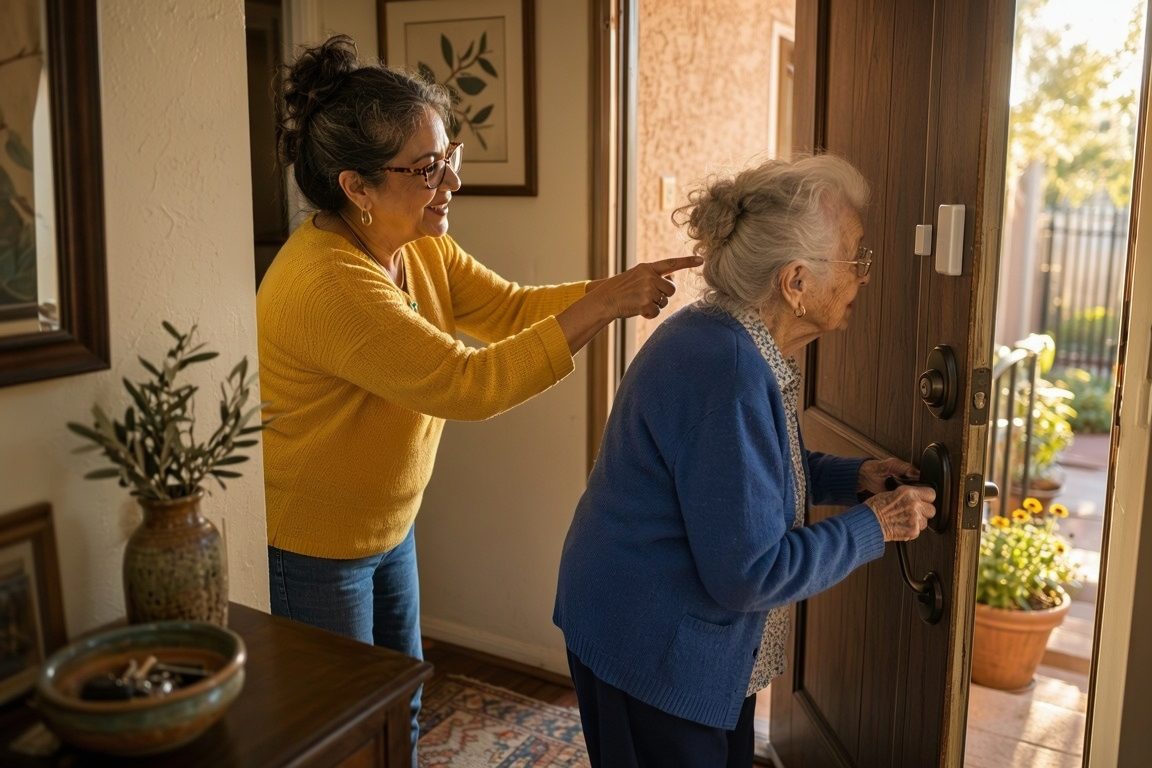
Step by step
What not to do
- Do not install hidden cameras without telling your loved one. If they discover a camera, they may feel betrayed, angry, or paranoid. This can damage trust and make them more resistant to other safety measures.Instead, use non-camera sensors and explain their purpose openly: 'This sensor on the door helps me know if you go outside so I can make sure you are okay.'
- Do not rely on a single sensor or tracker. A person with dementia can remove a bracelet, forget to charge a device, or walk past a sensor that is not positioned correctly. Use multiple layers: door sensors, pressure mats, and a GPS tracker. This way, if one fails, another catches the alert. Test each device weekly and replace batteries as needed.
- Do not ignore false alarms. If a sensor goes off frequently for no reason, you may start to ignore it, and miss a real event. Adjust the sensitivity, move the sensor to a better location, or replace it if it is faulty. Keep a log of false alarms and patterns so you can troubleshoot. If your loved one is opening the door often, consider a lock that requires a key or a chain lock placed out of sight.
- Do not assume your loved one will remember how to use a medical alert button. Many people with dementia forget they are wearing it or do not understand its purpose.Instead, choose a system that automatically detects falls or lack of movement, like a pendant that senses a fall or a mat that detects no motion for a set time. Test the system with your loved one present so they can see it works, but do not rely on them to press a button.
- Do not use a GPS tracker that requires the person to charge it daily. If they forget, the device will be dead when you need it. Choose a tracker with a long battery life (weeks or months) or one that uses a replaceable coin cell battery. Set a recurring calendar reminder to check and charge the device, and keep a backup tracker ready.
- Do not forget to update the emergency plan as the disease progresses. What works in early stage may not work in middle stage. For example, a simple door alarm may be enough at first, but later you may need a lock that requires a key or a monitored system. Reassess every three months and adjust the sensors, alerts, and contact list accordingly.
Key points
- Non-camera sensors (door alarms, pressure mats, GPS trackers) provide safety without invading privacy.
- Introduce sensors gradually and frame them as helpful tools, not surveillance.
- Use multiple layers of monitoring: door sensors, pressure mats, and a GPS tracker for redundancy.
- Test all devices weekly and replace batteries as needed to avoid failures.
- Involve neighbors and create a phone tree for low-tech backup.
- Reassess the monitoring plan every three months as the disease progresses.
Videos
 Dementia Proofing Your HomeThis video shows practical, low-cost modifications for a dementia-safe home, including non-camera sensor ideas like door alarms and pressure mats.
 Long-Distance CaregivingOffers strategies for monitoring from afar without cameras, such as using smart plugs and motion sensors that send phone alerts.
 How to Prevent a Loved One with Dementia from Getting LostFocuses on GPS trackers and identification methods (like bracelets) that work without video or audio monitoring.
 The Baffled Brain: Demystifying Dementia Episode 22Discusses the balance between safety and dignity, including how to use sensors in a way that respects the person's autonomy.

Background
Why Privacy-Preserving Monitoring Matters
When a person with dementia begins to wander, fall, or have trouble with daily tasks, the instinct is often to watch them closely. But cameras and microphones can feel invasive, both to your loved one and to you. They can make a person feel watched, anxious, or even paranoid, especially in early and middle stages when awareness is still present. The goal is to create a safety net that alerts you to problems without constant surveillance. This approach honors the person's privacy and autonomy while still keeping them safe.
Non-camera sensors work by detecting changes in the environment, like a door opening, a person stepping on a mat, or a lack of movement for a long time. They send alerts to your phone or a central hub, so you know when something needs attention. These tools are designed to be unobtrusive: they don't record conversations or show what someone is doing, just that something has happened. This can reduce stress for everyone and help your loved one feel more in control of their own space.
How Sensors Fit Into a Dementia-Safe Home
Dementia affects memory, judgment, and spatial awareness. A person may not realize they are leaving the house, or they may become disoriented in familiar rooms. Sensors act as a backup for those moments when your loved one's brain cannot keep up. For example, a door alarm can alert you the moment the front door opens, giving you a chance to redirect them before they wander far. A pressure mat under the bed can tell you if they have gotten up at night, so you can check on them without startling them.
These tools are especially helpful for caregivers who cannot be in the same room all the time, whether you are in another part of the house, at work, or living long-distance. They also work well for people who resist being watched or who become agitated by cameras. The key is to introduce them gradually and frame them as helpful tools, not as spying devices. For instance, you might say, 'This little mat will let me know if you need help getting up at night, it's like a helper for me.'
The Balance Between Safety and Dignity
Every family must find their own comfort level. Some people are fine with a simple door alarm; others may need a GPS tracker in a shoe or a locket. The important thing is to start with the least intrusive option that still meets the safety need. If your loved one is still aware of their surroundings, involve them in the choice. Say something like, 'I want to make sure you are safe when I am not right here. Would you be okay with a sensor on the door that lets me know if you go outside? It won't watch you, just the door.'
If they resist, you can try a more subtle approach, like a GPS tracker hidden in a shoe sole or sewn into a jacket. The goal is to keep them safe without making them feel controlled. Remember, the disease can make it hard for them to understand why these tools are needed, so patience and gentle explanation go a long way. If they still refuse, consider a monitored security system that alerts a response center instead of you directly, this can feel less personal and more like a standard home safety feature.
Practical tools
6
Door and Window Contact Sensors
Small, wireless sensors that stick to door frames and doors. When the door opens, the sensor sends an alert to your phone or a base station. Brands like Ring, SimpliSafe, or Wyze offer affordable options without subscription fees.
Pressure-Sensitive Floor Mats
Thin mats that trigger an alarm when stepped on.
Some mats can be connected to a smart home hub to send a phone alert instead of a local alarm.
GPS Tracker in a Wearable or Shoe
A small GPS device that can be sewn into a shoe sole, hidden in a locket or bracelet, or clipped to a belt.
Motion-Activated Night Lights
Lights that turn on automatically when someone walks by.
Smart Plug with Remote Control
A plug that lets you turn off appliances remotely from your phone. Use it for the coffee maker, lamp, TV, or even a space heater. If your loved one forgets to turn something off, you can do it from anywhere. Some smart plugs also have energy monitoring that can tell you if an appliance is on longer than usual. Set up a routine to turn off the plug automatically at a certain time each night.
Neighbor Alert System (Phone Tree)
A low-tech but effective tool.
Different situations
Early stage (still aware and independent)
Involve your loved one in choosing the sensors. Explain that these tools help you both feel safe without being watched. Start with the least intrusive option, like a door sensor or a night light. Avoid GPS trackers unless they agree. Frame it as a team effort: 'Let's set this up together so I can relax when I am not here.' If they resist, wait a few weeks and try again with a different approach.
Middle stage (more confusion, wandering likely)
Use multiple layers of sensors: door alarms, pressure mats, and a GPS tracker. The person may not understand or remember the sensors, so you do not need to explain every detail. Focus on safety. If they remove a wearable tracker, try sewing it into a shoe or jacket. Consider a monitored security system that alerts a response center. Update the emergency contact list and share a recent photo with neighbors and local police.
Spouse vs. adult child caregiver
A spouse may feel more comfortable with subtle sensors because they are present most of the time. An adult child living long-distance may need more robust alerts, like a system that sends phone notifications. If you are the adult child, set up a routine check-in time and ask a neighbor or home health aide to check the sensors weekly. For a spouse, consider a system that alerts both of you, so the spouse is not the only one responsible.
Living alone vs. with family
If your loved one lives alone, prioritize a monitored system that can call for help if no movement is detected for a set time. Also set up a daily check-in call or visit. If they live with family, sensors can be less urgent but still helpful for nighttime wandering. In either case, make sure the sensors are tested weekly and that backup contacts (neighbors, family) know how to respond to an alert.
Lewy body dementia or Parkinson's dementia
These conditions often involve visual hallucinations and sensitivity to light. Avoid bright or flashing sensor lights. Use soft, warm night lights. The person may also have movement fluctuations, so pressure mats should be placed carefully to avoid false alarms. GPS trackers may be more acceptable if they look like a watch or a piece of jewelry. Discuss any changes in behavior with the clinician, as hallucinations can affect how the person reacts to sensors.
For the doctor
5
- Ask your doctor if there are any medical conditions that could affect your loved one's ability to use a wearable GPS tracker (e.g., skin sensitivity, swelling, or a pacemaker).
- If your loved one has a history of falls or seizures, discuss whether pressure mats or motion sensors are safe to use near their bed or in the bathroom.
- For someone with a history of elopement (wandering away), ask the clinician about local wandering prevention services or programs like MedicAlert + Alzheimer's Association Safe Return.
- If your loved one is on medications that cause drowsiness or confusion, ask how those might affect their ability to respond to alarms or use a medical alert button.
- Discuss any changes in behavior that might make sensors less effective, such as increased agitation or paranoia about being watched.