Step by step
What not to do
- Do not confront or scold the person if they try to access a locked drawer. This can cause agitation and make them more determined.Instead, calmly redirect: 'Oh, that drawer is for tools. Let's look at this basket of towels instead.'
- Do not leave knives or scissors on the counter, even for a moment. A person with dementia can pick them up before you realize. Always store them in a locked drawer immediately after use.
- Do not assume that because the person has never shown interest in dangerous items, they never will. Dementia changes behavior unpredictably. Secure items proactively, before an incident occurs.
- Do not use locks that are too complex for you to open quickly in an emergency (e.g., a combination lock you might forget). Choose magnetic or keyed locks that you can open easily, and keep a spare key in a nearby but hidden spot.
- Do not hide dangerous items in places the person might find while rummaging, like the back of a low cabinet. They may discover them and cause harm. Lock them away in a high cabinet or a closet that is not easily accessible.
- Do not leave the kitchen door open if the person is prone to wandering. Use a door alarm or a childproof door knob cover to alert you if they enter the kitchen unsupervised.
Key points
- Lock up all sharp objects, cleaning chemicals, and medications in cabinets or drawers using childproof latches or magnetic locks.
- Remove stove knobs or use knob covers, and disconnect the garbage disposal to prevent accidental injury.
- Store vitamins, seasonings, and decorative fruits out of sight to avoid confusion and accidental ingestion.
- Unplug small appliances and place them out of reach or behind a childproof gate.
- Create a safe drawer with engaging items to redirect the person's need to explore.
- Supervise all kitchen activities and use door alarms to alert you if the person enters unsupervised.
- If using a refrigerator lock, only lock it when you cannot supervise, and ensure the person always has access to water and appropriate snacks outside the fridge. Unlock it at meal and snack times.
Videos
 5 Cheap Safety Devices for At-Home Alzheimer's Dementia CareDemonstrates affordable, easy-to-install locks and alarms that can be used in the kitchen to secure cabinets and doors.
 How Do You Ensure Home Safety For Dementia Patients? - Dementia Help HubProvides an overview of kitchen safety modifications, including removing tripping hazards and securing dangerous items.
 095. How to create a safe home for Dementia family membersCovers room-by-room safety, including kitchen-specific tips like stove knob covers and cabinet locks.
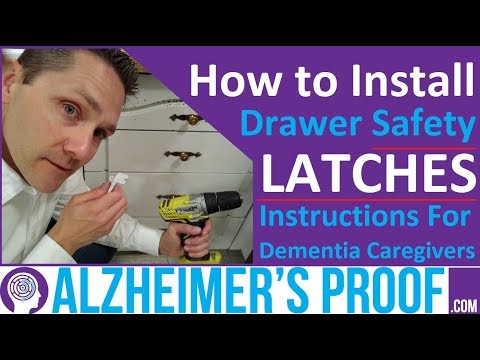 Alzheimer's Kitchen Safety: Drawer-Latch Installation for CaretakersStep-by-step installation guide for drawer latches, showing exactly how to secure dangerous items like knives.
2 more videos
 095. How to create a safe home for Dementia family membersAlternative video covering similar kitchen safety strategies, including refrigerator locks and appliance unplugging.
 Why Does my Person w Dementia ONLY EAT SWEETS & JUNK FOOD?!?Explains how to manage access to sweets and junk food, which can be a kitchen hazard for dietary reasons.
Background
Why the kitchen becomes dangerous
As dementia progresses, the brain's ability to process visual information, remember the purpose of objects, and control impulses declines. A person may pick up a sharp knife thinking it's a spoon, or try to clean a counter with bleach because they no longer recognize the bottle's warning label. The kitchen is full of items that were once familiar but can now be misinterpreted, a glass bowl placed on a hot burner, a bottle of seasoning mistaken for sugar, or a drawer of knives seen as 'tools to help.' This is not intentional; it's a symptom of the disease. The goal is not to take away their autonomy, but to create an environment where they cannot accidentally harm themselves while still feeling capable and involved.
The principle of 'deterrent, not fortress'
No lock or latch is foolproof. The interventions you install, cabinet locks, drawer latches, stove knob covers , are meant to slow down access, giving you time to redirect or intervene. They are not a substitute for supervision. Think of them like childproofing for an adult: the person may still try to open a drawer, but the extra step of figuring out the latch gives you a moment to offer an alternative activity. This approach reduces frustration for both of you. If the person becomes agitated by a lock, you can remove it and try a different strategy, like storing dangerous items in a locked closet or garage.
What happens if you don't secure items
Without barriers, a person with dementia can easily access knives, scissors, graters, peelers, and even small appliances like blenders or toasters. They may cut themselves while trying to prepare a snack, or ingest cleaning chemicals stored under the sink. In later stages, they might put non-food items in their mouth, such as decorative fruit or small magnets. The risk is not just physical injury, it can also cause emotional distress for both of you if an accident occurs. Taking proactive steps now prevents a crisis later.
Practical tools
6
Childproof Cabinet Locks (magnetic or strap-style)
Available at hardware stores or online. Magnetic locks are invisible from the outside and require a magnet key to open. Strap locks are visible but easy to install. Choose locks that are designed for cabinets with handles or knobs. Test them to ensure they are not too difficult for you to open in a hurry.
Stove Knob Covers or Knob Removal
Plastic covers that snap over stove knobs, preventing turning. You can also simply pull the knobs off and store them in a locked drawer. For gas stoves, turn off the gas valve behind the stove. This is a low-cost, high-impact safety measure.
Refrigerator Lock (magnetic or strap)
A simple lock that attaches to the fridge door. Use it to prevent access to spoiled food, excessive sweets, or items that could cause choking. Only lock the refrigerator when you cannot supervise, and ensure the person always has access to water and appropriate snacks outside the fridge. Unlock it at meal and snack times. Some locks require a key, others use a magnetic release. Choose one that is easy for you but challenging for the person.
Garbage Disposal Circuit Breaker Lockout
Flip the circuit breaker that controls the garbage disposal and place a lockout tag (available at hardware stores) on the breaker. This prevents accidental activation. Alternatively, unplug the disposal and store the plug in a locked cabinet.
Safe Drawer or Rummage Box
Create a drawer or box filled with safe, engaging items:
Label it with a picture of a spoon or the word 'safe.' This gives the person a positive outlet for their need to explore and keeps them away from dangerous areas.
Door Alarm for Kitchen Entry
A simple battery-operated alarm that sounds when the kitchen door is opened. This alerts you if the person enters the kitchen unsupervised. Place it on the door frame or use a motion sensor alarm near the kitchen entrance.
Different situations
Early-stage dementia (still living alone or with minimal supervision)
Focus on removing obvious hazards like knives and cleaning chemicals from easy reach. Use stove knob covers and unplug small appliances. Do not install locks that might feel infantilizing, instead, store dangerous items in a locked closet or garage. Encourage the person to use a pill organizer and keep medications in a locked box. Discuss with their clinician about when to transition to more secure measures.
Middle-stage dementia (needs supervision but still mobile)
Install all the locks and latches described above. Remove all decorative fruits and toxic plants. Use a refrigerator lock if they tend to eat spoiled food, but only lock it when you cannot supervise, and ensure the person always has access to water and appropriate snacks outside the fridge. Unlock it at meal and snack times. Create a safe drawer with engaging items. Supervise all kitchen activities. Consider using a door alarm to alert you if they enter the kitchen alone.
Late-stage dementia (bedridden or very limited mobility)
The kitchen may no longer be accessible. Focus on securing any items that could be brought to the bedside, such as scissors, nail clippers, or medications. Keep the kitchen door locked if the person can still move around. Use a bed alarm or motion sensor to alert you if they try to get up.
Lewy body dementia or Parkinson's disease dementia
These conditions often involve visual hallucinations and fluctuating cognition. The person may see a knife as a harmless object or a bottle as a toy. Secure all dangerous items even more rigorously. Use contrasting colors on cabinet doors to help them distinguish between safe and unsafe areas. Avoid locks that require fine motor skills (e.g., small keyholes), use magnetic or strap locks instead.
Spouse caregiver vs. adult child caregiver
A spouse may feel uncomfortable 'locking up' items that were once shared. Frame it as a temporary safety measure: 'This is to keep you safe while I'm in the other room.' An adult child may need to gently assert authority: 'Mom, I'm putting these away so you don't get hurt. Let's find something else to do together.' Both should involve the person in the process when possible, e.g., 'Can you help me put these knives in this drawer?'
For the doctor
6
- If the person has a history of self-harm or aggression, discuss with their clinician whether to remove all sharp objects from the home entirely, including kitchen knives.
- If the person has diabetes or dietary restrictions, ask their doctor or dietitian about safe alternatives to sweets and junk food that you can keep in the kitchen.
- If the person is on blood thinners or other medications that increase bleeding risk, ask the clinician about the safest way to manage minor cuts if an accident occurs despite precautions.
- If the person has a history of choking, ask the clinician about which foods to avoid keeping in the kitchen and whether a refrigerator lock is necessary.
- Ask the doctor: 'Is it safe to lock the refrigerator for this person, and what steps should I take to ensure they still have regular access to water and appropriate snacks?'
- Ask the doctor: 'Are there any specific dietary or hydration concerns I should consider if I use a refrigerator lock?'