Step by step
What not to do
- Do not leave the person alone in the kitchen while the stove or oven is on.
- Do not store food or frequently used items on high shelves where reaching or climbing is required.
- Do not use cleaning products that resemble food or drink containers.
- Do not use portable space heaters or open-flame devices in the kitchen.
- Do not leave sharp knives, scissors, or other cutting tools in open drawers or on countertops.
Key points
- The kitchen is the most dangerous room for a person with dementia: 3 in 10 home fires start there, and older adults are at 2.7 times higher risk of dying in a kitchen fire.
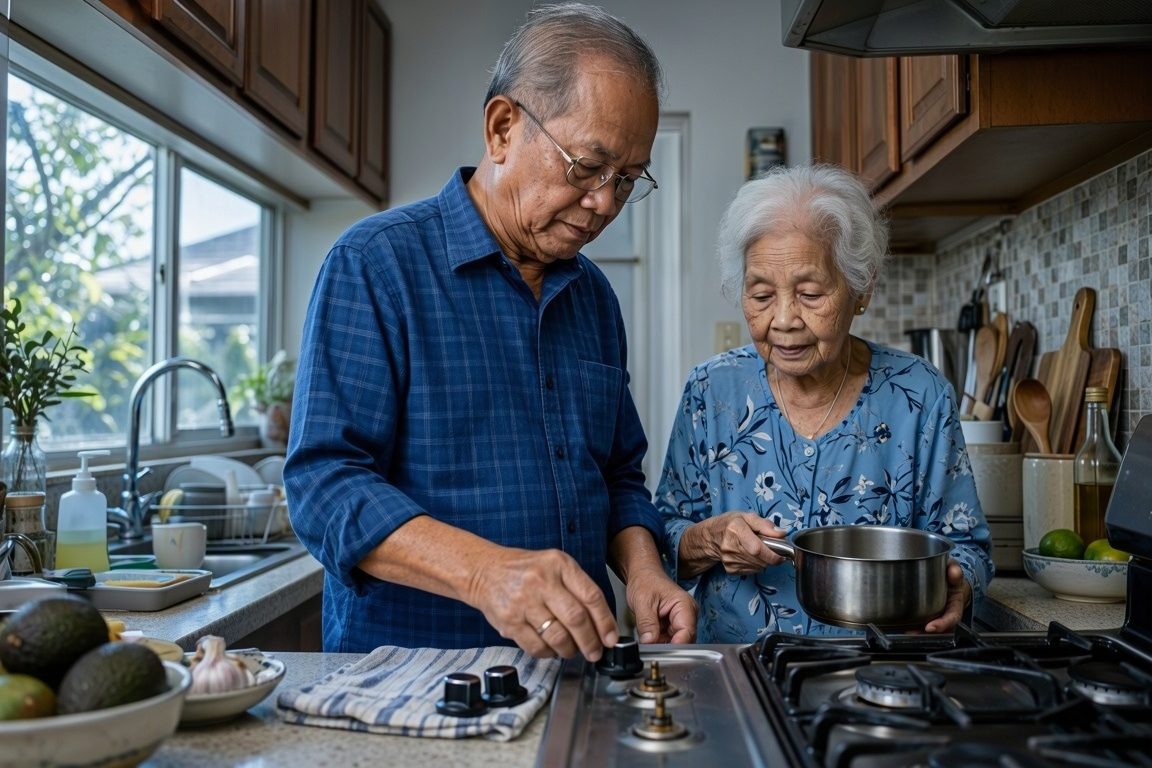
- Remove stove knobs or use knob covers to prevent unsupervised stove use. This is the single most effective step you can take.
- Install smoke detectors with sealed batteries and test them monthly. Use voice or strobe alerts if needed.
- Lock up knives, cleaning supplies, and medications. Use childproof locks on cabinets and drawers.
- Supervise all cooking activities. Never leave the kitchen while the stove or oven is on.
- Create a calm, clutter-free kitchen with contrasting colors to mark danger zones. Use automatic shut-off appliances and timers.
Videos
 What Are Common Safety Risks For Dementia Patients? - Dementia Help HubProvides an overview of the most common safety risks for dementia patients, including falls and wandering, and explains why the kitchen is a high-risk area.
 Kitchen Safety Tips for SeniorsOffers practical, easy-to-implement kitchen safety tips specifically for older adults, including those with dementia.
 095. How to create a safe home for Dementia family membersWalks through the process of creating a safe home environment, with a focus on the kitchen and other high-risk areas.
 123. Replay: How to create a safe home for Dementia family membersA replay of the previous video, offering additional insights and reminders for home safety modifications.
2 more videos
 How Do You Ensure Home Safety For Dementia Patients? - Dementia Help HubCovers general home safety principles, including lighting, clutter removal, and securing dangerous items, with a section on kitchen safety.
 Steady Steps: Practical Strategies for Managing Falls in DementiaFocuses on fall prevention, which is closely related to kitchen safety (spills, reaching for items, slippery floors).
Background
Why the kitchen is the most dangerous room
As dementia progresses, a person's memory, judgment, and ability to recognize danger all decline. They may forget they left a burner on, place a dish towel too close to a flame, or try to cook a meal they no longer remember how to prepare safely. According to the National Fire Protection Association, three in ten home fires begin in the kitchen, more than any other room. The Federal Emergency Management Agency adds that adults over 65 have a 2.7 times higher risk of dying in a kitchen fire than younger people. This is not because they are careless; it is because the brain changes of dementia make it hard to notice hazards like a hot stove, a spilled liquid, or a forgotten pot.
Beyond fire: other kitchen dangers
Fire is not the only worry. A person with dementia may slip on a recent spill or newly mopped tile, fall when reaching for something on a high shelf, cut themselves on a sharp knife, or burn their skin on a hot stovetop. They may also mistake cleaning products for food or drink, or leave the stove on, risking gas poisoning. The kitchen is warm and welcoming, but it is also full of hidden risks that a person with dementia may no longer perceive. That is why making the kitchen safer is one of the most important things you can do as a caregiver.
How dementia affects the ability to stay safe
Dementia changes how a person sees, thinks, and reacts. They may not notice a hot surface because their sense of touch has changed. They may not smell smoke or gas. They may become confused by too many items on the counter, leading to agitation or impulsive actions. They may also wander into the kitchen at night, not realizing the stove is on. These are not signs of stubbornness, they are symptoms of a brain that is struggling to process information. Your job is not to argue or explain, but to change the environment so that hazards are removed before they can cause harm.
Practical tools
4
Automatic shut-off stove/oven devices
Devices that turn off the stove or oven after a preset time of inactivity or if no movement is detected nearby.
Stove knob covers or locking knobs
Covers that prevent the stove knobs from being turned on; some require a key or pressing a release button to operate.
Motion-sensor kettle and coffee maker
Appliances that automatically shut off when no motion is detected for a short period, preventing dry boiling.
Smoke alarm and carbon monoxide detector
Battery-operated or hardwired alarms specifically designed to detect smoke and CO; should be interconnected for best safety.
Different situations
Early-stage dementia (mild cognitive changes)
In early stages, your loved one may still be able to cook with supervision. Focus on removing distractions, using timers, and keeping the kitchen clutter-free. Do not take away their independence entirely, instead, cook together. Use a checklist on the fridge: 'Turn off stove. Unplug toaster. Lock knives.' Gradually introduce safety devices as needed.
Middle-stage dementia (moderate decline)
At this stage, supervision is essential. Remove stove knobs or install a stove lock. Lock all cabinets with hazardous items. Use automatic shut-off appliances. Consider disabling the stove's gas or electric supply when you are not in the kitchen. Create a 'safe zone' in the kitchen with a chair and a small table where your loved one can sit and watch you cook, but not touch anything hot.
Late-stage dementia (severe decline)
In late stages, the person should not be in the kitchen unsupervised at all. Lock the kitchen door or use a childproof gate. Remove all appliances from the counter. Store only non-breakable, non-toxic items in low cabinets. If the person wanders, consider a bed alarm or motion sensor that alerts you when they leave their room. Focus on safety over independence.
Lewy body dementia or Parkinson's disease dementia
These types often involve movement problems, visual hallucinations, and sensitivity to heat. The person may have trouble balancing or reaching for items. Lower the risk of falls by removing rugs and keeping floors dry. Use contrasting colors to mark steps and the stove edge. Be extra cautious with hot water, set the thermostat lower. If hallucinations cause the person to think the stove is something else (like a monster), cover it with a cloth or use a stove cover.
Frontotemporal dementia (behavioral variant)
This type often involves impulsive behavior, poor judgment, and loss of empathy. The person may try to cook at odd hours or use the stove in dangerous ways. Lock the stove and all appliances. Remove matches and lighters. Use a lockbox for any flammable items. Be prepared for the person to try to bypass safety devices, use multiple layers of protection.
For the doctor
5
- Ask your doctor or occupational therapist: 'What type of stove lock or automatic shut-off device would work best for my specific stove model and my loved one's abilities?'
- If your loved one has a history of falls or balance problems, ask: 'Would a medical alert system or fall detection device be helpful in the kitchen, and what features should I look for?'
- Talk to your clinician: 'Could my loved one's medications affect their balance, coordination, or ability to sense heat? Are there any alternatives that might reduce these risks?'
- If your loved one has a history of smoking or using matches, ask: 'How can I safely remove these items from the home without causing distress, and are there any additional precautions I should take?'
- Ask your doctor: 'Are there any specific kitchen safety recommendations based on my loved one's type and stage of dementia?'