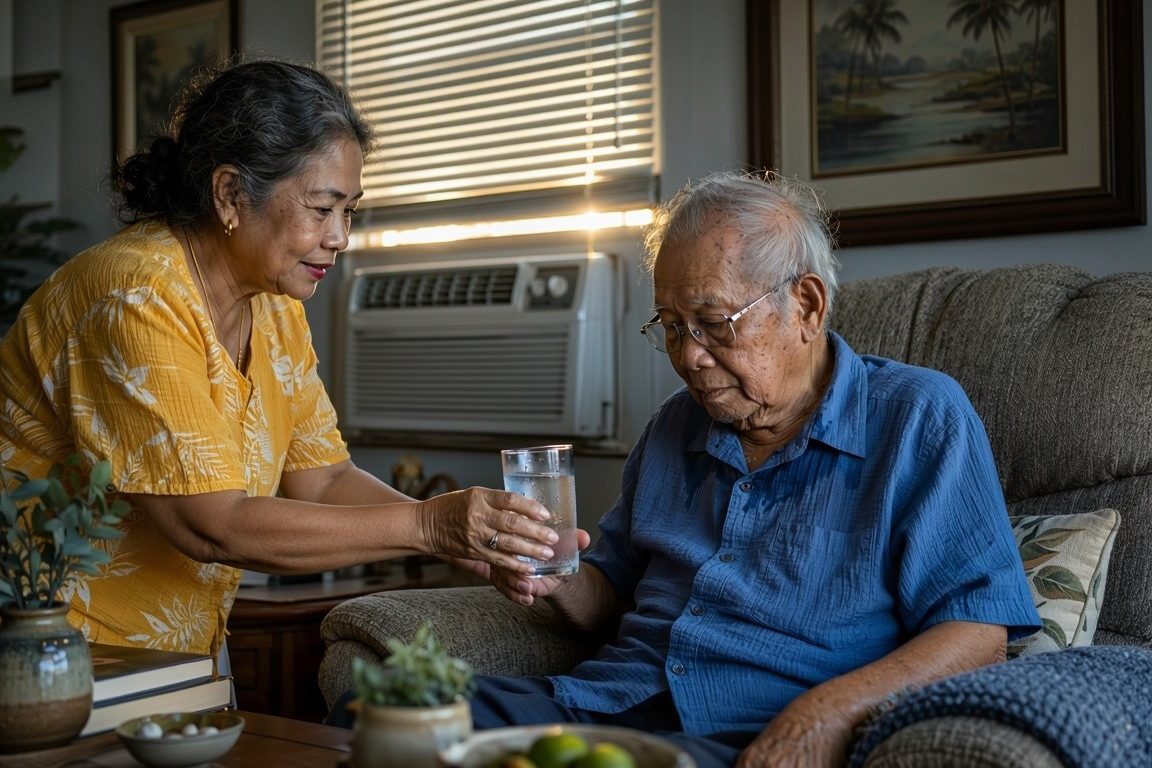
Step by step
What not to do
- Do not wait until they say they are thirsty, thirst is a late sign of dehydration and dementia blunts the ability to feel it.
- Do not use ice-cold water for cooling; it can cause shivering, which raises body temperature.
- Do not rely on fans when the room is above 95°F, they blow hot air; use air conditioning or go to a cooled location instead.
- Do not force a shower or bath if resisted; try a cool washcloth on the back of the neck or a misting spray instead.
- Do not leave them alone in a car, even for a minute, temperatures rise rapidly and they may not be able to open the door or call for help.
- Do not dismiss behavioral changes like agitation or lethargy as 'just the dementia' on hot days, always consider heat exhaustion or heat stroke.
Key points
- Offer fluids every hour, even if they say no, thirst is not a reliable signal for people with dementia.
- Use hydrating foods like watermelon, cucumbers, and popsicles when drinking is a struggle.
- Watch for the three stages of heat illness: cramps, exhaustion, and stroke, act early.
- Keep the home cool with curtains, fans (below 95°F), and a designated cool zone.
- Never leave a person with dementia alone in a car, even for a minute.
- Have an emergency plan: know where to go if your home gets too hot, and keep a go bag ready.
Videos
 Keeping Seniors Safe in the HeatThis video directly addresses the dangers of heat for seniors and gives practical prevention tips, including hydration and recognizing heat illness.
 123. Replay: How to create a safe home for Dementia family membersThis replay covers home safety modifications, including temperature control and preventing accidents, which is essential during heat waves.
 095. How to create a safe home for Dementia family membersThis episode offers a room-by-room safety checklist, including kitchen and bathroom tips that help prevent heat-related injuries like scalding.
 Senior Won't Bathe? 9 Tips For How To Get Your Elderly Parent To ShowerBathing can be a challenge, but it's a key cooling strategy. This video gives gentle, respectful approaches to help your loved one accept a cool shower or bath.

Background
Why Heat is More Dangerous for Seniors with Dementia
As we age, our bodies become less efficient at cooling down. Seniors sweat less, have reduced blood flow to the skin, and their hearts may not pump blood as effectively to release heat. Between 1999 and 2009, 40% of all heat-related deaths in the U.S. occurred in people over 65. For someone with Alzheimer's or another dementia, the danger multiplies because they may not feel thirsty, may forget to drink, or may not be able to tell you they are overheating. The part of the brain that senses thirst and temperature can be damaged, so they might not recognize the warning signs until they are already in trouble.
The Three Heat-Related Syndromes to Watch For
Heat illness happens in stages. First comes heat cramps, painful muscle spasms, often in the legs or abdomen, that occur during or after activity due to dehydration. Next is heat exhaustion, which brings heavy sweating, weakness, cold and clammy skin, a fast but weak pulse, nausea, and fainting. The most dangerous is heat stroke, a medical emergency where the body temperature rises above 103°F, the skin becomes hot and red (often dry, because sweating stops), the pulse is strong and fast, and the person may become confused, unconscious, or have a seizure. Heat stroke can cause permanent organ damage or death if not treated immediately. The key is to catch and reverse the problem early, before it escalates.
Why Dementia Changes the Approach
A person with dementia may not understand why you are offering water or asking them to stay inside. They might resist drinking because they don't recognize thirst, or they may become agitated if you try to move them to a cooler room. They might also wander outside in the heat without realizing the danger. Your role is to make staying cool and hydrated easy and pleasant, not a battle. Think of it like childproofing, you adjust the environment and your approach to keep them safe, rather than relying on them to make good choices. For example, you might set the water heater to no more than 120°F to prevent scalding, because someone with dementia may not know how to adjust the temperature if water gets too hot.
Practical tools
4
Hydration Station with Visual Tracker
Cooling Kit
Assemble a basket with
Keep in the cool zone for quick access.
Temperature Check Routine
Set a phone timer every 30 minutes on hot days to check
Note findings on a fridge chart.
Emergency Go Bag
Pack
Store by the front door; refresh water and medications every few months.
Different situations
Late-stage dementia or bedbound
Focus on passive cooling: keep the room at 70–72°F, use a light sheet instead of a blanket, and offer sips of water or ice chips every 15 minutes. Use a cool washcloth on the forehead and wrists. Watch for signs of overheating like flushed skin or rapid breathing. If they cannot swallow, discuss with their doctor about using a sponge for mouth care to keep them hydrated.
Lewy body dementia (LBD)
People with LBD are especially sensitive to heat and may have trouble regulating body temperature due to autonomic nervous system issues. They may also be more sensitive to medications that affect heat regulation. Avoid sudden temperature changes (like a cold shower) because they can cause confusion or falls. Use gradual cooling methods. Watch for increased hallucinations or rigidity, which can be signs of overheating.
Frontotemporal dementia (FTD) with behavioral changes
If your loved one is prone to wandering or agitation, heat can make these behaviors worse. Use distraction to keep them in a cool area: offer a favorite activity, a snack, or a short video. If they insist on going outside, go with them but keep it brief (5–10 minutes) and bring water. Use a GPS tracker or medical alert bracelet in case they wander off in the heat.
Adult child caregiver vs. spouse caregiver
As an adult child, you may need to approach with more diplomacy. Instead of saying 'You need to drink more water,' try 'I'm going to have a glass of water, would you like one too?' or 'Let's share this watermelon.' Spouses may have an easier time with routines but may also be at risk of burnout. If you are the spouse, set a timer to remind yourself to drink and cool down too, you need to stay healthy to care for them.
Living in a facility (assisted living or memory care)
Visit during the hottest part of the day to check on their comfort. Ask staff: 'What is the temperature in the common areas? Is the AC working? Are residents being offered fluids every hour?' If your loved one is in a private room, bring a fan (check facility rules) and a cooling towel. Make sure staff know about any medications that affect heat tolerance. If you notice signs of heat illness, report it immediately and request a room change if needed.
For the doctor
6
- Ask the doctor: 'Could any of my loved one's medications increase their risk of dehydration or heat stroke?' Common ones include diuretics, antihistamines, some antidepressants, and antipsychotics.
- If your loved one has a condition like heart failure or kidney disease that requires fluid restriction, ask: 'Exactly how much water can they safely drink per day during a heat wave?'
- If your loved one has trouble swallowing (dysphagia), ask: 'What is the safest way to keep them hydrated? Should we use thickened liquids or ice chips?'
- If your loved one has had heat stroke before, ask: 'Are there any special precautions we should take?'
- If your loved one becomes confused or agitated in the heat, ask: 'Could this be a side effect of their medication, or is it likely heat-related?'
- Ask the doctor: 'How many glasses of water per day is safe for my loved one, especially if they have a fluid restriction?'