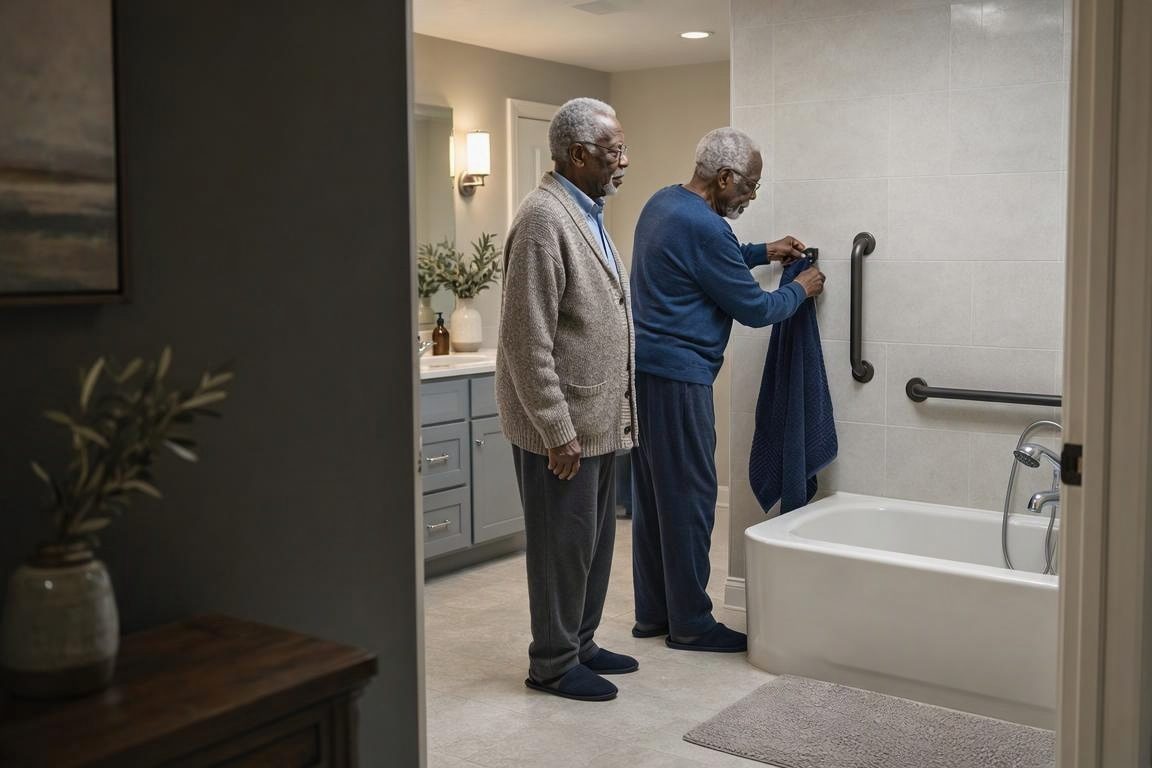
Step by step
What not to do
- Don’t rush or surprise the person. A sudden announcement like 'Time for your bath!' can trigger panic.Instead, give a gentle, positive cue: 'Let’s go get warm and comfortable.' Rushing increases anxiety and resistance.
- Don’t use cold or lukewarm water. Many caregivers assume room-temperature water is fine, but for someone with dementia, it can feel painfully cold. Always warm the water to a comfortable temperature and test it on your own wrist. Cold water can cause the person to recoil and refuse to continue.
- Don’t leave the person alone in the bathroom, even for a moment. Falls can happen quickly, and the person may become disoriented or frightened. Stay within arm’s reach, and keep the door slightly ajar so you can hear if they call out. Your presence provides safety and reassurance.
- Don’t argue or scold if the person resists. Saying 'You need a bath, you haven’t had one in a week' will only escalate conflict.Instead, acknowledge their feelings: 'I know you don’t feel like it right now. Let’s just sit here for a minute.' Then try a different approach or a different time.
- Don’t force a full bath if a sponge bath will do. Insisting on a complete shower can lead to a meltdown. A quick wipe-down with no-rinse wipes or a warm washcloth is better than nothing. Flexibility preserves the relationship and reduces stress for both of you.
- Don’t neglect the visual environment. A bathroom that is all one color, white, beige, gray, is disorienting. Without contrast, the person cannot see where to step or what to hold. Add color with towels, mats, or tape to create clear visual boundaries.
Key points
- Warm the bathroom to a comfortable temperature before the person undresses, cold is a major trigger for resistance.
- Use high-contrast colors (dark mat on light floor, bright tape on tub edge) to help the person see and navigate safely.
- Install grab bars, a shower bench, and non-slip mats to prevent falls and reduce fear.
- Play soft, familiar music to mask harsh echoes and create a calming atmosphere.
- Use a handheld showerhead and warm water, test the temperature on your wrist.
- Have a backup plan: no-rinse wipes or sponge baths on difficult days are better than a battle.
- Establish a consistent routine and use gentle, positive language, never rush or scold.
Videos
 How Do You Persuade Someone With Dementia To Bathe?Offers practical persuasion techniques that complement environmental setup, such as using the person’s favorite music and warm towels.
 When Someone With Dementia REFUSES to Bathe: Do This!Provides step-by-step strategies for handling refusal, including adjusting the environment and using distraction.
 Dementia Toileting problemsAddresses related bathroom challenges and routines that can affect bathing cooperation.
 Bonus Live Q & AAnswers real caregiver questions about bathing resistance and environmental adjustments.
2 more videos
 Why Dementia Patients HATE Bathing (11 Shocking Reasons!)Explains sensory and perceptual reasons for bathing aversion, reinforcing the need for a carefully set-up environment.
 Secrets for How to BATHE A Person with Dementia Without a FIGHT! The ABC's of FAQ's for DementiaCovers products and techniques, including warm towels and no-rinse wipes, that align with the environmental setup advice.
Background
Why the Bathroom Feels Threatening to Someone with Dementia
For a person living with dementia, the bathroom can become a confusing and frightening place. Changes in depth perception and color discrimination make it hard to see where the tub or shower begins, where the floor ends, or where to safely step. Many bathrooms are monochromatic, white walls, white tub, white toilet, white floor, which blurs boundaries and creates a visual void. This lack of contrast can trigger a fear of falling, because the person cannot trust what they see. As one expert explains, 'Would you be willing to step onto something that you couldn’t see? I doubt it. Why should they trust you?' (source 12). This visual disorientation is a major reason for resistance, not stubbornness.
Temperature, Sound, and Sensation: The Hidden Triggers
Beyond vision, the bathroom environment assaults other senses. The room is often cold and sterile, and asking someone to undress in a chilly space can feel shocking and unpleasant. Older adults, especially those with dementia, have thinner skin and altered temperature perception; lukewarm water can feel painfully hot or icy cold due to changes in the brain’s insula (source 24). The echo of running water and hard surfaces can amplify sounds, making the experience overwhelming. Many caregivers report that their loved one yells 'Ow, you’re hurting me' even with comfortable water, because their brain is processing the sensation differently. These sensory misperceptions are not the person being difficult; they are genuine physical experiences.
The Emotional Weight of Vulnerability and Loss of Control
Bathing is an intimate, private act. For someone with dementia, being undressed and helped by another person can feel like a loss of dignity and control. They may not understand why they need help, or they may revert to old habits from a time when weekly baths were the norm (source 21). The bathroom itself can become associated with embarrassment, fear, or past negative experiences. When a caregiver approaches with urgency or frustration, the person picks up on that anxiety and may become more resistant. Creating a calm, warm, and predictable environment signals safety and respect, which can reduce the emotional charge and make cooperation more likely.
Practical tools
6
Warm Towel or Robe from the Dryer
Before bath time, toss a large towel or a soft robe in the dryer for 5–10 minutes. Wrap it around the person’s shoulders as soon as they undress, and use it to dry them afterward. The warmth is comforting and signals safety. You can also use a towel warmer if you have one.
High-Contrast Visual Cues Checklist
Walk through the bathroom and check:
If not, add a dark bath mat, a colored toilet seat, or bright tape on the tub edge. Use a dark towel on a light hook. These small changes make a big difference in navigation.
Handheld Showerhead with a Long Hose
A handheld showerhead lets you control the water direction and pressure, avoiding the person’s face and ears. It also allows the person to hold it themselves if they want to feel in control. Look for one with an easy-grip handle and a pause button. Install it before you need it.
No-Rinse Cleansing Wipes or Sponge Bath Kit
Keep a pack of no-rinse wipes (available on Amazon or at drugstores) in the bathroom or a nearby drawer. On difficult days, you can clean the person while they are seated in a chair or even in bed. This avoids the bathroom entirely and reduces resistance. Brands like 'Comfort Bath' or 'Rinse-Free Shampoo Caps' are helpful.
Soothing Music Playlist
Create a short playlist of the person’s favorite songs, old-time music, classical, or nature sounds. Play it on a small waterproof speaker or a phone in a dry spot. The music masks harsh echoes and sets a calm mood. You can also sing along to create a positive connection.
Shower Bench or Transfer Bench
A sturdy, non-slip shower bench allows the person to sit while bathing, reducing fall risk and fear. A transfer bench extends outside the tub so the person can sit down first, then swing their legs over the edge. This eliminates the need to step over a high tub wall. Measure your tub to ensure a good fit.
Different situations
Early-stage dementia (mild cognitive impairment)
In early stages, the person may only need reminders and gentle cues. The bathroom setup can be simpler: focus on good lighting and contrast, but you may not need a shower bench yet. Encourage independence by letting them hold the washcloth or shampoo bottle. Use the same routine each time to build habit. Avoid over-preparing the room in a way that feels infantilizing.
Late-stage dementia (severe impairment)
In late stages, the person may be bed-bound or unable to sit up safely. Focus on bed baths using no-rinse wipes or a basin with warm water. The bathroom may not be used at all. If you do use a shower, use a shower stretcher or a rolling shower chair. Keep the room very warm, use soft lighting, and have a second person to help with transfers. Safety is paramount, never leave the person unattended.
Lewy body dementia (LBD)
People with LBD often have extreme sensitivity to temperature and may experience visual hallucinations. Avoid bright, flickering lights. Use warm, soft lighting and a calm, quiet environment. The person may have Parkinson’s-like stiffness, so a shower bench and grab bars are essential. Be prepared for sudden changes in cooperation; have a backup plan like a sponge bath. Avoid rushing, as LBD can cause fluctuations in alertness.
Spouse caregiver vs. adult child caregiver
A spouse may feel more comfortable with intimate care but may also be more emotionally drained. An adult child may feel awkward or embarrassed. For either role, use a same-gender helper if the person is uncomfortable. If you are an adult child, consider hiring a home health aide for baths once or twice a week to reduce stress. The bathroom setup remains the same, but the emotional dynamic changes, use gentle, respectful language and maintain the person’s dignity.
Home with limited mobility or wheelchair use
If the person uses a wheelchair, the bathroom door must be wide enough (at least 32 inches). Consider a roll-in shower with no curb, or a transfer bench that allows sliding from the wheelchair. Install grab bars at the correct height. Use a handheld showerhead and a shower chair with a back. Remove throw rugs and clutter. If the bathroom is too small, consider a bedside bath using a portable basin or wipes.
For the doctor
5
- Ask your doctor or occupational therapist about a home safety evaluation to identify fall risks and recommend specific grab bar placements.
- Discuss whether a prescription for physical or occupational therapy at home is appropriate, insurance may cover a professional to assess and teach safe bathing techniques (source 8).
- If the person has a history of falls or balance problems, ask about the best type of shower bench or transfer bench for their specific needs.
- Consult with a clinician if the person has skin conditions, infections, or wounds that require special bathing products or techniques.
- Ask about medications that might affect balance, temperature perception, or skin sensitivity, and how to adjust the bathing routine accordingly.