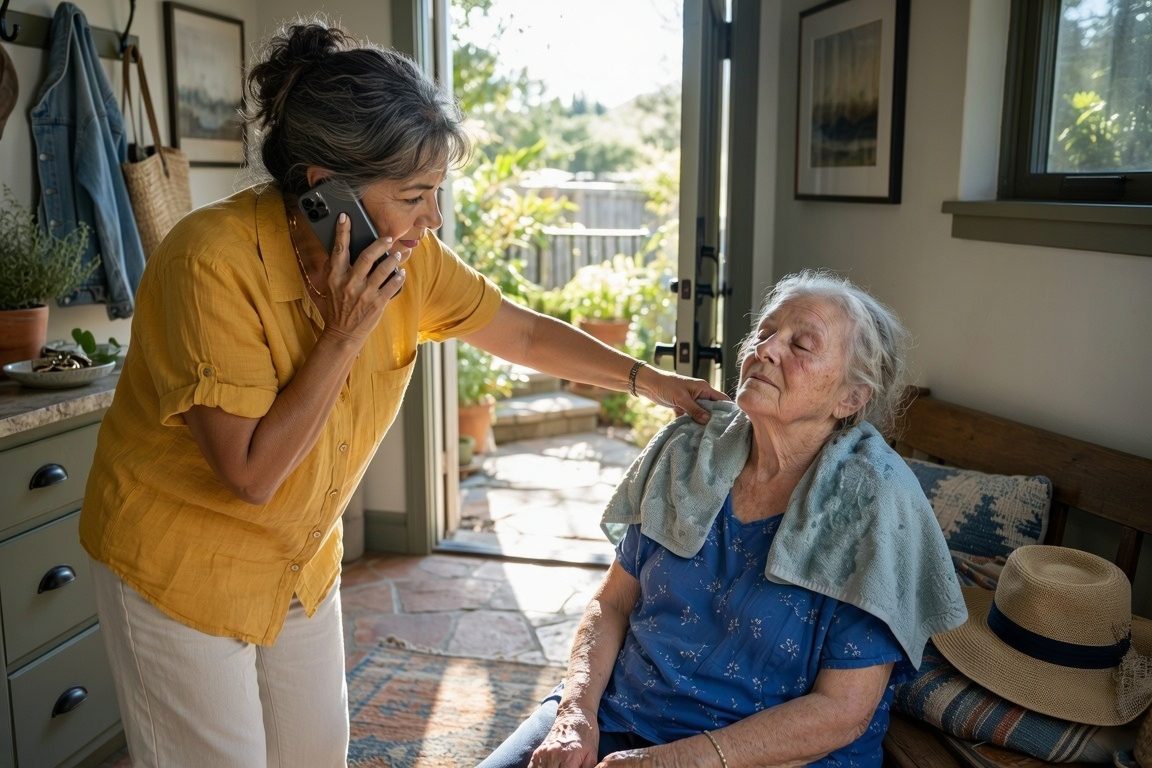
What not to do
- Do not give any cold or fever-reducing medications (e.g., aspirin, acetaminophen) – they do not treat heat stroke and can be harmful.
- Do not use alcohol rubs or ice-water baths – these can cause shivering, which raises core temperature.
- Do not leave the person alone – stay with them and monitor their breathing and responsiveness until help arrives.
- Do not force fluids if the person is unconscious, vomiting, or cannot swallow – this risks choking or aspiration.
Key points
- Heat stroke is a medical emergency, call 911 immediately if you suspect it.
- Seniors with dementia are at higher risk because they may not recognize or communicate symptoms of overheating.
- Cool the person aggressively with cool cloths, fans, and misting while waiting for help.
- Do not give aspirin or cold baths; use gentle cooling methods instead.
- Prevent heat stroke by offering water every 30 minutes, using cooling towels, and keeping the home below 75°F.
- Have a plan: keep a hydration checklist, a medical alert device, and an emergency contact card ready.
Videos
 Keeping Seniors Safe in the HeatThis video provides a clear overview of heat-related illnesses and practical prevention tips for seniors, including hydration strategies and recognizing early warning signs.
 What if the caregiver needs help? Get peace of mindThis video addresses the caregiver's own safety and offers solutions like medical alert devices, which are crucial if you are an older spouse caring for a loved one with dementia.
 Understanding the signs of paranoia, hallucinations and delusional behaviors w/ Lucy Barylak Sept 12This video helps you distinguish between dementia-related behaviors and medical emergencies like heat stroke, emphasizing the importance of checking temperature when behavior changes suddenly.
 Senior Won't Bathe? 9 Tips For How To Get Your Elderly Parent To ShowerThis video offers gentle strategies for encouraging bathing, which is important for cooling down during heat waves. It includes tips for making the shower safe and comfortable.
2 more videos
 Dementia Needs a Lot More Thought | Kris Engskov | TEDxUofWThis TEDx talk highlights why seniors with dementia visit emergency rooms too often and why the ER is a difficult environment for them. It reinforces the need for proactive home care and prevention.
 Why Do Old People Refuse to Go to the Doctor?This video explains common reasons seniors resist medical care, which can be a barrier during heat stroke emergencies. It offers communication tips to encourage cooperation.
Background
Why Seniors with Dementia Are at Higher Risk
As we age, our bodies become less efficient at regulating temperature. Older adults often have a reduced ability to sweat, and their circulation may not cool them as effectively. For someone living with dementia, these physical changes are compounded by cognitive challenges: they may not feel thirsty, may forget to drink water, or may not be able to tell you they are overheating. According to CDC data from 1999 through 2009, 40% of heat-related deaths occurred in seniors, and many of these tragedies are preventable with the right knowledge and quick action. The heat is more dangerous for older adults because their bodies simply cannot cool down as fast, and dementia can mask the early warning signs.
What Happens During Heat Stroke
Heat stroke is the most severe form of heat-related illness. It occurs when the body's temperature regulation fails, and core body temperature rises to dangerous levels, typically above 104°F (40°C). Unlike heat cramps or heat exhaustion, heat stroke is a medical emergency that can lead to organ damage, brain injury, or death if not treated immediately. Symptoms include hot, red, dry skin (no sweating), a rapid strong pulse, confusion or loss of consciousness, and body temperature that continues to climb. In a person with dementia, these signs may be mistaken for their usual confusion or agitation, which is why it is critical to check their temperature and look for other clues like flushed skin or rapid breathing.
The Role of Dehydration and Medications
Dehydration is a common precursor to heat stroke. Seniors often do not feel thirsty until they are already dehydrated, and some medications, such as diuretics, antihistamines, or certain blood pressure drugs, can increase fluid loss or impair the body's ability to cool itself. If your loved one takes medication that requires them to limit fluid intake, it is essential to talk to their doctor about how much water they should drink daily during hot weather. Additionally, dementia can cause a person to forget to drink or to refuse fluids, so you may need to offer small sips frequently or provide high-water-content foods like watermelon, cantaloupe, citrus fruits, tomatoes, cucumbers, and celery to help maintain hydration.
Practical tools
3
Cold water or ice packs
Apply wrapped in a cloth to neck, armpits, and groin to rapidly lower core temperature.
Portable fan or hand fan
Use to increase evaporative cooling when water is applied to the skin.
Electrolyte drink or cool water
Offer in small sips only if the person is conscious and able to swallow safely.
Different situations
Lewy body dementia or Parkinson's disease dementia
These individuals are more sensitive to heat and may have autonomic nervous system issues that impair sweating. They are also at higher risk for medication-induced heat sensitivity. Check their temperature more frequently and avoid any sudden temperature changes. If they are on antipsychotic medications, discuss with their doctor whether these increase heat stroke risk.
Late-stage dementia (bedbound or limited mobility)
They may not be able to move to a cooler spot or communicate discomfort. You must proactively check their skin temperature and look for signs like flushed face, rapid breathing, or restlessness. Use a cool washcloth on their forehead and neck, and offer ice chips if they can swallow safely. Ensure the room temperature is below 75°F (24°C) during heat waves.
Spouse caregiver vs. adult child caregiver
If you are an older spouse, you may also be at risk for heat stroke. Take care of yourself first, stay hydrated and cool. Consider using a medical alert device for yourself. If you are an adult child, you may need to visit more frequently during heat waves or arrange for a neighbor or home care aide to check in. Do not rely on phone calls alone, as your parent may not remember to call for help.
Living in a facility (assisted living or memory care)
Ask the facility staff about their heat emergency plan. Ensure the room has working air conditioning and that staff check on residents every hour during extreme heat. If you notice the room is too warm or your loved one seems lethargic, speak up immediately. You have the right to request a room transfer or additional cooling measures.
Medicaid or limited resources
If you cannot afford air conditioning, check with your local Area Agency on Aging or utility company for assistance programs. Some communities offer free fans or cooling centers. During a heat wave, go to a public library, mall, or senior center during the hottest part of the day. Call 211 for local resources.
For the doctor
5
- Ask your loved one's doctor if any of their current medications (e.g., diuretics, antihistamines, blood pressure drugs) increase the risk of heat stroke or dehydration.
- If your loved one has a condition that requires fluid restriction (e.g., heart failure or kidney disease), ask the doctor: 'How much water can they safely drink during hot weather? What is a safe hydration schedule for them?'
- Discuss whether a wearable medical alert device is appropriate for your situation, especially if you are an older caregiver yourself.
- If your loved one has had heat stroke before, ask about a follow-up plan and any long-term effects on their dementia symptoms.
- Ask about the best way to manage fever or infection during a heat wave, since infections like urinary tract infections can cause confusion that mimics heat stroke.