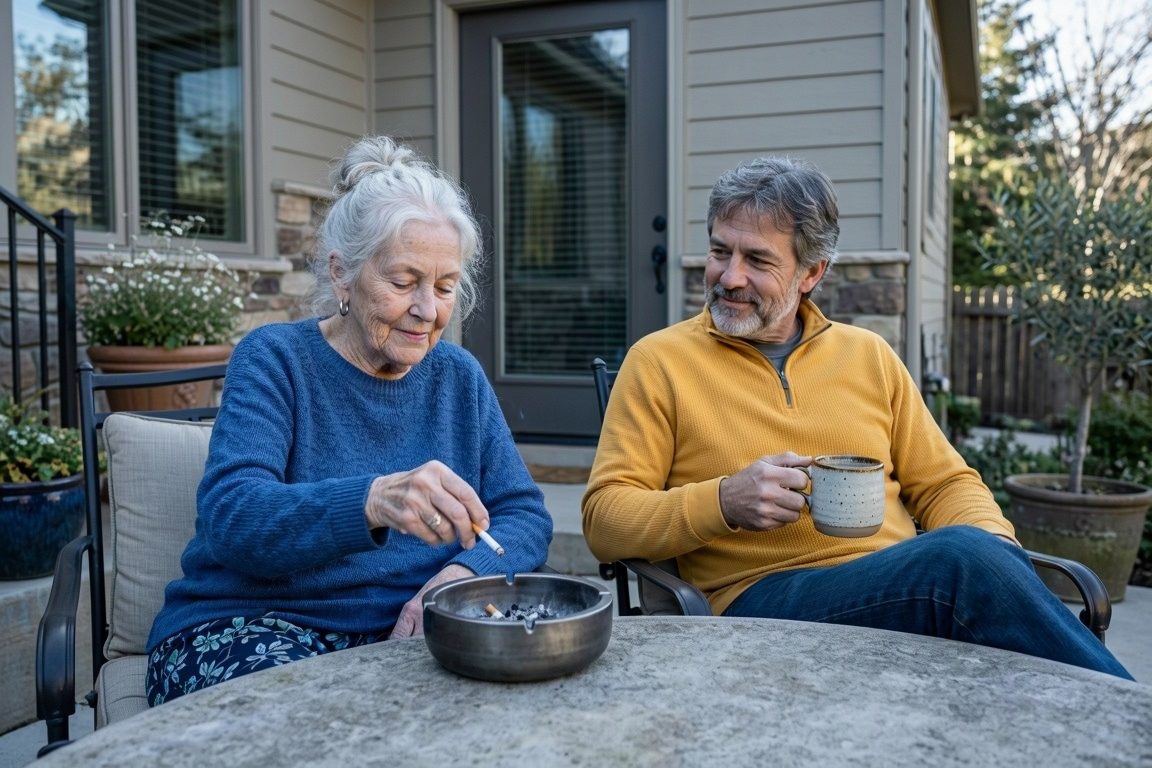
Step by step
What not to do
- Do not hide cigarettes or lie about them. If your loved one discovers you have hidden their cigarettes, it can damage trust and lead to anger or searching behavior.Instead, be transparent: say you are keeping them safe and that you will give them a cigarette when it is time.
- Do not argue or scold if they forget to put out a cigarette. Dementia affects memory and judgment. Telling them 'never to do it again' will not be effective.Instead, calmly take the cigarette, extinguish it, and redirect to another activity. Your calm response reduces agitation.
- Do not allow smoking in bed or in a recliner. A person can fall asleep with a lit cigarette, causing a devastating fire. If they insist on smoking in a chair, stay with them and remove the cigarette as soon as they show signs of drowsiness.
- Do not leave lighters or matches in easy reach. Even if you think they cannot find them, dementia can make people surprisingly resourceful. Keep all fire-starting items locked away, including decorative matches or lighters on shelves.
- Do not smoke around your loved one if you are a caregiver yourself. As one caregiver advised, 'Do not smoke around people. Your caregivers go out in the garage or somewhere else to have a cigarette.' Secondhand smoke is harmful, and it sets a confusing example.
- Do not force them to quit cold turkey. Nicotine withdrawal can cause irritability, anxiety, and physical discomfort. If you want to reduce smoking, do it gradually with their doctor's guidance. Forcing a quit can lead to severe agitation and a breakdown in your relationship.
Key points
- You do not have to force your loved one to quit smoking to reduce fire risk. Controlling access and supervising are effective.
- Lock up all cigarettes, lighters, and matches. Only you should have the key.
- Supervise every smoking session. Stay present and attentive the entire time.
- Create a safe smoking area away from flammable items, and use a deep ashtray with sand or water.
- Install working smoke detectors and keep a fire extinguisher nearby.
- Never allow smoking in bed or near oxygen. Never argue or scold; redirect instead.
Videos
 4 steps to help you decide if you should try to change unhealthy dementia behaviorThis video helps you think through whether to try to change a behavior like smoking, and offers a framework for deciding when to intervene and when to accept the risk.
 What Are Common Safety Risks For Dementia Patients? - Dementia Help HubThis video covers a range of safety risks, including fire, and reinforces the importance of controlling access to dangerous items like lighters and matches.
 Dealing with Difficult Behaviors in DementiaThis video offers strategies for handling agitation and resistance, which can be helpful when your loved one is upset about not being able to smoke freely.
 3 THINGS THAT HELP SOMEONE WITH DEMENTIA BE MORE ACCEPTING OF YOUR CAREThis video provides practical tips for building trust and cooperation, which can make it easier to implement safety measures like supervised smoking.
Background
Why Smoking Becomes a Fire Risk in Dementia
As dementia progresses, a person may forget that they have a cigarette burning, drop it without noticing, or leave it on a flammable surface. They may also forget to extinguish it properly, or they may try to light a new cigarette while one is still lit. The combination of impaired judgment, memory loss, and reduced coordination makes smoking a serious fire hazard. According to fire safety experts, adults over 65 have a 2.7 times higher risk of dying in a kitchen fire than younger people, and similar risks apply to smoking-related fires. The person may not recognize the danger or remember to call for help if a fire starts.
The Emotional Reality for Caregivers
Many caregivers feel torn between wanting to protect their loved one and avoiding the anger or agitation that can come from taking away cigarettes. As one caregiver shared, 'I buy the cigarettes because he gets very angry if he doesn't have them.' This is not a failure on your part. It is a recognition that forcing a quit can lead to distress, arguments, and a breakdown in trust. The goal here is not to stop smoking entirely, but to manage the risk in a way that respects your loved one's autonomy and your own limits. You are already doing an amazing job by looking for solutions.
How Controlling Access Reduces Danger
The single most effective step you can take is to control access to smoking materials. By keeping all cigarettes, lighters, and matches in a locked drawer or cabinet that only you can open, you become the gatekeeper. This means your loved one cannot smoke unsupervised or at odd hours. When you give them a cigarette, you know exactly when and where they are smoking, and you can be present to watch. This simple change cuts down the biggest safety risk: a cigarette left burning unattended. It also prevents them from smoking in bed or in other dangerous locations.
Practical tools
6
Lockable Storage Box
Use a small lockbox or a locked drawer to store all cigarettes, lighters, and matches. Choose one that is not easily opened by someone with dementia. This gives you control over when and where smoking happens.
Deep, Non-Flammable Ashtray with Lid
Purchase a deep metal ashtray with a lid that closes automatically, or a ceramic one filled with sand. This prevents embers from escaping and makes it easy to smother a cigarette. Place it on a non-flammable surface like concrete or tile.
Smoke Detectors with Interconnectivity
Fire Extinguisher (Class A/B/C)
Keep a small, easy-to-use fire extinguisher in the kitchen and near the smoking area. Learn the PASS technique:
Do not expect your loved one to use it.
Timer or Visual Cue
Use a kitchen timer or a smartphone alarm set for 5-10 minutes when your loved one starts smoking. When it goes off, say, 'Time to put that out now.' This helps them remember to finish and reduces the chance of a forgotten cigarette.
Redirecting Phrases
When they ask for a cigarette outside of designated times, say, 'Let's have a cup of tea first,' or 'How about we go for a short walk?' or 'Tell me about your favorite memory from when you were young.' Redirecting can reduce the urge without confrontation.
Different situations
Lewy body dementia or Parkinson's disease dementia
These conditions often cause visual hallucinations and fluctuations in alertness. The person may become confused about whether they have already smoked or may try to light a cigarette that is already lit. Supervision is even more critical. Also, they may have difficulty with fine motor skills, making it harder to hold a cigarette safely. Consider using a cigarette holder or a short cigarette to reduce the risk of burns.
Late-stage dementia (bedridden or very limited mobility)
Smoking may no longer be safe at all. If the person cannot sit up or hold a cigarette, the risk of burns and fire is extremely high. Discuss with their doctor whether nicotine patches or gum might be a safer alternative. If smoking continues, it must be done with you holding the cigarette and extinguishing it immediately after each puff.
Spouse caregiver vs. adult child caregiver
Spouses may have a longer history of shared smoking and may feel guilty about restricting it. Adult children may find it easier to set boundaries. Regardless, both need to prioritize safety over guilt. If you are a spouse, consider framing it as 'I want to keep you safe so we can enjoy more time together.' If you are an adult child, you can say, 'Mom, I love you and I want to make sure you are safe.'
Living in a facility (nursing home or assisted living)
Most facilities have strict no-smoking policies indoors. If your loved one is in a facility, work with staff to create a safe outdoor smoking plan. They may require a staff member to supervise. Bring a lockbox for their cigarettes and lighters and give them to the staff. Do not leave smoking materials in the room.
Medicaid or limited financial resources
Smoke detectors and fire extinguishers are often available at low cost through local fire departments or community programs. Some utilities offer free smoke alarms. Check with your local Area Agency on Aging or fire department for free or discounted safety devices. You do not need expensive equipment to be safe.
For the doctor
4
- Ask your loved one's doctor about nicotine replacement therapy (patches, gum, lozenges) as a safer alternative to smoking. This can reduce fire risk while managing cravings.
- If your loved one has a history of heart disease or high blood pressure, ask the doctor if nicotine replacement is safe for them.
- If your loved one becomes severely agitated when denied cigarettes, ask the doctor about behavioral strategies or medications that might help reduce agitation without taking away smoking.
- If your loved one uses oxygen, ask the doctor: 'What is the safest way to manage smoking and oxygen use? Should I move the concentrator or remove the cannula while smoking, or is there another approach?' Never smoke near oxygen without medical guidance.